THE ADVENTURE COLLECTIVE® · Independent discovery and booking for outdoor travel

Drive across red sand and climb canyon ledges on a guided Wadi Rum jeep tour that pairs geological drama with Bedouin hospitality. Choose a half-day route or linger overnight for stargazing, traditional meals, and a campfire beneath the Milky Way.
Drive across red sand and climb canyon ledges on a guided Wadi Rum jeep tour that pairs geological drama with Bedouin hospitality. Choose a half-day route or linger overnight for stargazing, traditional meals, and a campfire beneath the Milky Way.
The jeep kicks up a ribbon of red sand and the mountains answer with a muted rumble—Wadi Rum announces itself in color and scale. On a full-day Explorer Jeep Tour, the driver-guide steers across open salt flats and under towering sandstone walls, pausing where the wind has carved arches and where petroglyphs still watch travelers from bronze-aged grooves.
Verified experiences and guided adventures in the surrounding area.
Operated by Wadi Rum Fire Camp · Wadi Rum Village, Aqaba Governorate
The jeep kicks up a ribbon of red sand and the mountains answer with a muted rumble—Wadi Rum announces itself in color and scale. On a full-day Explorer Jeep Tour, the driver-guide steers across open salt flats and under towering sandstone walls, pausing where the wind has carved arches and where petroglyphs still watch travelers from bronze-aged grooves.
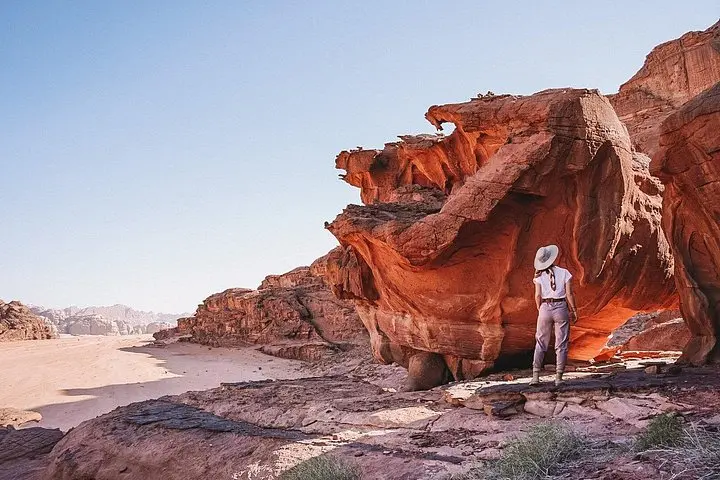
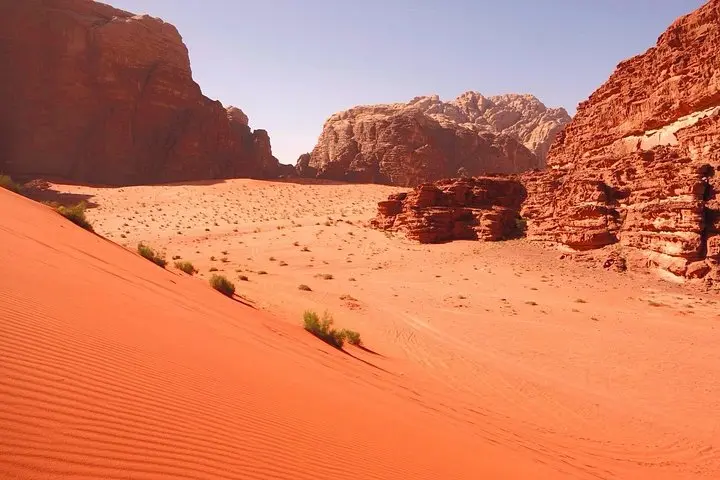
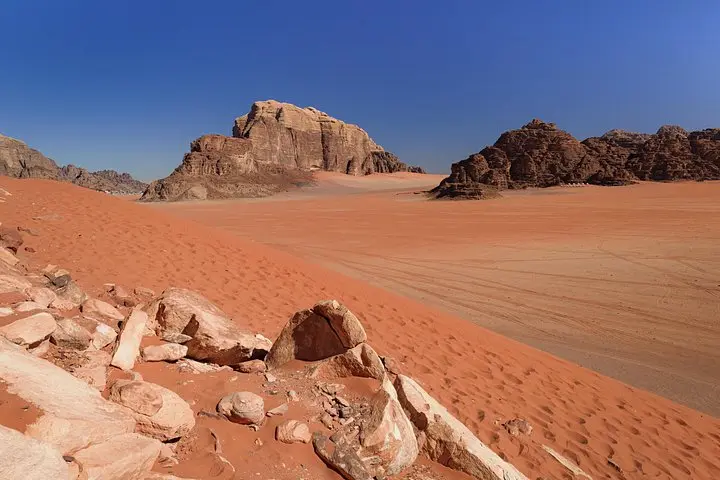
Start with a short walk at Lawrence Springs: moss and a trickle of water feel almost impossible in this red landscape, a sudden green that once drew camel caravans. The tour threads together canyons like Khazali and Abu Khashaba, climbs a fat dune for the view, then slips under natural bridges—Little Arch and the distant Burdah Rock Bridge—each stop an exercise in geology. The iron-rich sand gives the desert its rust hue; wind and flash floods, the slow sculptors, explain the mushroom rocks and pedestal formations you’ll photograph until the battery dies.
History pervades the route. Nabatean traders, pilgrims and the indelible figure of T.E. Lawrence left marks here—stone shelters, inscriptions, and the so-called Lawrence’s House, a viewpoint that folds the plain into a lesson in human routes across unforgiving terrain. Bedouin hospitality threads the modern experience: optional home-cooked dinners, tea around a bonfire and an overnight in a private tent let travelers see how desert life maps onto survival and ceremony.
For planning: the tour is offered as a half-day or full-day with an optional overnight. It’s run in open-air 4x4s—expect bumpy tracks, brief hikes, and short climbs but no technical ascents. Bring sun protection and at least 2 liters of water per person; the operator provides bottled water and, if you stay overnight, breakfast and dinner. Sandboarding is available on request and suitable footwear is non-negotiable if you intend to climb dunes or scramble to viewpoints.
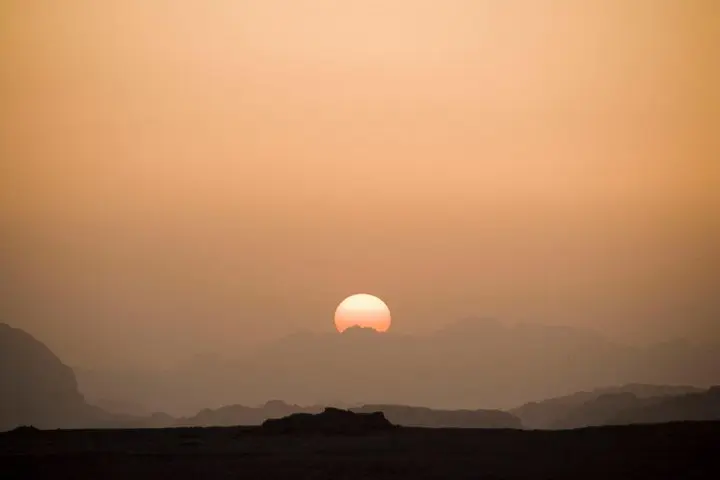
Timing matters. Sunrise and sunset condense the desert’s palette; the full-day schedule makes an afternoon stop at Um Sabatah ideal for sunset and optional stargazing. Wear layers—desert days can scorch and nights chill. Respect the protected-area rules: stay on guided routes, don’t touch petroglyphs, and avoid leaving trash. If you opt to sleep under the stars, budget for a simple mattress and the possibility of wind.
Whether you’re chasing geological oddities, the calm of an endless horizon, or a night sky that pushes the Milky Way into vivid relief, the Wadi Rum Explorer balances sensory spectacle with hands-on context—history in the rock, modernity in the jeep, and Bedouin warmth at the campfire.
Pickup is from the Wadi Rum Visitor Center or designated parking 5 km inside Wadi Rum Village; the tour returns to the same meeting point.
Yes—vehicles are open-air 4x4s and activities are non-technical, though those with spinal issues or pregnancy are advised against participation.
Yes—an optional overnight includes dinner, breakfast, a private Bedouin tent or sleeping under the stars and organized stargazing.
Sandboarding is available on request for half-day or longer tours; bring appropriate footwear and let guides know in advance.
Meals (tea, lunch, dinner, breakfast) are optional and traditionally prepared at the camp; bottled water is provided during the trip.
Basic facilities are available at the visitor center and some camps; in the field expect natural stops and portable options depending on location.
Wadi Rum Fire Camp operates guided outdoor trips and adventures with an emphasis on safety, stewardship, and memorable experiences.
The jeep kicks up a ribbon of red sand and the mountains answer with a muted rumble—Wadi Rum announces itself in color and scale. On a full-day Explorer Jeep Tour, the driver-guide steers across open salt flats and under towering sandstone walls, pausing where the wind has carved arches and where petroglyphs still watch travelers from bronze-aged grooves.
The jeep kicks up a ribbon of red sand and the mountains answer with a muted rumble—Wadi Rum announces itself in color and scale. On a full-day Explorer Jeep Tour, the driver-guide steers across open salt flats and under towering sandstone walls, pausing where the wind has carved arches and where petroglyphs still watch travelers from bronze-aged grooves.
Start with a short walk at Lawrence Springs: moss and a trickle of water feel almost impossible in this red landscape, a sudden green that once drew camel caravans. The tour threads together canyons like Khazali and Abu Khashaba, climbs a fat dune for the view, then slips under natural bridges—Little Arch and the distant Burdah Rock Bridge—each stop an exercise in geology. The iron-rich sand gives the desert its rust hue; wind and flash floods, the slow sculptors, explain the mushroom rocks and pedestal formations you’ll photograph until the battery dies.
History pervades the route. Nabatean traders, pilgrims and the indelible figure of T.E. Lawrence left marks here—stone shelters, inscriptions, and the so-called Lawrence’s House, a viewpoint that folds the plain into a lesson in human routes across unforgiving terrain. Bedouin hospitality threads the modern experience: optional home-cooked dinners, tea around a bonfire and an overnight in a private tent let travelers see how desert life maps onto survival and ceremony.
For planning: the tour is offered as a half-day or full-day with an optional overnight. It’s run in open-air 4x4s—expect bumpy tracks, brief hikes, and short climbs but no technical ascents. Bring sun protection and at least 2 liters of water per person; the operator provides bottled water and, if you stay overnight, breakfast and dinner. Sandboarding is available on request and suitable footwear is non-negotiable if you intend to climb dunes or scramble to viewpoints.
Timing matters. Sunrise and sunset condense the desert’s palette; the full-day schedule makes an afternoon stop at Um Sabatah ideal for sunset and optional stargazing. Wear layers—desert days can scorch and nights chill. Respect the protected-area rules: stay on guided routes, don’t touch petroglyphs, and avoid leaving trash. If you opt to sleep under the stars, budget for a simple mattress and the possibility of wind.
Whether you’re chasing geological oddities, the calm of an endless horizon, or a night sky that pushes the Milky Way into vivid relief, the Wadi Rum Explorer balances sensory spectacle with hands-on context—history in the rock, modernity in the jeep, and Bedouin warmth at the campfire.