THE ADVENTURE COLLECTIVE® · Independent discovery and booking for outdoor travel

Drive into the red heart of Jordan: a full-day Jeep tour through Wadi Rum’s canyons, arches and dunes, capped by an authentic Bedouin overnight at Desert Moon Camp. Expect short hikes, ancient inscriptions, sandboarding and a skyful of stars.
Drive into the red heart of Jordan: a full-day Jeep tour through Wadi Rum’s canyons, arches and dunes, capped by an authentic Bedouin overnight at Desert Moon Camp. Expect short hikes, ancient inscriptions, sandboarding and a skyful of stars.
The sun is an anvil of gold over red sandstone when the convoy pulls away from Wadi Rum Village. Wind has already carved the day’s weather into the rock—sharp ridgelines, round domes, and seamed arches that throw long shadows across rippled sand. Your guide eases the Jeep along a faint track and the desert opens in pieces: a glinting pool at Lawrence’s Spring, petroglyph-studded walls at Khazali Canyon, a slot of shade where tea is poured and conversation slows.
Verified experiences and guided adventures in the surrounding area.
Operated by Desert Moon Camp · Wadi Rum Village, Ma'an Governorate
The sun is an anvil of gold over red sandstone when the convoy pulls away from Wadi Rum Village. Wind has already carved the day’s weather into the rock—sharp ridgelines, round domes, and seamed arches that throw long shadows across rippled sand. Your guide eases the Jeep along a faint track and the desert opens in pieces: a glinting pool at Lawrence’s Spring, petroglyph-studded walls at Khazali Canyon, a slot of shade where tea is poured and conversation slows.
Wadi Rum’s landscape reads like a geological manuscript. Millennia of wind and flash floods have sculpted Cambrian sandstone and granite into mushroom rocks, natural bridges and narrow canyons. The Nabateans left inscriptions and carved ways through these walls; later, T.E. Lawrence made the area famous during the Arab Revolt, and traces of both histories are visible on rock faces and in local stories. Today Bedouin families continue to live with desert know-how—guides point out shepherding routes, seasonal wells, and ancient camel tracks.
The tour stitches together classic stops and small, active moments: a short scramble up Small Arch, a gentle walk inside Khazali to study petroglyphs, a 30–45 minute hike through Abu Khasaba Canyon that rewards you with narrow viewpoints and a chance to sandboard. Midday the guide lays out a traditional Bedouin lunch—flatbread, stews and strong tea—while conversation turns practical: where animals shelter, which springs hold water after rains, and which rock faces preserve the oldest inscriptions.
At dusk the group climbs to watch sunset at Um Sabatah, where tea and a telescope make the slow shift of light feel ceremonial. The night is quieter: tents at Desert Moon Camp offer privacy and shared facilities, but the real draw is the sky—uncrowded, bright, and perfect for stargazing.
Practical edge: you’ll meet at the Wadi Rum Village parking lot; the itinerary runs full-day before an overnight and returns the next morning. Fitness requirements are moderate—expect several short hikes, some scrambling and sand travel. Summer days can be extreme; spring and fall are the most comfortable seasons. Guides expect respectful behavior around inscriptions and Bedouin property: leave no trace, avoid climbing delicate panels, and ask before photographing people.
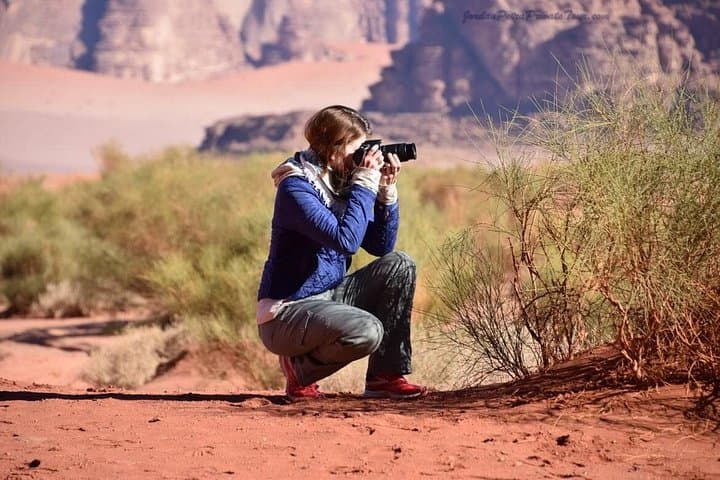
Bring layered clothing for cold nights, sun protection, at least 2–3 liters of water, sturdy shoes for sands and rock, and a headlamp for the camp. For photographers, golden hour and predawn are the most rewarding; bring a wide-angle lens for arches and a long lens for rock-clinging birds.
This is a trip that balances motion and stillness—the Jeep pushes you into the desert’s wide rooms, and the camp returns you to a human scale where stories, tea and the night sky stitch the day together.
Meet at the Wadi Rum Village parking lot next to the Wadi Rum Rest House; guides will gather the group and load gear into the Jeeps.
You get a private canvas tent with basic bedding and shared bathroom facilities at Desert Moon Camp—expect simple, traditionally inspired accommodations with hot water available.
Yes—lunch, dinner and breakfast are included, along with bottled water and Bedouin tea during stops.
This tour is not recommended for pregnant travelers or people with serious back or heart conditions; children should be supervised during hikes and near cliffs.
Yes—there is time allocated for sandboarding near Abu Khasaba after the canyon walk.
Fall through spring (October–April) offers cooler daytime temperatures and more comfortable nights; summer can be extremely hot.
Desert Moon Camp operates guided outdoor trips and adventures with an emphasis on safety, stewardship, and memorable experiences.
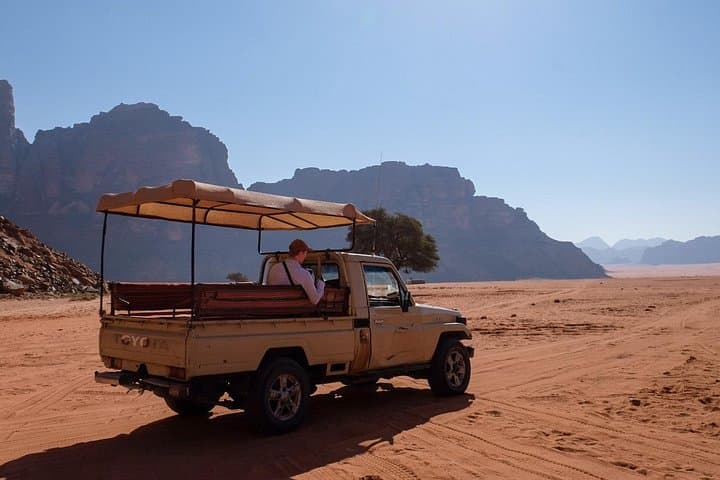
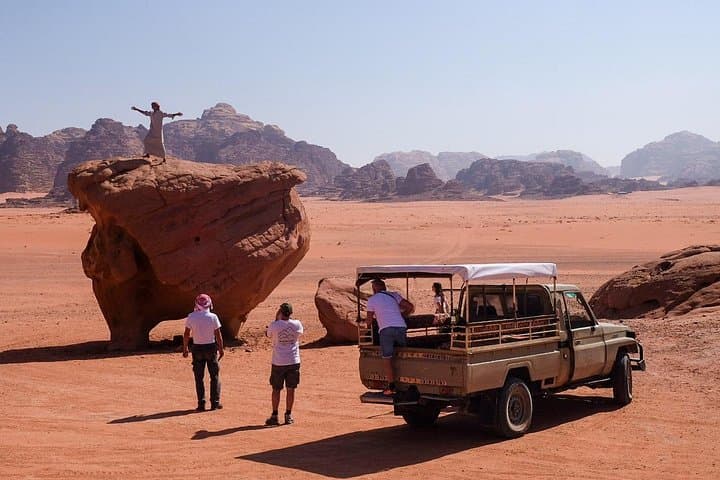
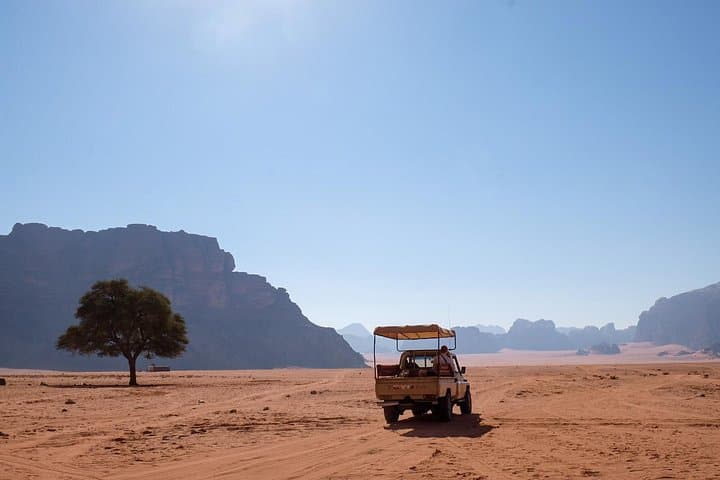
The sun is an anvil of gold over red sandstone when the convoy pulls away from Wadi Rum Village. Wind has already carved the day’s weather into the rock—sharp ridgelines, round domes, and seamed arches that throw long shadows across rippled sand. Your guide eases the Jeep along a faint track and the desert opens in pieces: a glinting pool at Lawrence’s Spring, petroglyph-studded walls at Khazali Canyon, a slot of shade where tea is poured and conversation slows.
The sun is an anvil of gold over red sandstone when the convoy pulls away from Wadi Rum Village. Wind has already carved the day’s weather into the rock—sharp ridgelines, round domes, and seamed arches that throw long shadows across rippled sand. Your guide eases the Jeep along a faint track and the desert opens in pieces: a glinting pool at Lawrence’s Spring, petroglyph-studded walls at Khazali Canyon, a slot of shade where tea is poured and conversation slows.
Wadi Rum’s landscape reads like a geological manuscript. Millennia of wind and flash floods have sculpted Cambrian sandstone and granite into mushroom rocks, natural bridges and narrow canyons. The Nabateans left inscriptions and carved ways through these walls; later, T.E. Lawrence made the area famous during the Arab Revolt, and traces of both histories are visible on rock faces and in local stories. Today Bedouin families continue to live with desert know-how—guides point out shepherding routes, seasonal wells, and ancient camel tracks.
The tour stitches together classic stops and small, active moments: a short scramble up Small Arch, a gentle walk inside Khazali to study petroglyphs, a 30–45 minute hike through Abu Khasaba Canyon that rewards you with narrow viewpoints and a chance to sandboard. Midday the guide lays out a traditional Bedouin lunch—flatbread, stews and strong tea—while conversation turns practical: where animals shelter, which springs hold water after rains, and which rock faces preserve the oldest inscriptions.
At dusk the group climbs to watch sunset at Um Sabatah, where tea and a telescope make the slow shift of light feel ceremonial. The night is quieter: tents at Desert Moon Camp offer privacy and shared facilities, but the real draw is the sky—uncrowded, bright, and perfect for stargazing.
Practical edge: you’ll meet at the Wadi Rum Village parking lot; the itinerary runs full-day before an overnight and returns the next morning. Fitness requirements are moderate—expect several short hikes, some scrambling and sand travel. Summer days can be extreme; spring and fall are the most comfortable seasons. Guides expect respectful behavior around inscriptions and Bedouin property: leave no trace, avoid climbing delicate panels, and ask before photographing people.
Bring layered clothing for cold nights, sun protection, at least 2–3 liters of water, sturdy shoes for sands and rock, and a headlamp for the camp. For photographers, golden hour and predawn are the most rewarding; bring a wide-angle lens for arches and a long lens for rock-clinging birds.
This is a trip that balances motion and stillness—the Jeep pushes you into the desert’s wide rooms, and the camp returns you to a human scale where stories, tea and the night sky stitch the day together.