THE ADVENTURE COLLECTIVE® · Independent discovery and booking for outdoor travel

Drive into the dark core of Wadi Rum, warm your hands over a small fire, and let Bedouin guides map desert navigation by star and story. This two‑hour Jeep tour pairs stargazing with cultural storytelling for an intimate night in Jordan’s red sands.
Drive into the dark core of Wadi Rum, warm your hands over a small fire, and let Bedouin guides map desert navigation by star and story. This two‑hour Jeep tour pairs stargazing with cultural storytelling for an intimate night in Jordan’s red sands.
The Jeep slows to a stop on a wind-swept plain. Around you, sandstone ribs and granite towers crouch like ancient audience members; night slips in and the sky opens, brutally clear and pinpricked. Your guide sets a low fire, pours steaming tea, and starts naming the constellations the Bedouin used to read the desert. The hush of the dunes makes room for stories that map survival, routes, and the small human rituals that have kept people moving across this landscape for centuries.
Verified experiences and guided adventures in the surrounding area.
Operated by Wadi Rum Cave Camping · Wadi Rum Village, Ma'an Governorate
The Jeep slows to a stop on a wind-swept plain. Around you, sandstone ribs and granite towers crouch like ancient audience members; night slips in and the sky opens, brutally clear and pinpricked. Your guide sets a low fire, pours steaming tea, and starts naming the constellations the Bedouin used to read the desert. The hush of the dunes makes room for stories that map survival, routes, and the small human rituals that have kept people moving across this landscape for centuries.
Wadi Rum is a geological archive—layers of Cambrian sandstone risen, cracked, and polished into arches and cliffs by wind and rare water. The valley’s rock faces keep ancient petroglyphs and Nabatean inscriptions, evidence of millennia of travelers and caravans. At night, the desert’s geometry simplifies into silhouettes and star charts; for Bedouin culture, constellations were not just ornament but navigation and calendar.
On this two-hour tour you’re not just watching the sky. A short Jeep ride lifts you away from any scattered lights to the protected area’s dark core, where even dim stars reassert themselves. Guides blend natural history with local folklore—how the moon signals grazing times, where foxes hunt, which rock carries the tale of a lost caravan—so the stargaze becomes a cultural lesson as much as an astronomical one.
Practical notes: pickups are arranged from camps across the Wadi Rum protected area and most vehicles are standard 4x4 tour jeeps. The tour is designed for minimal physical effort—guests gather around a campfire and walk only short distances to viewpoints. Still, desert nights can be chilly; bring a warm layer even after a hot day. Expect snacks, tea, and bottled water included; binoculars or a small telescope will sharpen the view but aren’t necessary.
Timing matters: the best nights are new-moon or late-night hours when the Milky Way becomes a bright river overhead. Weather can cancel tours—winds that whip sand or cloud cover erase the stars—so book with a flexible evening. Respect private camps and the protected area: stick to vehicle tracks, avoid touching inscriptions, and leave the night as you found it.
Whether you come for the science of the sky or the slow art of Bedouin storytelling, the short trip compacts a lot—landscape, culture, and the sudden, humbling clarity of a desert night. For travelers staying in Rum village or Aqaba, it’s an accessible, memorable way to spend an evening in one of Jordan’s most elemental places.
Guides drive to spots within the Wadi Rum protected area chosen for darkness and safety; drives typically last 10–30 minutes depending on pickup location.
Yes—most ages are welcome, but the tour is not recommended for infants or travelers with spinal or serious heart conditions as noted by the operator.
On a clear, moonless night you’ll often see the Milky Way as a distinct band; moon phase and light pollution determine visibility.
Basic binoculars are sometimes available but large telescopes are not standard; bring your own if you prefer.
Tours are canceled in high winds or heavy cloud cover; the operator offers full refunds if you cancel at least 24 hours in advance or if they cancel due to weather.
Yes—the tour offers custom pickup from camps inside the protected area and sometimes from hotels in nearby towns; provide your exact camp information when booking.
Wadi Rum Cave Camping operates guided outdoor trips and adventures with an emphasis on safety, stewardship, and memorable experiences.


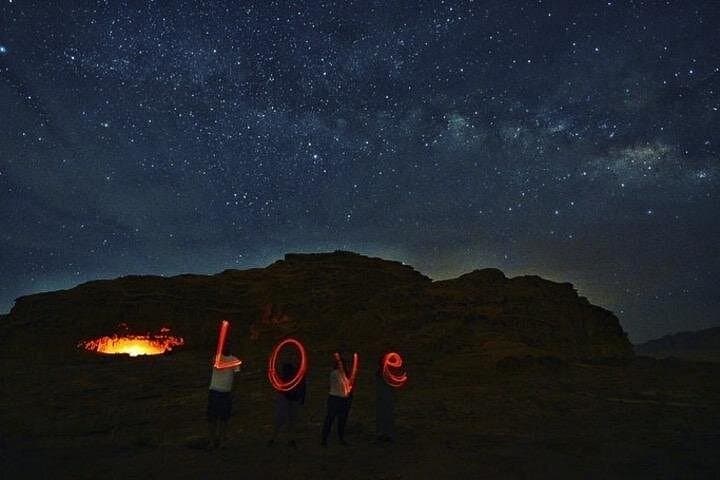

The Jeep slows to a stop on a wind-swept plain. Around you, sandstone ribs and granite towers crouch like ancient audience members; night slips in and the sky opens, brutally clear and pinpricked. Your guide sets a low fire, pours steaming tea, and starts naming the constellations the Bedouin used to read the desert. The hush of the dunes makes room for stories that map survival, routes, and the small human rituals that have kept people moving across this landscape for centuries.
The Jeep slows to a stop on a wind-swept plain. Around you, sandstone ribs and granite towers crouch like ancient audience members; night slips in and the sky opens, brutally clear and pinpricked. Your guide sets a low fire, pours steaming tea, and starts naming the constellations the Bedouin used to read the desert. The hush of the dunes makes room for stories that map survival, routes, and the small human rituals that have kept people moving across this landscape for centuries.
Wadi Rum is a geological archive—layers of Cambrian sandstone risen, cracked, and polished into arches and cliffs by wind and rare water. The valley’s rock faces keep ancient petroglyphs and Nabatean inscriptions, evidence of millennia of travelers and caravans. At night, the desert’s geometry simplifies into silhouettes and star charts; for Bedouin culture, constellations were not just ornament but navigation and calendar.
On this two-hour tour you’re not just watching the sky. A short Jeep ride lifts you away from any scattered lights to the protected area’s dark core, where even dim stars reassert themselves. Guides blend natural history with local folklore—how the moon signals grazing times, where foxes hunt, which rock carries the tale of a lost caravan—so the stargaze becomes a cultural lesson as much as an astronomical one.
Practical notes: pickups are arranged from camps across the Wadi Rum protected area and most vehicles are standard 4x4 tour jeeps. The tour is designed for minimal physical effort—guests gather around a campfire and walk only short distances to viewpoints. Still, desert nights can be chilly; bring a warm layer even after a hot day. Expect snacks, tea, and bottled water included; binoculars or a small telescope will sharpen the view but aren’t necessary.
Timing matters: the best nights are new-moon or late-night hours when the Milky Way becomes a bright river overhead. Weather can cancel tours—winds that whip sand or cloud cover erase the stars—so book with a flexible evening. Respect private camps and the protected area: stick to vehicle tracks, avoid touching inscriptions, and leave the night as you found it.
Whether you come for the science of the sky or the slow art of Bedouin storytelling, the short trip compacts a lot—landscape, culture, and the sudden, humbling clarity of a desert night. For travelers staying in Rum village or Aqaba, it’s an accessible, memorable way to spend an evening in one of Jordan’s most elemental places.