THE ADVENTURE COLLECTIVE® · Independent discovery and booking for outdoor travel

A full-day 4x4 loop from Amman or the Dead Sea that places you in Wadi Rum’s wind-sculpted sandstone world. Expect long drives, four-hour desert safaris, sunset viewpoints and the option of a Bedouin dinner and campfire before you return.
A full-day 4x4 loop from Amman or the Dead Sea that places you in Wadi Rum’s wind-sculpted sandstone world. Expect long drives, four-hour desert safaris, sunset viewpoints and the option of a Bedouin dinner and campfire before you return.
You pull off the highway and the world changes: paved road gives way to a corridor of ochre rock and wind-sculpted sandstone. By the time the driver drops the last town signal behind you, Wadi Rum has begun to assert itself — cliffs yawning into a flat sea of sand, a silence punctuated by the low rumble of a 4x4. On this one-day loop from Amman or the Dead Sea, the vehicle acts as both elevator and interpreter, ferrying you into a landscape that earned the nickname “Mars on Earth.”
Verified experiences and guided adventures in the surrounding area.
Operated by Jordan Drive Tribe · Wadi Rum Village, Ma'an Governorate
You pull off the highway and the world changes: paved road gives way to a corridor of ochre rock and wind-sculpted sandstone. By the time the driver drops the last town signal behind you, Wadi Rum has begun to assert itself — cliffs yawning into a flat sea of sand, a silence punctuated by the low rumble of a 4x4. On this one-day loop from Amman or the Dead Sea, the vehicle acts as both elevator and interpreter, ferrying you into a landscape that earned the nickname “Mars on Earth.”
Wadi Rum’s geology reads like a slow-motion action movie. Layers of sandstone and granite, uplifted and carved over millions of years, form narrow canyons, natural bridges and sheer domes. Nabatean inscriptions and rock-cut tombs faintly mark human presence here, while more recent tales — from Lawrence of Arabia to cinematic crews — have framed the valley in myth. Local Bedouin communities continue to live in or around the reserve; their camps and hospitality are part of the terrain as much as the rocks.
The tour’s heart is a roughly four-hour 4x4 safari that follows sandy tracks and stony washes to classic stops: Khazali Canyon for its petroglyphs, the sweeping view at the Seven Pillars of Wisdom, and the Burdah rock bridge if the route allows. Short walks branch off the vehicle route — a scramble up a dune, a five-minute hike into a slot canyon — but most of the terrain is experienced from the jeep: sudden climbs over soft sand, knees-deep tracks behind another tour, and the repeated reward of wide, empty horizons.
Practicalities matter here. The drive from Amman is long — plan on roughly 3.5–4 hours each way — so expect a full day (this experience runs about 9–14 hours). The operator provides private, air-conditioned transport, bottled water, and an English-speaking guide; pick-up can be arranged from Amman, Madaba, the Dead Sea, the airport or King Hussein Bridge. The tour times are designed to reach a good sunset viewpoint; if you opt for a Bedouin dinner and oud by the campfire, allow the evening’s cool to set in before you head back.
Packing is straightforward: sun protection, solid shoes for short hikes, and a wind layer for sunset. Weather swings are sharp — hot days and chilly nights — so time your visit for spring or fall for temperate conditions. Finally, treat the desert gently: keep to jeep tracks, carry out trash, and support local guides and camps when possible. Wadi Rum rewards those who come with curiosity and a little preparation — it looks simple at first glance, but it asks you to slow down and let the landscape speak.
Yes — pickup is available from Amman, Madaba, Dead Sea hotels, the airport, King Hussein Bridge and other arranged pickup points; confirm your exact location at booking.
The guided 4x4 desert safari is about four hours, with stops for short walks, viewpoints and photo breaks.
Bottled water is included; the standard day tour does not include a full lunch but you can opt for a traditional Bedouin dinner and campfire experience at the end of the day for an additional fee if offered.
The operator notes infant seats are available and the tour is generally suitable for families, but long drives and bumpy desert tracks can be challenging for very young children.
Some stops offer short, moderate hikes; access to Burdah Bridge requires a brief scramble and good footwear — guides will advise which hikes suit your group.
Dress modestly when visiting villages or camps, follow your guide’s directions, stay on vehicle tracks to protect crusted desert surfaces, and avoid removing rocks or artifacts.
Jordan Drive Tribe operates guided outdoor trips and adventures with an emphasis on safety, stewardship, and memorable experiences.
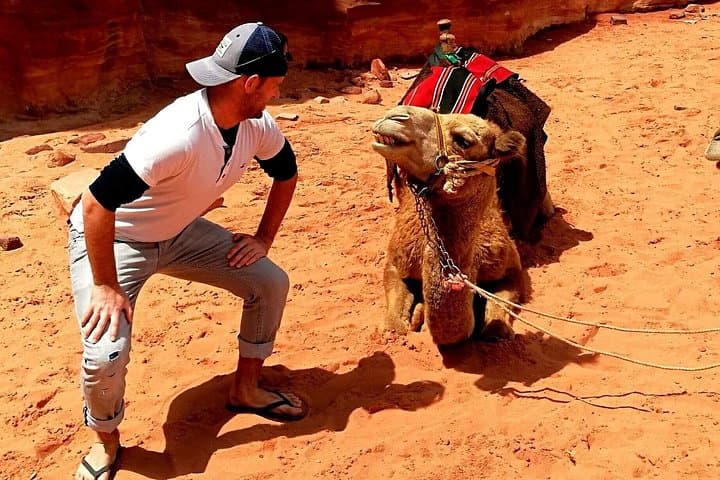
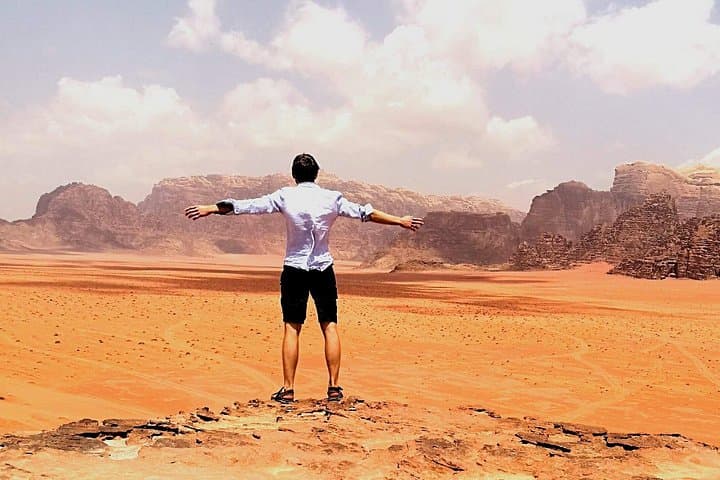
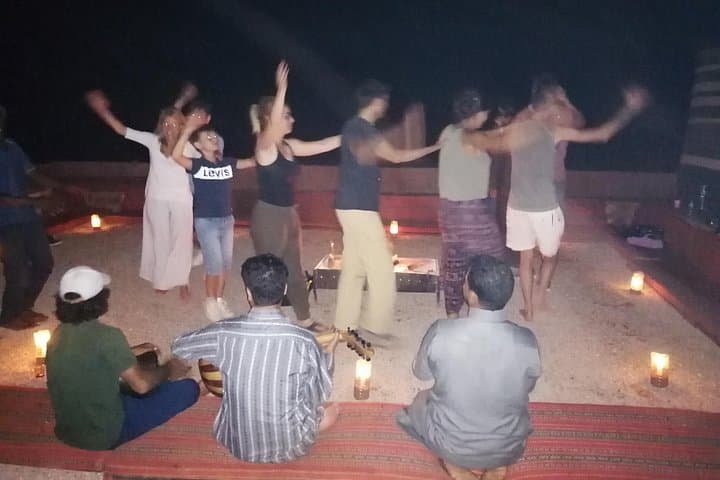
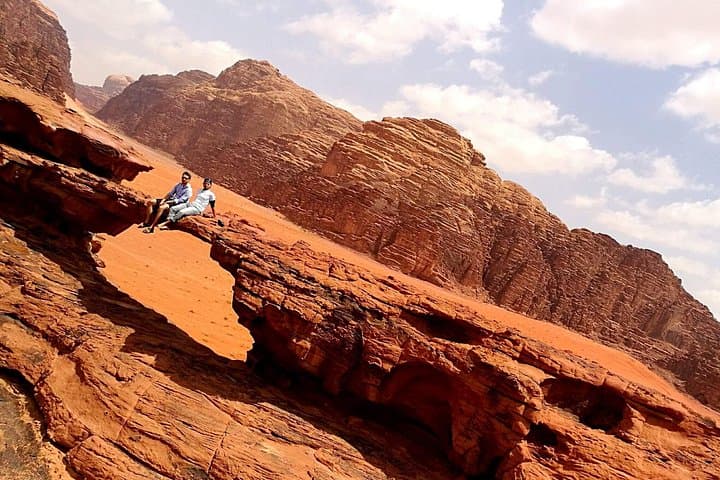
You pull off the highway and the world changes: paved road gives way to a corridor of ochre rock and wind-sculpted sandstone. By the time the driver drops the last town signal behind you, Wadi Rum has begun to assert itself — cliffs yawning into a flat sea of sand, a silence punctuated by the low rumble of a 4x4. On this one-day loop from Amman or the Dead Sea, the vehicle acts as both elevator and interpreter, ferrying you into a landscape that earned the nickname “Mars on Earth.”
You pull off the highway and the world changes: paved road gives way to a corridor of ochre rock and wind-sculpted sandstone. By the time the driver drops the last town signal behind you, Wadi Rum has begun to assert itself — cliffs yawning into a flat sea of sand, a silence punctuated by the low rumble of a 4x4. On this one-day loop from Amman or the Dead Sea, the vehicle acts as both elevator and interpreter, ferrying you into a landscape that earned the nickname “Mars on Earth.”
Wadi Rum’s geology reads like a slow-motion action movie. Layers of sandstone and granite, uplifted and carved over millions of years, form narrow canyons, natural bridges and sheer domes. Nabatean inscriptions and rock-cut tombs faintly mark human presence here, while more recent tales — from Lawrence of Arabia to cinematic crews — have framed the valley in myth. Local Bedouin communities continue to live in or around the reserve; their camps and hospitality are part of the terrain as much as the rocks.
The tour’s heart is a roughly four-hour 4x4 safari that follows sandy tracks and stony washes to classic stops: Khazali Canyon for its petroglyphs, the sweeping view at the Seven Pillars of Wisdom, and the Burdah rock bridge if the route allows. Short walks branch off the vehicle route — a scramble up a dune, a five-minute hike into a slot canyon — but most of the terrain is experienced from the jeep: sudden climbs over soft sand, knees-deep tracks behind another tour, and the repeated reward of wide, empty horizons.
Practicalities matter here. The drive from Amman is long — plan on roughly 3.5–4 hours each way — so expect a full day (this experience runs about 9–14 hours). The operator provides private, air-conditioned transport, bottled water, and an English-speaking guide; pick-up can be arranged from Amman, Madaba, the Dead Sea, the airport or King Hussein Bridge. The tour times are designed to reach a good sunset viewpoint; if you opt for a Bedouin dinner and oud by the campfire, allow the evening’s cool to set in before you head back.
Packing is straightforward: sun protection, solid shoes for short hikes, and a wind layer for sunset. Weather swings are sharp — hot days and chilly nights — so time your visit for spring or fall for temperate conditions. Finally, treat the desert gently: keep to jeep tracks, carry out trash, and support local guides and camps when possible. Wadi Rum rewards those who come with curiosity and a little preparation — it looks simple at first glance, but it asks you to slow down and let the landscape speak.