THE ADVENTURE COLLECTIVE® · Independent discovery and booking for outdoor travel

Drive across Wadi Rum’s red sands, hike into narrow canyons, then spend a night at a Bedouin camp under a cathedral of stars. This small-group 4WD tour pairs cinematic scenery with local food and stargazing—ideal for travelers seeking a compact desert immersion.
Drive across Wadi Rum’s red sands, hike into narrow canyons, then spend a night at a Bedouin camp under a cathedral of stars. This small-group 4WD tour pairs cinematic scenery with local food and stargazing—ideal for travelers seeking a compact desert immersion.
The jeep drops you into an open room of red—wind-sanded plains, steep sandstone ribs, and a sky so wide it seems to push back. Engines hush as the guide points toward a jagged arch silhouetted against late afternoon light. You climb out, sand whispering under boots, and the desert rearranges itself around you: dunes that shift like slow water, cliffs carved by centuries of wind, and the faint carved marks of people who passed this way long before vehicle tracks.
Verified experiences and guided adventures in the surrounding area.
Operated by Wadi Rum Fire Camp · Wadi Rum Village, Ma'an Governorate
The jeep drops you into an open room of red—wind-sanded plains, steep sandstone ribs, and a sky so wide it seems to push back. Engines hush as the guide points toward a jagged arch silhouetted against late afternoon light. You climb out, sand whispering under boots, and the desert rearranges itself around you: dunes that shift like slow water, cliffs carved by centuries of wind, and the faint carved marks of people who passed this way long before vehicle tracks.
Wadi Rum is framed by millennia of geology and human history. Granite and sandstone folded and fused here millions of years ago; today their faces hold Nabatean inscriptions and faint petroglyphs that predate the Bedouin tribes who made this place home. The modern map of Wadi Rum is also cinematic—Lawrence of Arabia’s name lingers in place names such as Lawrence’s Spring and Lawrence’s House, and Hollywood has used the valley’s moonlike vistas as a backdrop for distant worlds.
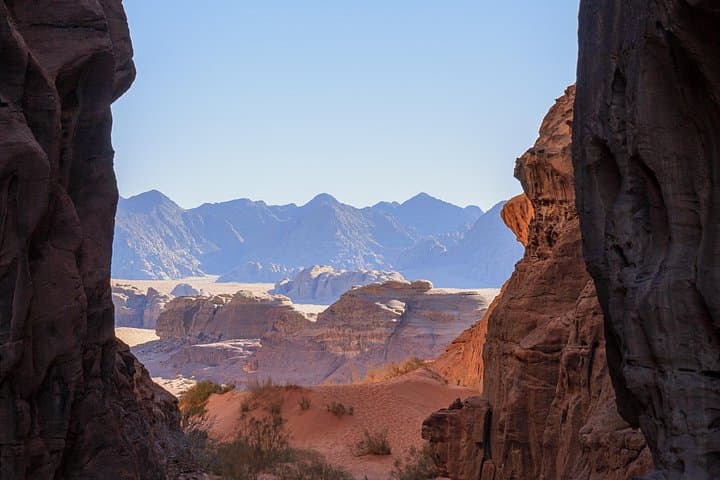
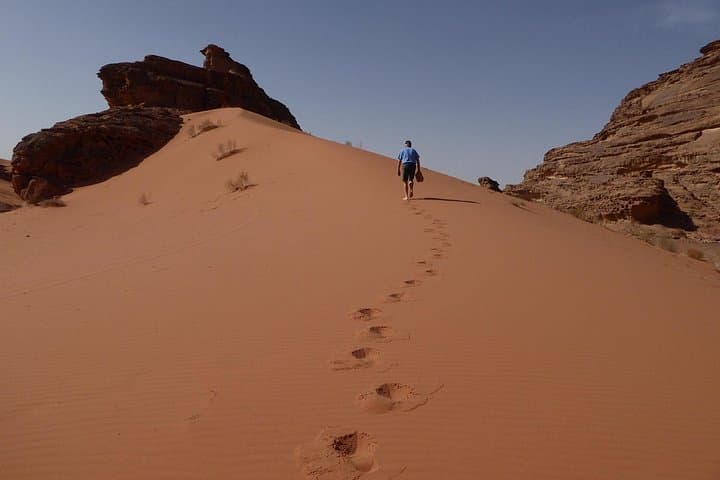
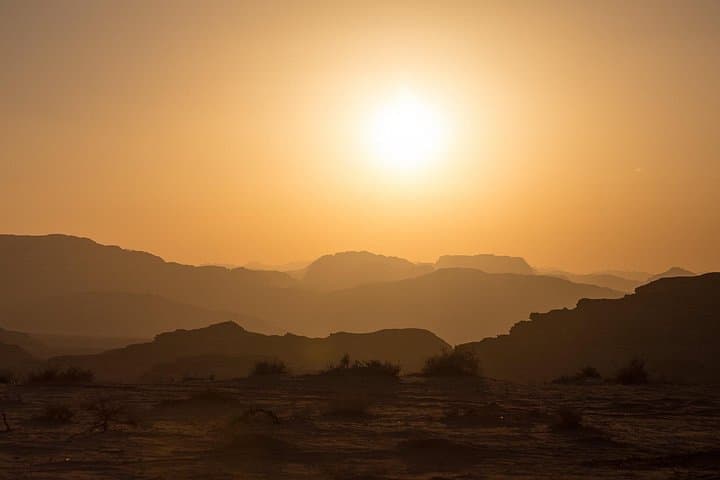
This tour pairs a fast, focused 4WD route with an overnight in a private Bedouin camp. In a small group—max eight—your driver-guide threads between highlights: Khazali Canyon’s engraved walls, the small natural arch that frames sunset, and a climbable red dune that delivers an immediate, panoramic payoff. Most stops include short hikes of 10–30 minutes over mixed sand and packed stone; expect low elevation change but uneven footing.
The evening is the point: a communal buffet of local dishes cooked under the sand, steaming tea, and a bonfire where stories travel with the smoke. The desert’s temperature drops quickly after dark—what felt like warmth at dusk becomes crisp under the stars, and the Milky Way reads like a road map above the camp.
Practical edge: arrive with a Jordan Pass or 5 JD to enter the protected area and meet at the Wadi Rum Visitor Centre or Rest House. The operator provides breakfast, dinner, bottled water, and one night’s private tented accommodation. Wear sturdy shoes for short hikes, bring layered clothing for cold nights, and pack sunscreen and a brimmed hat for daytime heat. If you want the photography payoff, aim for the golden hour at the dunes and plan to stay awake after dinner for clear, unpolluted night-sky shots.
This is a trip for travelers who want intensity without technical demand: minimal navigation skills, a readiness for off-road motion, and respect for fragile rock art. Leave no trace—stay on marked routes when asked, avoid climbing fragile inscriptions, and treat the Bedouin camp as a living community rather than a prop. Do that, and Wadi Rum gives back: vastness, quiet, and a night under a desert sky that keeps its own timetable.
You can use a Jordan Pass if you have one; if not, expect to pay a 5 JD entrance fee at the visitor center.
The route is off-road and can be bumpy—motion-sensitive travelers should prepare accordingly and sit where comfortable.
This tour includes one night in private tented accommodation at the Bedouin camp; confirm specifics when booking.
Vegetarian and vegan options are available if requested at booking; notify the operator in advance for other dietary needs.
Yes—guides commonly stop for photography at key viewpoints and may pause at other scenic spots on request.
The tour is family-friendly, but not recommended for travelers with serious cardiovascular issues or pregnant travelers; check with the operator for specifics.
Wadi Rum Fire Camp operates guided outdoor trips and adventures with an emphasis on safety, stewardship, and memorable experiences.
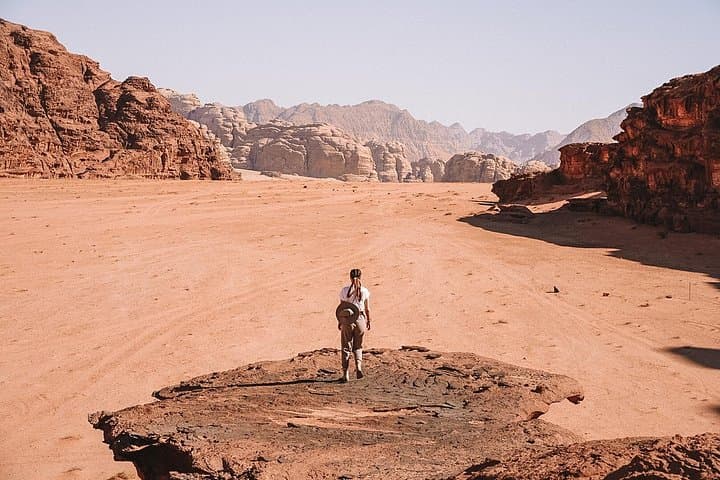
The jeep drops you into an open room of red—wind-sanded plains, steep sandstone ribs, and a sky so wide it seems to push back. Engines hush as the guide points toward a jagged arch silhouetted against late afternoon light. You climb out, sand whispering under boots, and the desert rearranges itself around you: dunes that shift like slow water, cliffs carved by centuries of wind, and the faint carved marks of people who passed this way long before vehicle tracks.
The jeep drops you into an open room of red—wind-sanded plains, steep sandstone ribs, and a sky so wide it seems to push back. Engines hush as the guide points toward a jagged arch silhouetted against late afternoon light. You climb out, sand whispering under boots, and the desert rearranges itself around you: dunes that shift like slow water, cliffs carved by centuries of wind, and the faint carved marks of people who passed this way long before vehicle tracks.
Wadi Rum is framed by millennia of geology and human history. Granite and sandstone folded and fused here millions of years ago; today their faces hold Nabatean inscriptions and faint petroglyphs that predate the Bedouin tribes who made this place home. The modern map of Wadi Rum is also cinematic—Lawrence of Arabia’s name lingers in place names such as Lawrence’s Spring and Lawrence’s House, and Hollywood has used the valley’s moonlike vistas as a backdrop for distant worlds.
This tour pairs a fast, focused 4WD route with an overnight in a private Bedouin camp. In a small group—max eight—your driver-guide threads between highlights: Khazali Canyon’s engraved walls, the small natural arch that frames sunset, and a climbable red dune that delivers an immediate, panoramic payoff. Most stops include short hikes of 10–30 minutes over mixed sand and packed stone; expect low elevation change but uneven footing.
The evening is the point: a communal buffet of local dishes cooked under the sand, steaming tea, and a bonfire where stories travel with the smoke. The desert’s temperature drops quickly after dark—what felt like warmth at dusk becomes crisp under the stars, and the Milky Way reads like a road map above the camp.
Practical edge: arrive with a Jordan Pass or 5 JD to enter the protected area and meet at the Wadi Rum Visitor Centre or Rest House. The operator provides breakfast, dinner, bottled water, and one night’s private tented accommodation. Wear sturdy shoes for short hikes, bring layered clothing for cold nights, and pack sunscreen and a brimmed hat for daytime heat. If you want the photography payoff, aim for the golden hour at the dunes and plan to stay awake after dinner for clear, unpolluted night-sky shots.
This is a trip for travelers who want intensity without technical demand: minimal navigation skills, a readiness for off-road motion, and respect for fragile rock art. Leave no trace—stay on marked routes when asked, avoid climbing fragile inscriptions, and treat the Bedouin camp as a living community rather than a prop. Do that, and Wadi Rum gives back: vastness, quiet, and a night under a desert sky that keeps its own timetable.