THE ADVENTURE COLLECTIVE® · Independent discovery and booking for outdoor travel

Spend two days hiking between dunes, canyons and natural arches in Wadi Rum, topping out on Jabal Al Hash for sweeping desert views. Small-group jeeps, Bedouin camp nights, and guided walks bring geology, Nabataean inscriptions and sunset tea within reach.
Spend two days hiking between dunes, canyons and natural arches in Wadi Rum, topping out on Jabal Al Hash for sweeping desert views. Small-group jeeps, Bedouin camp nights, and guided walks bring geology, Nabataean inscriptions and sunset tea within reach.
The sun has already pulled the color out of the dunes by the time the group piles into a waiting jeep. A thin veil of heat shivers above the red sand as the driver eases along a track between ribs of sandstone—giant, wind-carved ribs that seem to breathe. Your first steps are on battered rock and warm sand, the air smelling faintly of tea smoke from last night’s campfire. Guides point out iron-streaked faces and curving arches; each formation looks practiced, like a landscape that learned how to pose for light.
Verified experiences and guided adventures in the surrounding area.
Operated by Wadi Rum Backpacker Camp · Wadi Rum Village, Ma'an
The sun has already pulled the color out of the dunes by the time the group piles into a waiting jeep. A thin veil of heat shivers above the red sand as the driver eases along a track between ribs of sandstone—giant, wind-carved ribs that seem to breathe. Your first steps are on battered rock and warm sand, the air smelling faintly of tea smoke from last night’s campfire. Guides point out iron-streaked faces and curving arches; each formation looks practiced, like a landscape that learned how to pose for light.
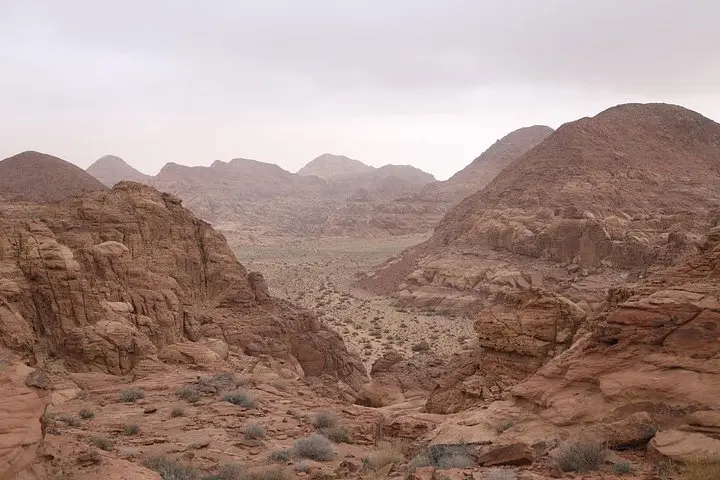
History presses close in Wadi Rum. Nabataean inscriptions in Khazali Canyon and the rubble of Lawrence’s House are touchpoints—small, readable marks in a desert that has hosted traders, shepherds and soldiers for millennia. Geologically, the area is a lesson in erosion: sandstone, some yellow-red granite lenses, and compacted silts have been scoured into bridges and mushroom rocks over a billion years. Jabal Al Hash rises last: an approachable mountain that rewards a five- to six-hour ascent with a panorama of folded color and distant Saudi ridgelines at roughly 1,700 meters above sea level.
Culturally, the trip moves at a human pace. Evenings at a quiet village camp are low-light rituals: shared meals, metal cups of strong Bedouin tea, and the slow swapping of stories beneath a starlit sweep. Your guide acts as storyteller and map—translating rock inscriptions, finding spring-fed hollows like Elqetter, and timing the route so you’re in place for Um Sabatah’s sunset.
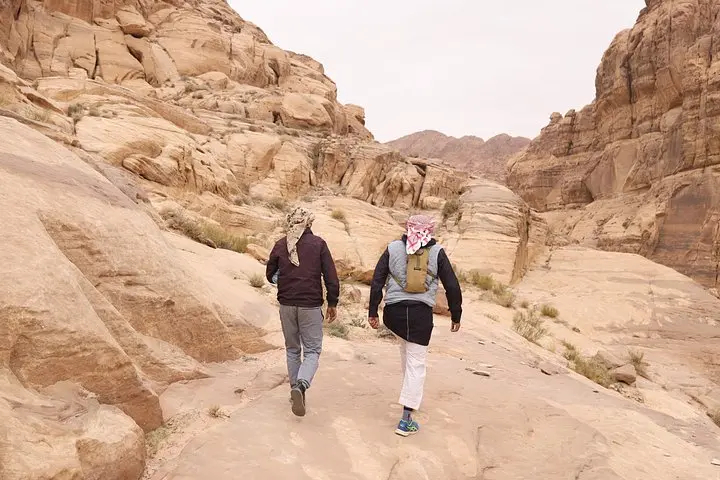
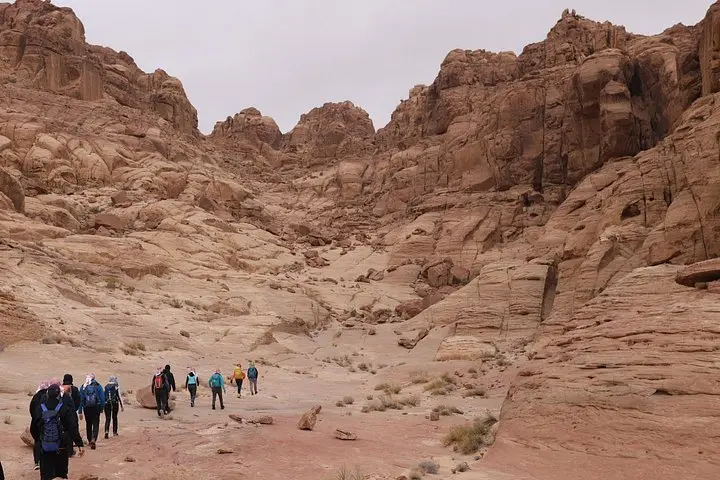
Practically, this is a mix of easy walking and sustained hiking. Days are spent crossing dune fields, slot canyons and rocky slopes; there’s no technical climbing, but expect rocky ground, loose scree and short, non-technical scrambles. The Jabal Al Hash approach from Um Snenah Valley is steady; plan on 5–6 hours of hiking with exposed sections and an overall moderate effort. The tour is small—max seven people—with two nights’ accommodation in a traditional tent camp and all meals provided.
Plan: start early to avoid midday heat, carry 2–3 liters of water and sun protection, and bring layered clothing for sharp temperature swings after sunset. There’s a 5 JD Wadi Rum entry fee (Jordan Pass waives it), and cell coverage is patchy—download maps and carry cash for incidental needs. For photographers, aim for golden hour at Khazali Canyon and the Burdah Rock Bridge; for quieter moments, walk the red dunes at dawn to watch sand shift like slow water.
This tour is accessible to families and active travelers who can manage several hours of hiking across uneven terrain. It’s not a climb—it's a full-sensory desert traverse where geology, history and Bedouin hospitality meet on the trail.
No technical climbing is required; the route includes rocky paths and short scrambles but is achievable for hikers with good footwear and basic experience.
Wadi Rum entry typically costs 5 JD per person; a Jordan Pass includes this fee—bring cash if you don’t have the pass.
Shade is limited; guides carry water and the camp provides mineral water, but you should bring your own 2–3 liters for daytime hiking.
The operator lists the tour as easy walking suitable for a wide range of ages, but participants should be comfortable with several hours of walking on uneven ground.
Pack warm layers for the night, personal toiletries, a headlamp, and any medication; bedding is typically provided by the camp.
Coverage is sporadic—download offline maps and let someone know your plans; guides are experienced and familiar with the route.
Wadi Rum Backpacker Camp operates guided outdoor trips and adventures with an emphasis on safety, stewardship, and memorable experiences.
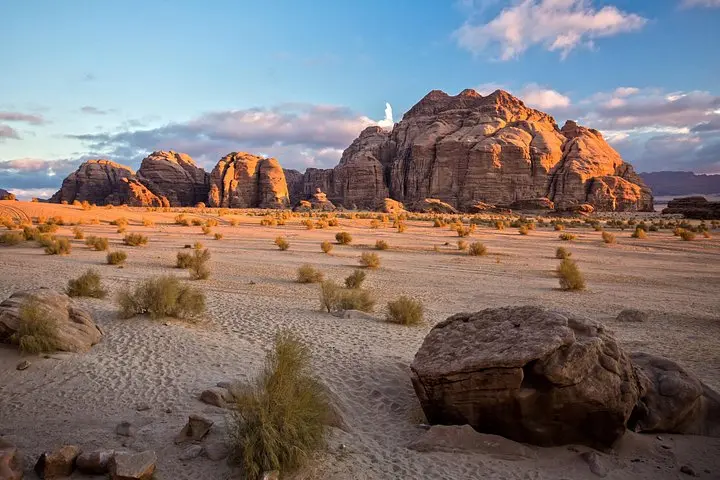
The sun has already pulled the color out of the dunes by the time the group piles into a waiting jeep. A thin veil of heat shivers above the red sand as the driver eases along a track between ribs of sandstone—giant, wind-carved ribs that seem to breathe. Your first steps are on battered rock and warm sand, the air smelling faintly of tea smoke from last night’s campfire. Guides point out iron-streaked faces and curving arches; each formation looks practiced, like a landscape that learned how to pose for light.
The sun has already pulled the color out of the dunes by the time the group piles into a waiting jeep. A thin veil of heat shivers above the red sand as the driver eases along a track between ribs of sandstone—giant, wind-carved ribs that seem to breathe. Your first steps are on battered rock and warm sand, the air smelling faintly of tea smoke from last night’s campfire. Guides point out iron-streaked faces and curving arches; each formation looks practiced, like a landscape that learned how to pose for light.
History presses close in Wadi Rum. Nabataean inscriptions in Khazali Canyon and the rubble of Lawrence’s House are touchpoints—small, readable marks in a desert that has hosted traders, shepherds and soldiers for millennia. Geologically, the area is a lesson in erosion: sandstone, some yellow-red granite lenses, and compacted silts have been scoured into bridges and mushroom rocks over a billion years. Jabal Al Hash rises last: an approachable mountain that rewards a five- to six-hour ascent with a panorama of folded color and distant Saudi ridgelines at roughly 1,700 meters above sea level.
Culturally, the trip moves at a human pace. Evenings at a quiet village camp are low-light rituals: shared meals, metal cups of strong Bedouin tea, and the slow swapping of stories beneath a starlit sweep. Your guide acts as storyteller and map—translating rock inscriptions, finding spring-fed hollows like Elqetter, and timing the route so you’re in place for Um Sabatah’s sunset.
Practically, this is a mix of easy walking and sustained hiking. Days are spent crossing dune fields, slot canyons and rocky slopes; there’s no technical climbing, but expect rocky ground, loose scree and short, non-technical scrambles. The Jabal Al Hash approach from Um Snenah Valley is steady; plan on 5–6 hours of hiking with exposed sections and an overall moderate effort. The tour is small—max seven people—with two nights’ accommodation in a traditional tent camp and all meals provided.
Plan: start early to avoid midday heat, carry 2–3 liters of water and sun protection, and bring layered clothing for sharp temperature swings after sunset. There’s a 5 JD Wadi Rum entry fee (Jordan Pass waives it), and cell coverage is patchy—download maps and carry cash for incidental needs. For photographers, aim for golden hour at Khazali Canyon and the Burdah Rock Bridge; for quieter moments, walk the red dunes at dawn to watch sand shift like slow water.
This tour is accessible to families and active travelers who can manage several hours of hiking across uneven terrain. It’s not a climb—it's a full-sensory desert traverse where geology, history and Bedouin hospitality meet on the trail.