THE ADVENTURE COLLECTIVE® · Independent discovery and booking for outdoor travel

Trade the highway for canyon water and limestone ledges on a full-day journey from Muscat to Wadi Shab and Bimmah Sinkhole. Swim to a hidden grotto, learn the stories behind Oman's aflaj canals, and catch the turquoise pop of midday pools.
Trade the highway for canyon water and limestone ledges on a full-day journey from Muscat to Wadi Shab and Bimmah Sinkhole. Swim to a hidden grotto, learn the stories behind Oman's aflaj canals, and catch the turquoise pop of midday pools.
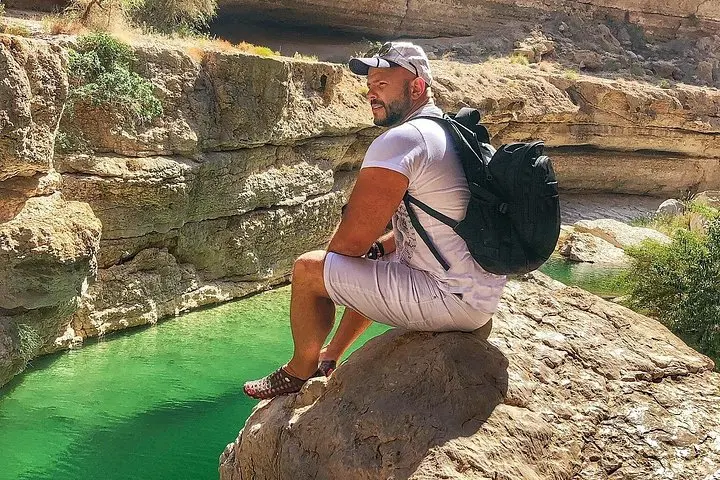
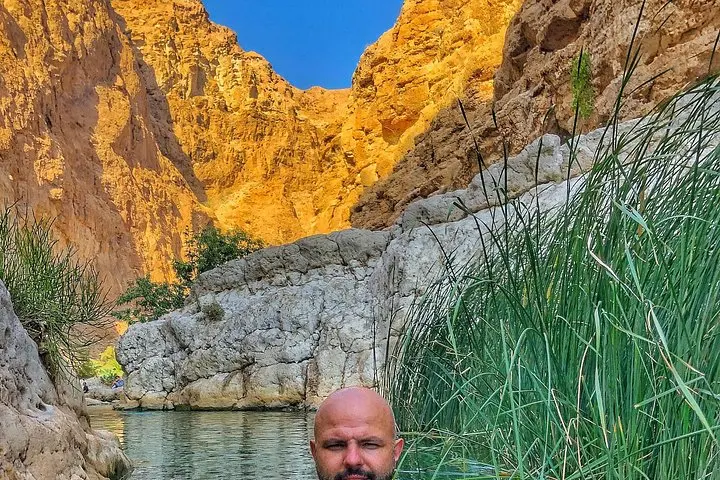
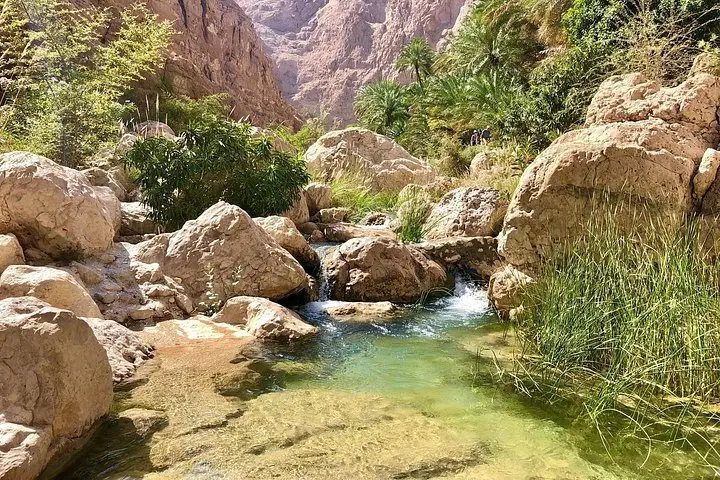
Dawn warms the Gulf of Oman as the coastal highway slips past whitewashed villages and date palms, the sea breathing on one side while the Hajar Mountains shoulder the horizon on the other. By the time the vehicle turns inland at Tiwi, the landscape tightens into canyon country. Wadi Shab announces itself with the hush of moving water and the gleam of travertine pools—a narrow oasis daring you to trade asphalt for rock and river.
Verified experiences and guided adventures in the surrounding area.
Operated by DMC OldOman · Tiwi, Ash Sharqiyah South
Dawn warms the Gulf of Oman as the coastal highway slips past whitewashed villages and date palms, the sea breathing on one side while the Hajar Mountains shoulder the horizon on the other. By the time the vehicle turns inland at Tiwi, the landscape tightens into canyon country. Wadi Shab announces itself with the hush of moving water and the gleam of travertine pools—a narrow oasis daring you to trade asphalt for rock and river.
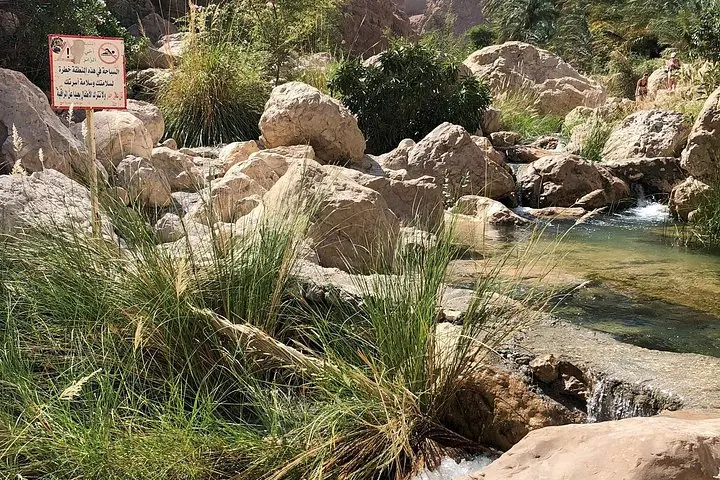
A short boat shuttle ferries visitors across the first channel, and the hike begins. The path is a mix of gravel, polished limestone, and terrace edges used for centuries to guide falaj irrigation. It takes about 40–50 minutes one way, with light scrambling and an elevation gain around 150 meters. The canyon squeezes and widens in rhythm; pools gather like thought. Those content to wade and float can linger at the lower basins under palms. Strong swimmers, guided and properly equipped, can press farther—through a corridor of water into the famed grotto, where a hidden waterfall pushes forward in a cool, echoing room.
This landscape is young by geologic standards—rain-charged floods carve the Eastern Hajar’s limestone every season, laying down smooth shelves and emerald bowls. Down the road, Bimmah Sinkhole tells a different story: a limestone collapse linked to subterranean channels that mix half fresh and half seawater. Locals once said a star fell here; geologists point to karst mechanics. Either way, the “Devil’s Eye” winks up at the sky, its tiered rim making easy access for a swim.
Culture rides shotgun on this route. Sur’s dhow yards once launched wooden trading ships to India and East Africa, and the aflaj canals—traditional water systems recognized by UNESCO—still lace nearby villages. Dress modestly around farms and families, and tread gently along canal edges; these are working lifelines, not museum pieces.
Practicalities sharpen the day. Expect 4–6 km of hiking round-trip at Wadi Shab, plus swimming if you continue to the grotto. Heat is a constant; start early, wear sun protection, and carry 2–3 liters of water per person. Rock ledges can be slick, so water shoes with good grip matter. Your licensed guide manages timing, safety, and the logistics—boat crossing, route finding, and lunch at a local restaurant where traditional Omani dishes reset energy for the afternoon stop at Bimmah.
Timing is best October through April when temperatures are kinder and the water’s color holds its punch under a high sun. Midday brings the brightest turquoise for photos; golden hour softens the canyon and lets the desert breathe. The sea keeps time outside, the wadis write it in stone, and the day circles back to Muscat with wet gear, tired legs, and a clear map of how water shapes a country.
Plan on 4–6 km round-trip with about 150 m of cumulative gain. The path includes uneven rock, brief scrambles, and wading; most active travelers find it moderate.
No. You can relax at the lower pools without swimming. Reaching the grotto and waterfall requires confident swimming through multiple pools with brief narrow sections.
Yes—lunch at a local restaurant serving traditional Omani dishes is included.
Quick-dry layers over modest swimwear, plus grippy water shoes. Bring a small towel and a change of clothes for the ride back.
Basic facilities are typically available at the Wadi Shab parking area and at Bimmah Sinkhole Park; none are along the canyon itself.
October–April offers cooler hiking and swimmable water. Start early year-round and avoid wadis during or immediately after heavy rain due to flash-flood risk.
DMC OldOman operates guided outdoor trips and adventures with an emphasis on safety, stewardship, and memorable experiences.
Dawn warms the Gulf of Oman as the coastal highway slips past whitewashed villages and date palms, the sea breathing on one side while the Hajar Mountains shoulder the horizon on the other. By the time the vehicle turns inland at Tiwi, the landscape tightens into canyon country. Wadi Shab announces itself with the hush of moving water and the gleam of travertine pools—a narrow oasis daring you to trade asphalt for rock and river.
Dawn warms the Gulf of Oman as the coastal highway slips past whitewashed villages and date palms, the sea breathing on one side while the Hajar Mountains shoulder the horizon on the other. By the time the vehicle turns inland at Tiwi, the landscape tightens into canyon country. Wadi Shab announces itself with the hush of moving water and the gleam of travertine pools—a narrow oasis daring you to trade asphalt for rock and river.
A short boat shuttle ferries visitors across the first channel, and the hike begins. The path is a mix of gravel, polished limestone, and terrace edges used for centuries to guide falaj irrigation. It takes about 40–50 minutes one way, with light scrambling and an elevation gain around 150 meters. The canyon squeezes and widens in rhythm; pools gather like thought. Those content to wade and float can linger at the lower basins under palms. Strong swimmers, guided and properly equipped, can press farther—through a corridor of water into the famed grotto, where a hidden waterfall pushes forward in a cool, echoing room.
This landscape is young by geologic standards—rain-charged floods carve the Eastern Hajar’s limestone every season, laying down smooth shelves and emerald bowls. Down the road, Bimmah Sinkhole tells a different story: a limestone collapse linked to subterranean channels that mix half fresh and half seawater. Locals once said a star fell here; geologists point to karst mechanics. Either way, the “Devil’s Eye” winks up at the sky, its tiered rim making easy access for a swim.
Culture rides shotgun on this route. Sur’s dhow yards once launched wooden trading ships to India and East Africa, and the aflaj canals—traditional water systems recognized by UNESCO—still lace nearby villages. Dress modestly around farms and families, and tread gently along canal edges; these are working lifelines, not museum pieces.
Practicalities sharpen the day. Expect 4–6 km of hiking round-trip at Wadi Shab, plus swimming if you continue to the grotto. Heat is a constant; start early, wear sun protection, and carry 2–3 liters of water per person. Rock ledges can be slick, so water shoes with good grip matter. Your licensed guide manages timing, safety, and the logistics—boat crossing, route finding, and lunch at a local restaurant where traditional Omani dishes reset energy for the afternoon stop at Bimmah.
Timing is best October through April when temperatures are kinder and the water’s color holds its punch under a high sun. Midday brings the brightest turquoise for photos; golden hour softens the canyon and lets the desert breathe. The sea keeps time outside, the wadis write it in stone, and the day circles back to Muscat with wet gear, tired legs, and a clear map of how water shapes a country.