THE ADVENTURE COLLECTIVE® · Independent discovery and booking for outdoor travel

A full-day trip from Muscat that pairs the rock-hopped gorge of Wadi Shab—complete with pools and a cave waterfall—with the striking turquoise Bimmah Sinkhole. Expect walking, river crossings, short boat rides, and swimming in clear water.
A full-day trip from Muscat that pairs the rock-hopped gorge of Wadi Shab—complete with pools and a cave waterfall—with the striking turquoise Bimmah Sinkhole. Expect walking, river crossings, short boat rides, and swimming in clear water.
Sunlight cracks against the limestone cliffs as the van leaves Muscat and the road narrows toward the coast; within an hour the city’s heat loosens and the horizon becomes stone and sea. At Wadi Shab the trail drops into a rocky corridor where a river dares you forward—rock-hopping, short swims and a brief boat crossing lead to turquoise pools and a cave with a waterfall at the back. Later the day opens onto Bimmah Sinkhole, a dramatic 50‑meter wide bowl of blue sheltered by rocky ledges where swimmers slide into cool water.
Verified experiences and guided adventures in the surrounding area.
Operated by WEB Tours · Muscat, Muscat Governorate
Sunlight cracks against the limestone cliffs as the van leaves Muscat and the road narrows toward the coast; within an hour the city’s heat loosens and the horizon becomes stone and sea. At Wadi Shab the trail drops into a rocky corridor where a river dares you forward—rock-hopping, short swims and a brief boat crossing lead to turquoise pools and a cave with a waterfall at the back. Later the day opens onto Bimmah Sinkhole, a dramatic 50‑meter wide bowl of blue sheltered by rocky ledges where swimmers slide into cool water.
Geology here is blunt and recent: uplifted carbonate rock carved by flash floods forms narrow canyons and sinkholes. Bimmah’s hollow likely reflects karst dissolution and collapse rather than a meteor strike, yet local legend still calls it “The Falling Star.” The area’s culture is coastal Oman—fishermen’s villages, date palms, and talkative guides with practical local knowledge about tides and safe swimming spots.
Practical guidance: expect 3–5 km of walking with river crossings and roughly 150–250 m cumulative elevation change on uneven, rocky terrain. Plan an early start (pickup around 8:00), bring a daypack with extra water, reef-safe sunscreen, sturdy water shoes and a quick-dry change. Swimming is part of the experience—basic swimming ability required. Respect signage and local customs: modest swimwear on shore, more privacy in the water. The tour runs about 8 hours door-to-door, returns by late afternoon, and is best visited outside the height of summer when temperatures top 40°C. Pack snacks, protect electronics in dry bags, and let the water pull you through the canyon—it's direct, tactile, and unglamorous in the best way.
The route involves rock-hopping and short swims across pools; overall distance is moderate (several kilometers) with uneven terrain—suitable for most fit travelers.
You can see much from the canyon edges, but reaching the inner waterfall requires basic swimming or willingness to wade and use the short boat transfer.
Facilities are minimal—expect basic restrooms at entry points and little shade on the trail; bring water and sun protection.
Older, supervised children who can manage rocky trails and swim are fine; infants and very young children are not recommended due to terrain and water risks.
WEB Tours operates guided outdoor trips and adventures with an emphasis on safety, stewardship, and memorable experiences.
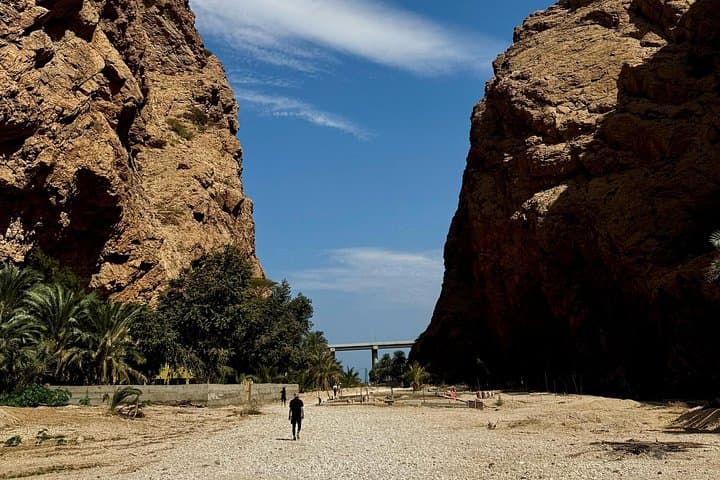
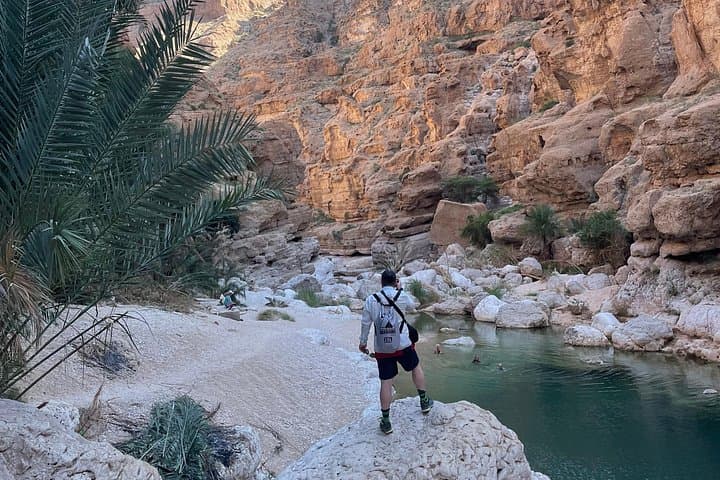
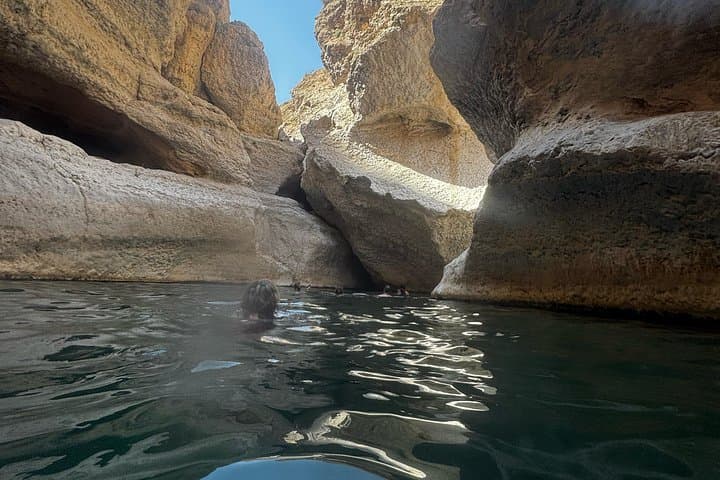
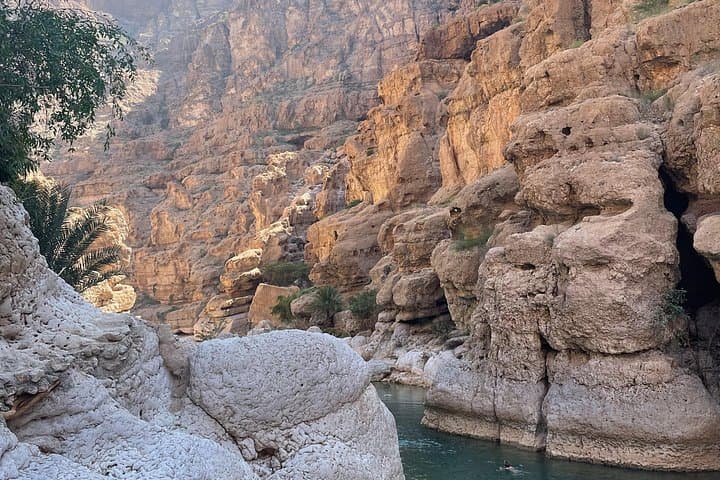
Sunlight cracks against the limestone cliffs as the van leaves Muscat and the road narrows toward the coast; within an hour the city’s heat loosens and the horizon becomes stone and sea. At Wadi Shab the trail drops into a rocky corridor where a river dares you forward—rock-hopping, short swims and a brief boat crossing lead to turquoise pools and a cave with a waterfall at the back. Later the day opens onto Bimmah Sinkhole, a dramatic 50‑meter wide bowl of blue sheltered by rocky ledges where swimmers slide into cool water.
Sunlight cracks against the limestone cliffs as the van leaves Muscat and the road narrows toward the coast; within an hour the city’s heat loosens and the horizon becomes stone and sea. At Wadi Shab the trail drops into a rocky corridor where a river dares you forward—rock-hopping, short swims and a brief boat crossing lead to turquoise pools and a cave with a waterfall at the back. Later the day opens onto Bimmah Sinkhole, a dramatic 50‑meter wide bowl of blue sheltered by rocky ledges where swimmers slide into cool water.
Geology here is blunt and recent: uplifted carbonate rock carved by flash floods forms narrow canyons and sinkholes. Bimmah’s hollow likely reflects karst dissolution and collapse rather than a meteor strike, yet local legend still calls it “The Falling Star.” The area’s culture is coastal Oman—fishermen’s villages, date palms, and talkative guides with practical local knowledge about tides and safe swimming spots.
Practical guidance: expect 3–5 km of walking with river crossings and roughly 150–250 m cumulative elevation change on uneven, rocky terrain. Plan an early start (pickup around 8:00), bring a daypack with extra water, reef-safe sunscreen, sturdy water shoes and a quick-dry change. Swimming is part of the experience—basic swimming ability required. Respect signage and local customs: modest swimwear on shore, more privacy in the water. The tour runs about 8 hours door-to-door, returns by late afternoon, and is best visited outside the height of summer when temperatures top 40°C. Pack snacks, protect electronics in dry bags, and let the water pull you through the canyon—it's direct, tactile, and unglamorous in the best way.