THE ADVENTURE COLLECTIVE® · Independent discovery and booking for outdoor travel

Follow Oman’s coastal road to Wadi Shab for a half-hike, half-swim adventure that ends at a secretive cave waterfall. With palm groves, emerald pools, and classic limestone scenery, this day trip from Muscat balances movement with moments worth lingering on.
Follow Oman’s coastal road to Wadi Shab for a half-hike, half-swim adventure that ends at a secretive cave waterfall. With palm groves, emerald pools, and classic limestone scenery, this day trip from Muscat balances movement with moments worth lingering on.
Dawn loosens its grip over the Gulf of Oman as the coastal highway unwinds south from Muscat. Cliffs lean toward the sea and fishing skiffs nose the swells, urging you onward to a cut in the limestone called Wadi Shab. A quick photo stop at Bimmah Sinkhole teases the geology to come—honeycombed rock, aquamarine water—before the real adventure begins near the village of Tiwi.
Verified experiences and guided adventures in the surrounding area.
Operated by Oman Day Tours · Tiwi, Ash Sharqiyah South
Dawn loosens its grip over the Gulf of Oman as the coastal highway unwinds south from Muscat. Cliffs lean toward the sea and fishing skiffs nose the swells, urging you onward to a cut in the limestone called Wadi Shab. A quick photo stop at Bimmah Sinkhole teases the geology to come—honeycombed rock, aquamarine water—before the real adventure begins near the village of Tiwi.
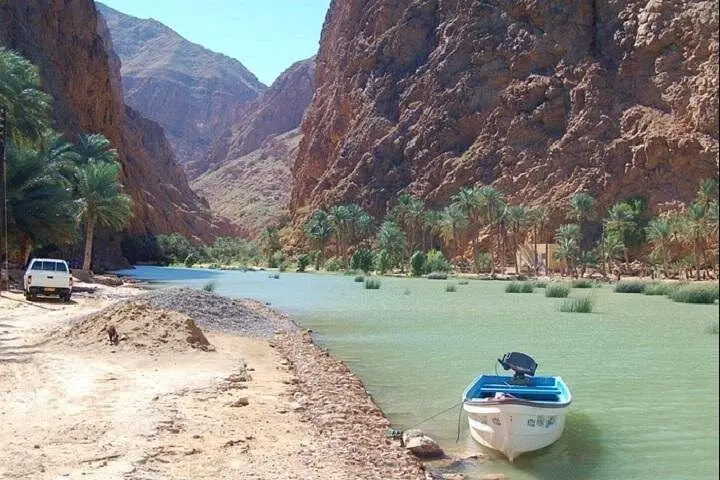
At the trailhead, a small boat ferries you across the first pool, the oars chattering against the gunwale as the wadi wakes. From here, the path threads between date palms and terraces irrigated by ancient aflaj channels, Oman's UNESCO-listed waterworks still whispering underfoot. Expect about 3 km one-way of rocky walking with light gain, broken by short scrambles and the occasional hop across boulders polished by flash floods. The canyon narrows, walls sharpening into warm, banded limestone. Gravity waits in the quiet, and the pools dare you closer.
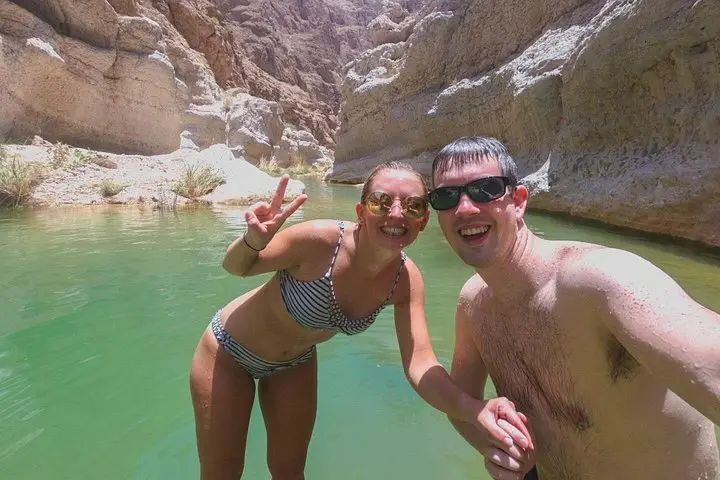
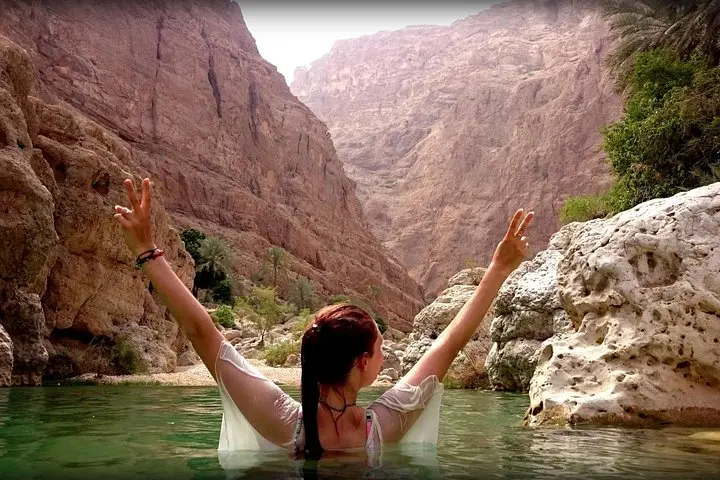
The payoff is kinetic: slip into clear, cool water and swim through a chain of emerald basins. The current nudges; the canyon funnels light; every stroke pulls you deeper until the slot pinches to a keyhole. Beyond it, a cave breathes with a hidden waterfall, its spray lifting and falling like a pulse. On calm days, the water glows electric, and sound ricochets off the rock. This is the moment Wadi Shab is known for—not dramatic so much as quietly intense, an invitation to move with the place rather than over it.
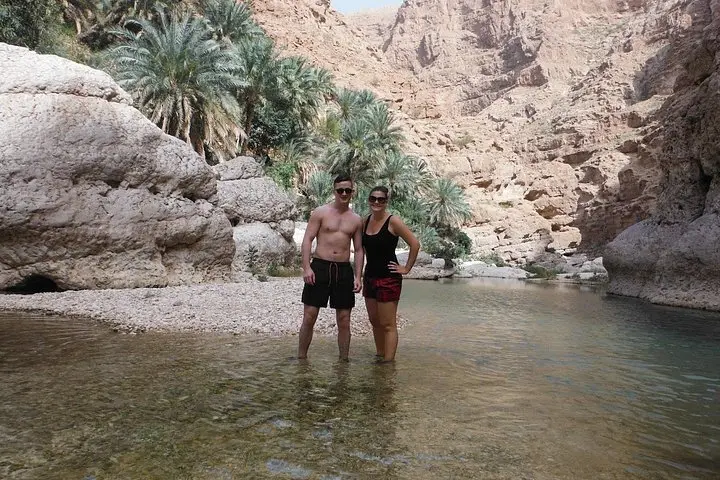
Wadi Shab sits in Oman’s coastal limestone, carved by seasonal rain that charges subterranean aquifers and occasionally roars through as floods. The palms and small gardens you pass are part of a centuries-old pact with water: aflaj channels distributing flow to date, banana, and papaya groves that shade the canyon floor. Out toward the coast, Fins Beach—its pebbles bleached white—offers a wind-cooled reset before the ride back to Muscat.
Practicalities keep the day smooth. The hike is moderate, but heat amplifies everything, especially from late spring through early fall. Closed-toe shoes help on marbles of loose rock; thin water shoes shine in the pools. Start early to beat crowds and sun, carry 2–3 liters of water per person, and pack modest swimwear—quick-dry shorts and a shirt work well in a conservative country. Check weather before you go; if rain is forecast anywhere in the watershed, the wadi’s calm veneer can turn fast. Respect the canyon, and it rewards you with one of Oman’s cleanest blends of movement and water—part hike, part swim, all momentum.
Plan on roughly 6 km round-trip with light elevation gain and short scrambles, plus a 200–300 m swim to reach the cave waterfall.
Yes. Non-swimmers can enjoy the lower pools, but reaching the cave requires a sustained swim through several basins and a narrow keyhole.
Basic toilets are usually available at the parking area, but there are no facilities once you start hiking—carry water and snacks.
Choose modest, quick-dry clothing such as swim shorts and a T-shirt or rash guard. This respects local customs and protects from sun.
The short boat shuttle is typically paid on the spot in cash (about 1 OMR per person). Some tours cover it, but bring small notes just in case.
October to April offers the most comfortable temperatures. Start early year-round to avoid heat and crowds, and skip stormy days due to flood risk.
Oman Day Tours operates guided outdoor trips and adventures with an emphasis on safety, stewardship, and memorable experiences.
Dawn loosens its grip over the Gulf of Oman as the coastal highway unwinds south from Muscat. Cliffs lean toward the sea and fishing skiffs nose the swells, urging you onward to a cut in the limestone called Wadi Shab. A quick photo stop at Bimmah Sinkhole teases the geology to come—honeycombed rock, aquamarine water—before the real adventure begins near the village of Tiwi.
Dawn loosens its grip over the Gulf of Oman as the coastal highway unwinds south from Muscat. Cliffs lean toward the sea and fishing skiffs nose the swells, urging you onward to a cut in the limestone called Wadi Shab. A quick photo stop at Bimmah Sinkhole teases the geology to come—honeycombed rock, aquamarine water—before the real adventure begins near the village of Tiwi.
At the trailhead, a small boat ferries you across the first pool, the oars chattering against the gunwale as the wadi wakes. From here, the path threads between date palms and terraces irrigated by ancient aflaj channels, Oman's UNESCO-listed waterworks still whispering underfoot. Expect about 3 km one-way of rocky walking with light gain, broken by short scrambles and the occasional hop across boulders polished by flash floods. The canyon narrows, walls sharpening into warm, banded limestone. Gravity waits in the quiet, and the pools dare you closer.
The payoff is kinetic: slip into clear, cool water and swim through a chain of emerald basins. The current nudges; the canyon funnels light; every stroke pulls you deeper until the slot pinches to a keyhole. Beyond it, a cave breathes with a hidden waterfall, its spray lifting and falling like a pulse. On calm days, the water glows electric, and sound ricochets off the rock. This is the moment Wadi Shab is known for—not dramatic so much as quietly intense, an invitation to move with the place rather than over it.
Wadi Shab sits in Oman’s coastal limestone, carved by seasonal rain that charges subterranean aquifers and occasionally roars through as floods. The palms and small gardens you pass are part of a centuries-old pact with water: aflaj channels distributing flow to date, banana, and papaya groves that shade the canyon floor. Out toward the coast, Fins Beach—its pebbles bleached white—offers a wind-cooled reset before the ride back to Muscat.
Practicalities keep the day smooth. The hike is moderate, but heat amplifies everything, especially from late spring through early fall. Closed-toe shoes help on marbles of loose rock; thin water shoes shine in the pools. Start early to beat crowds and sun, carry 2–3 liters of water per person, and pack modest swimwear—quick-dry shorts and a shirt work well in a conservative country. Check weather before you go; if rain is forecast anywhere in the watershed, the wadi’s calm veneer can turn fast. Respect the canyon, and it rewards you with one of Oman’s cleanest blends of movement and water—part hike, part swim, all momentum.