THE ADVENTURE COLLECTIVE® · Independent discovery and booking for outdoor travel

Step off the ferry and into a sky dark enough to recall the old navigation stories. This private night walk on Waiheke Island pairs local guides and telescopes to reveal Southern constellations, planets and the Milky Way—ideal for beginners and seasoned skywatchers alike.
Step off the ferry and into a sky dark enough to recall the old navigation stories. This private night walk on Waiheke Island pairs local guides and telescopes to reveal Southern constellations, planets and the Milky Way—ideal for beginners and seasoned skywatchers alike.
The ferry slips away from Auckland and, within half an hour, the city’s halo thins to a whisper. On Waiheke Island the air tastes of salt and rimu resin; the dark climbs up from the bays as lights from the mainland blink on the horizon. A guide meets you at the wharf, sets up a modest constellation map and a borrowed telescope, and the island’s night begins to take shape.
Verified experiences and guided adventures in the surrounding area.
Operated by Terra & Tide · Oneroa, Auckland
The ferry slips away from Auckland and, within half an hour, the city’s halo thins to a whisper. On Waiheke Island the air tastes of salt and rimu resin; the dark climbs up from the bays as lights from the mainland blink on the horizon. A guide meets you at the wharf, sets up a modest constellation map and a borrowed telescope, and the island’s night begins to take shape.
Waiheke sits in the warm microclimate of the Hauraki Gulf — a landscape of folded sandstone ridges, windswept pōhutukawa and old pastoral fields that double as excellent observation points because they’re far from metropolitan glare. The island has long been a waystation in Māori navigational routes and later in European farming and viticulture; tonight those histories feel present in the silence, where the sky reads like a different kind of map.
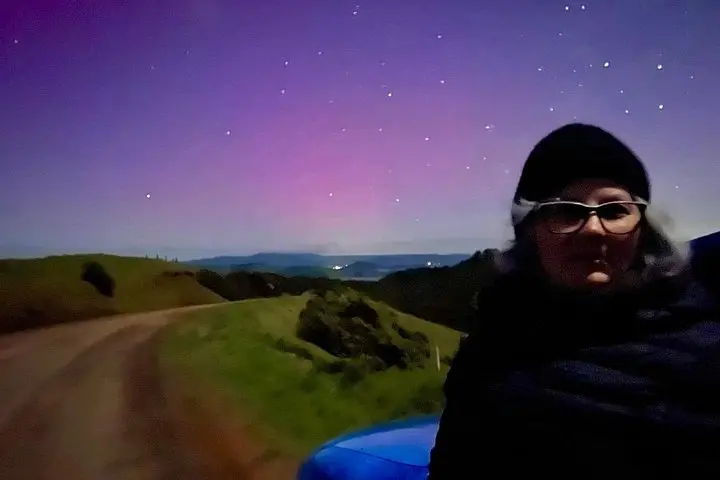
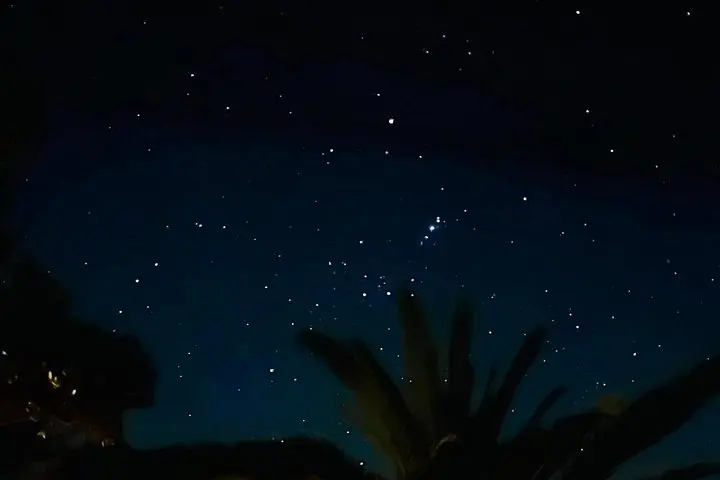
Geologically, the island is soft rock and coastal terrace, which means headlands and beaches open wide to the southern sky. Under a new moon, the Milky Way lays a pale swath across the heavens and planets glow with steady, deliberate light. Guides point out classical Southern constellations — Crux and the pointers that direct you toward Alpha Centauri — and also the modern surprises: fast-moving satellites, distant galaxies seen as faint smudges, and planets that appear like small coins of light.
Culturally, stargazing on Waiheke is as much about listening as it is about looking. Guides weave Māori star lore with modern astronomy, linking navigation stories to familiar star patterns and explaining why certain stars were markers for seasonal food-gathering and travel.
Practical considerations are simple but important. Dress in warm layers; the gulf breeze finds every gap in a jacket and temperatures drop quickly after sunset. Bring a headlamp with a red filter (or cover a white one) so your eyes adjust and you don’t wash out other viewers’ night vision. The tour is two hours and paced for anyone of average mobility — paths are short and largely flat but can be uneven, so solid footwear helps.
Timing matters: aim for a new moon or nights with low cloud cover; the guides will tailor the tour to weather and use binoculars and a small telescope to amplify the view. Photography is possible but expect long exposures and a tripod; your guide can suggest framing for skyscape silhouettes against the island’s shorelines.
This private night walk is not a remote wilderness expedition; it’s a curated, low-effort doorway into the Southern sky that pairs local knowledge with enough comfort to let the stars do the heavy lifting.
The experience runs about two hours and is paced for relaxed viewing and short walks to prime vantage points.
No—guides provide explanations suited to beginners and will point out features for experienced observers.
Tours may be rescheduled if conditions prevent meaningful viewing; cancellation and reschedule policies depend on the operator and weather.
Yes—children are welcome but must be supervised; the tour’s short walks and telescopes make it family-friendly.
Yes, but good results require a tripod, long exposures and basic camera settings; guides can offer framing tips but won’t provide camera instruction.
The tour begins on Waiheke; travelers typically take the ferry from Auckland and guides meet at the wharf; some local pickup on Waiheke may be available for an extra charge.
Terra & Tide operates guided outdoor trips and adventures with an emphasis on safety, stewardship, and memorable experiences.
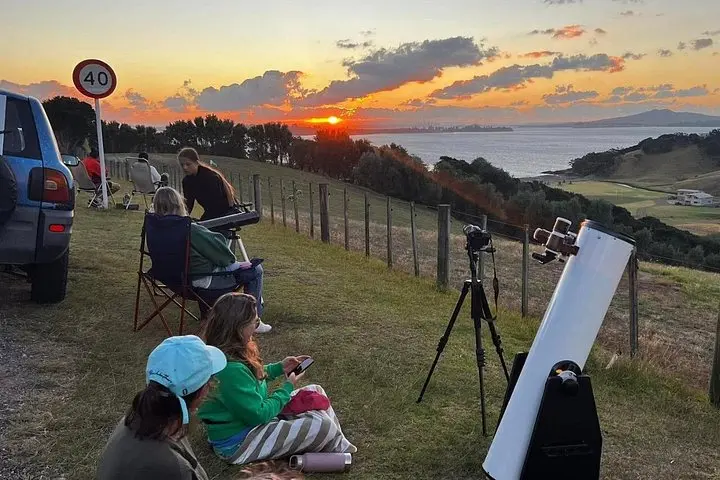
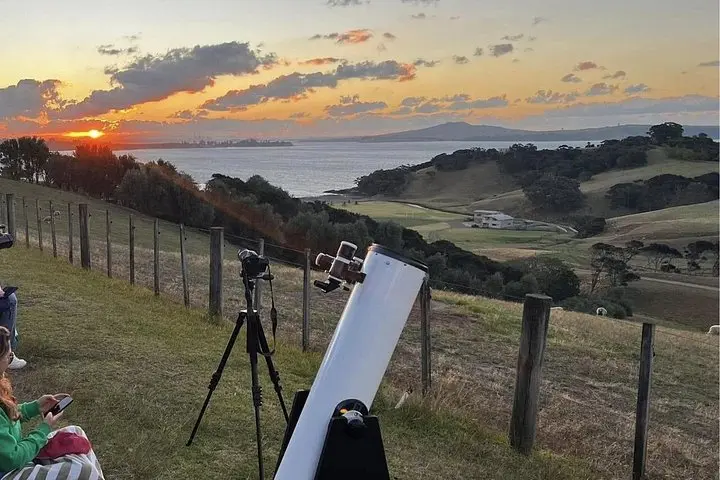
The ferry slips away from Auckland and, within half an hour, the city’s halo thins to a whisper. On Waiheke Island the air tastes of salt and rimu resin; the dark climbs up from the bays as lights from the mainland blink on the horizon. A guide meets you at the wharf, sets up a modest constellation map and a borrowed telescope, and the island’s night begins to take shape.
The ferry slips away from Auckland and, within half an hour, the city’s halo thins to a whisper. On Waiheke Island the air tastes of salt and rimu resin; the dark climbs up from the bays as lights from the mainland blink on the horizon. A guide meets you at the wharf, sets up a modest constellation map and a borrowed telescope, and the island’s night begins to take shape.
Waiheke sits in the warm microclimate of the Hauraki Gulf — a landscape of folded sandstone ridges, windswept pōhutukawa and old pastoral fields that double as excellent observation points because they’re far from metropolitan glare. The island has long been a waystation in Māori navigational routes and later in European farming and viticulture; tonight those histories feel present in the silence, where the sky reads like a different kind of map.
Geologically, the island is soft rock and coastal terrace, which means headlands and beaches open wide to the southern sky. Under a new moon, the Milky Way lays a pale swath across the heavens and planets glow with steady, deliberate light. Guides point out classical Southern constellations — Crux and the pointers that direct you toward Alpha Centauri — and also the modern surprises: fast-moving satellites, distant galaxies seen as faint smudges, and planets that appear like small coins of light.
Culturally, stargazing on Waiheke is as much about listening as it is about looking. Guides weave Māori star lore with modern astronomy, linking navigation stories to familiar star patterns and explaining why certain stars were markers for seasonal food-gathering and travel.
Practical considerations are simple but important. Dress in warm layers; the gulf breeze finds every gap in a jacket and temperatures drop quickly after sunset. Bring a headlamp with a red filter (or cover a white one) so your eyes adjust and you don’t wash out other viewers’ night vision. The tour is two hours and paced for anyone of average mobility — paths are short and largely flat but can be uneven, so solid footwear helps.
Timing matters: aim for a new moon or nights with low cloud cover; the guides will tailor the tour to weather and use binoculars and a small telescope to amplify the view. Photography is possible but expect long exposures and a tripod; your guide can suggest framing for skyscape silhouettes against the island’s shorelines.
This private night walk is not a remote wilderness expedition; it’s a curated, low-effort doorway into the Southern sky that pairs local knowledge with enough comfort to let the stars do the heavy lifting.