THE ADVENTURE COLLECTIVE® · Independent discovery and booking for outdoor travel

Set off from Kewalo Basin on a two‑hour catamaran and join guides who search Oahu’s waters for migrating humpback whales. Ideal between December and May, the tour blends close-up animal viewing with practical guidance and a sightings guarantee.
Set off from Kewalo Basin on a two‑hour catamaran and join guides who search Oahu’s waters for migrating humpback whales. Ideal between December and May, the tour blends close-up animal viewing with practical guidance and a sightings guarantee.
The catamaran slips from Kewalo Basin just after the lull of morning traffic, sails unfurling against a bright Honolulu sky. Salt air sharpens the senses; the Pacific has a different weight here, warmer and slow, as if conserving energy for the giants that arrive each winter. Within minutes, the shoreline of Waikiki thins into a low line of hotels and palms, and the captain eases the vessel into deeper water where the ocean begins to promise something larger.
Verified experiences and guided adventures in the surrounding area.
Operated by Hawaii Nautical · Honolulu, Hawaii
The catamaran slips from Kewalo Basin just after the lull of morning traffic, sails unfurling against a bright Honolulu sky. Salt air sharpens the senses; the Pacific has a different weight here, warmer and slow, as if conserving energy for the giants that arrive each winter. Within minutes, the shoreline of Waikiki thins into a low line of hotels and palms, and the captain eases the vessel into deeper water where the ocean begins to promise something larger.
From late December through early May, humpback whales (Megaptera novaeangliae) fill Hawaii’s nearshore seas to breed, calve, and teach young to surface. The practice is biological but it’s also cultural — Native Hawaiian navigators and coastal communities long observed these seasonal visitors, and their presence still marks winter on Oahu. Geologically, the islands sit on the Pacific Plate’s hot spot; the resulting sheltered bays and gently sloping offshore shelves create warm, shallow stretches that whales favor for nursing calves.
Kewalo Basin Harbor, the tour’s launch point, is part working marina, part gateway to Oahu’s ocean experiences. The Waikiki Deluxe Catamaran — locally known as Honi Olani — runs two-hour excursions with a guarantee: if a whale isn’t sighted, the company offers one free re-ride. Tours include snacks and unlimited non-alcoholic beverages, operate in most weather conditions, and carry up to 49 passengers on shared departures.
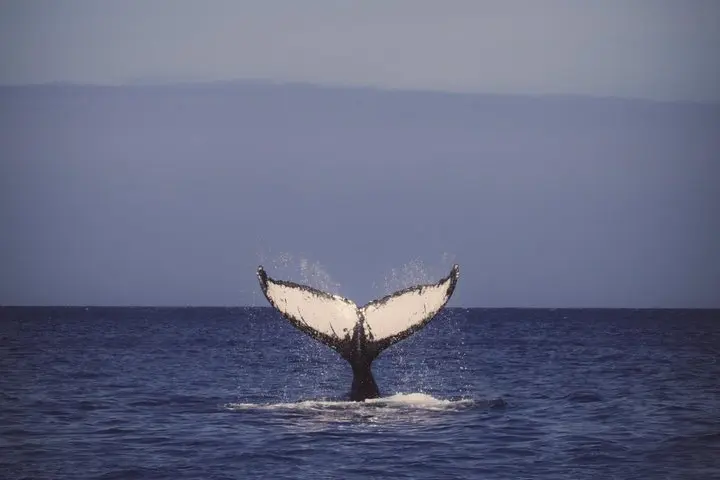
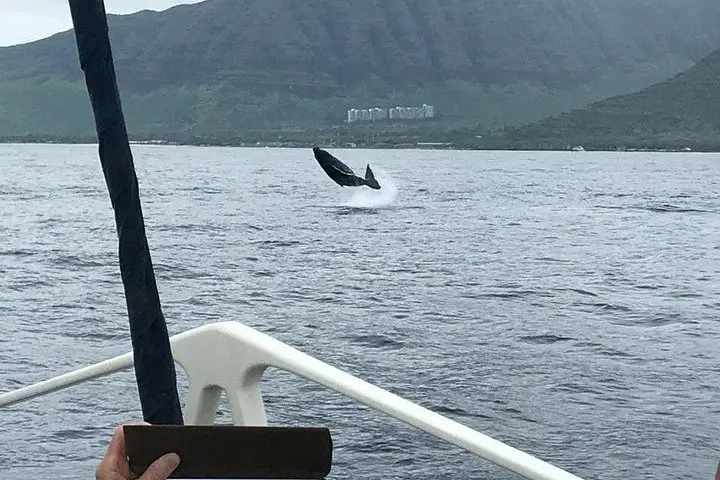
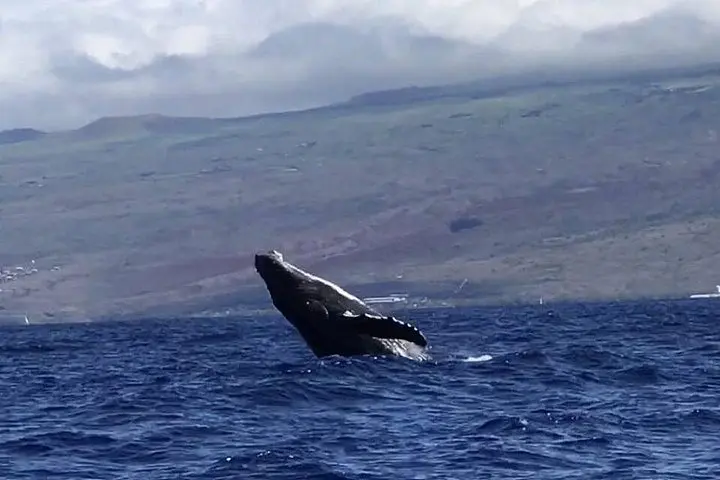
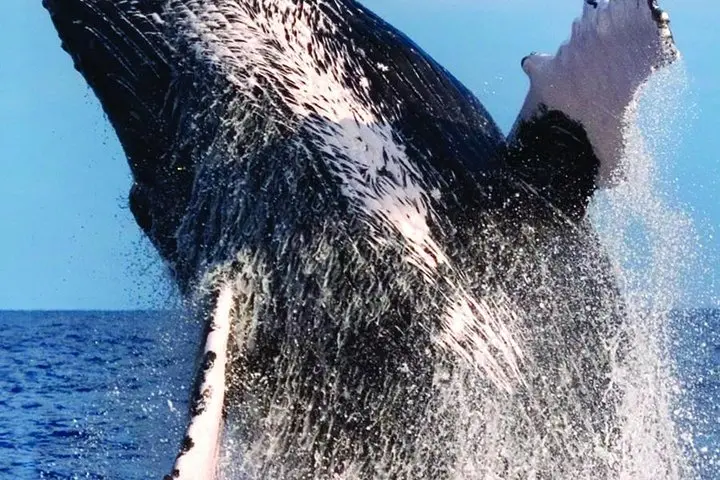
On the water, the rhythm alternates between slow scanning and sudden exhilaration. A spout becomes a rolling body, then a tail fluke in the sun; breaches split the sea and the breath of a blow fills the air like a bell. Guides point out behaviors — breaching, pectoral slapping, mother-calf pairs — and orient you to the larger landscape: Diamond Head to the southeast, the Ala Moana horizon to the west.
Practicalities matter: the best months for reliable sightings are January through April, so plan for crowds and early bookings. Sea conditions can shift; dress in layers and bring motion-sickness prevention if you’re prone to it. The vessel is family-friendly and accessible to most fitness levels, but expect some movement while boarding and when leaning over rails to photograph a passing profile.
Timing your trip for mid-morning often yields calmer seas and better light for photography; sunset trips are picturesque but can be choppier. Bring binoculars, a telephoto lens if you have one, and a windproof jacket. Respect the animals by keeping noise low and following distance rules enforced by the crew — this isn’t just etiquette, it’s conservation.
Whether you come for the possibility of a dramatic breach or the slow joy of watching a mother and calf roll and breathe, the Waikiki Deluxe Catamaran turns a two-hour outing into a primer on humpback life and the ocean that hosts them.
Whales are most commonly sighted from late December through early May, with peak activity often between January and April.
If no whales are observed on your trip, the operator offers one free re-ride; refunds are not provided instead of the re-ride.
Yes—tours are suitable for families and most physical levels; there may be steps to board and some movement on deck, so moderate mobility is needed.
The tour includes a two-hour catamaran cruise, snacks, and unlimited non-alcoholic beverages.
Service animals are allowed; non-service pets are not listed as permitted—check with the operator in advance.
The tour can be canceled for bad weather or low passenger count; full refunds are available if canceled at least 24 hours prior, per the operator’s policy.
Hawaii Nautical operates guided outdoor trips and adventures with an emphasis on safety, stewardship, and memorable experiences.
The catamaran slips from Kewalo Basin just after the lull of morning traffic, sails unfurling against a bright Honolulu sky. Salt air sharpens the senses; the Pacific has a different weight here, warmer and slow, as if conserving energy for the giants that arrive each winter. Within minutes, the shoreline of Waikiki thins into a low line of hotels and palms, and the captain eases the vessel into deeper water where the ocean begins to promise something larger.
The catamaran slips from Kewalo Basin just after the lull of morning traffic, sails unfurling against a bright Honolulu sky. Salt air sharpens the senses; the Pacific has a different weight here, warmer and slow, as if conserving energy for the giants that arrive each winter. Within minutes, the shoreline of Waikiki thins into a low line of hotels and palms, and the captain eases the vessel into deeper water where the ocean begins to promise something larger.
From late December through early May, humpback whales (Megaptera novaeangliae) fill Hawaii’s nearshore seas to breed, calve, and teach young to surface. The practice is biological but it’s also cultural — Native Hawaiian navigators and coastal communities long observed these seasonal visitors, and their presence still marks winter on Oahu. Geologically, the islands sit on the Pacific Plate’s hot spot; the resulting sheltered bays and gently sloping offshore shelves create warm, shallow stretches that whales favor for nursing calves.
Kewalo Basin Harbor, the tour’s launch point, is part working marina, part gateway to Oahu’s ocean experiences. The Waikiki Deluxe Catamaran — locally known as Honi Olani — runs two-hour excursions with a guarantee: if a whale isn’t sighted, the company offers one free re-ride. Tours include snacks and unlimited non-alcoholic beverages, operate in most weather conditions, and carry up to 49 passengers on shared departures.
On the water, the rhythm alternates between slow scanning and sudden exhilaration. A spout becomes a rolling body, then a tail fluke in the sun; breaches split the sea and the breath of a blow fills the air like a bell. Guides point out behaviors — breaching, pectoral slapping, mother-calf pairs — and orient you to the larger landscape: Diamond Head to the southeast, the Ala Moana horizon to the west.
Practicalities matter: the best months for reliable sightings are January through April, so plan for crowds and early bookings. Sea conditions can shift; dress in layers and bring motion-sickness prevention if you’re prone to it. The vessel is family-friendly and accessible to most fitness levels, but expect some movement while boarding and when leaning over rails to photograph a passing profile.
Timing your trip for mid-morning often yields calmer seas and better light for photography; sunset trips are picturesque but can be choppier. Bring binoculars, a telephoto lens if you have one, and a windproof jacket. Respect the animals by keeping noise low and following distance rules enforced by the crew — this isn’t just etiquette, it’s conservation.
Whether you come for the possibility of a dramatic breach or the slow joy of watching a mother and calf roll and breathe, the Waikiki Deluxe Catamaran turns a two-hour outing into a primer on humpback life and the ocean that hosts them.