THE ADVENTURE COLLECTIVE® · Independent discovery and booking for outdoor travel

Learn to stand, paddle and read small Waikiki waves with experienced instructors from Ohana Surf Project. These two-hour lessons focus on safety, reef awareness and family-friendly progression in calm nearshore waters.
Learn to stand, paddle and read small Waikiki waves with experienced instructors from Ohana Surf Project. These two-hour lessons focus on safety, reef awareness and family-friendly progression in calm nearshore waters.
Morning light breaks across Waikiki and the long, pale arc of the beach slides into view—the surf here is forgiving, the reef close enough to colour the water emerald. In a typical Ohana Surf Project lesson you’ll meet at the Waikiki Beach Marriott, gear up on the sand, and let experienced instructors guide you from kneeling to steady standing within a few waves.
Verified experiences and guided adventures in the surrounding area.
Operated by Ohana Surf Project · Honolulu, Hawaii
Morning light breaks across Waikiki and the long, pale arc of the beach slides into view—the surf here is forgiving, the reef close enough to colour the water emerald. In a typical Ohana Surf Project lesson you’ll meet at the Waikiki Beach Marriott, gear up on the sand, and let experienced instructors guide you from kneeling to steady standing within a few waves.
This stretch of Oʻahu has deep cultural roots in ocean sports: centuries before tourism, Hawaiian aliʻi rode longboards here, and Duke Kahanamoku’s modern-era surfing helped put Waikiki on the map. Geologically the shoreline sits seaward of a fringing coral reef that shapes small, consistent breaks; sandbars and channels can shift with seasonal swell and trade winds.
Expect hands-on coaching in paddling technique, wave reading, and safe re-entry. Instructors emphasize reef-aware movement—short swims, shallow water exits, and avoiding contact with coral. Morning sessions usually offer calmer water and clearer visibility; afternoons bring stronger tradewinds and slightly choppier conditions.
Practical guidance: wear a swimsuit under a quick-dry layer, use reef-safe sunscreen, and hydrate—lessons are active and sun-exposed. For families, lessons are paced for children and beginners; private or semi-private formats let instructors tailor entry zones and progressions. If you can’t swim, notify the school in advance—private arrangements and flotation devices are available. After the lesson, instructors often share photos and local tips—where to spot honu (green sea turtles) or stretch in Kapiolani Park—so you leave with both new skills and a clearer sense of Waikiki’s living shoreline.
Basic swimming ability is recommended; if participants cannot swim, notify the school in advance so staff can provide extra flotation or arrange a private lesson.
Lessons are family-friendly and can include children; the supplier will confirm age and weight limits when booking and may recommend private instruction for very young kids.
Yes—boards, paddles, rashguards, and reef shoes are provided, plus transport from select Waikiki pickup points when available.
Full refunds are available if you cancel at least 24 hours before the scheduled lesson; bad weather may also prompt cancellation and refund.
Ohana Surf Project operates guided outdoor trips and adventures with an emphasis on safety, stewardship, and memorable experiences.
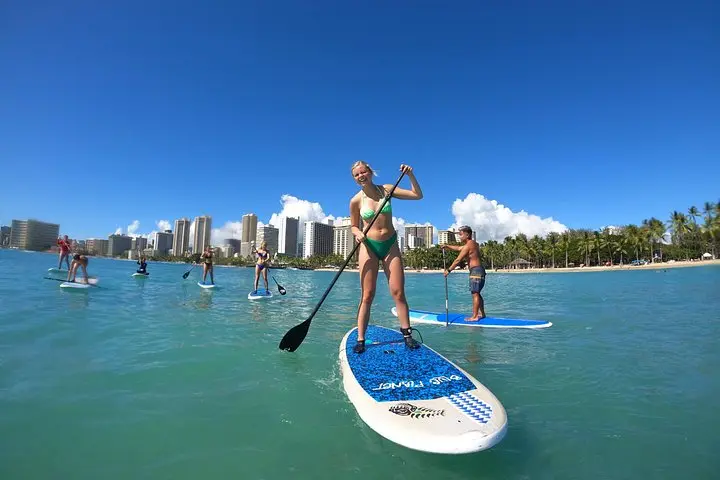
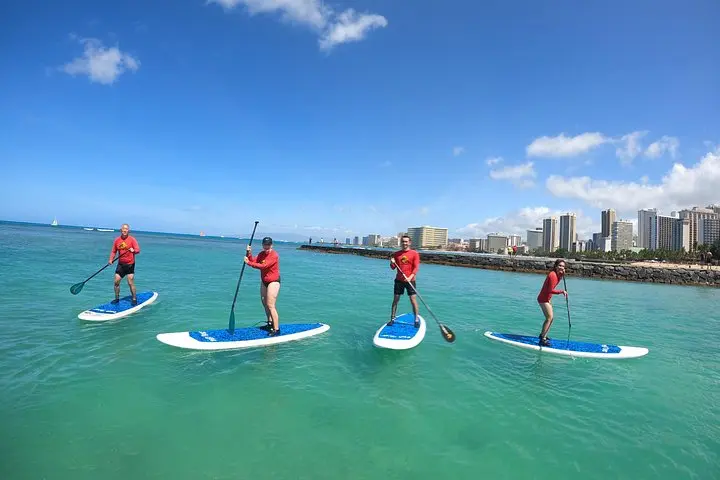
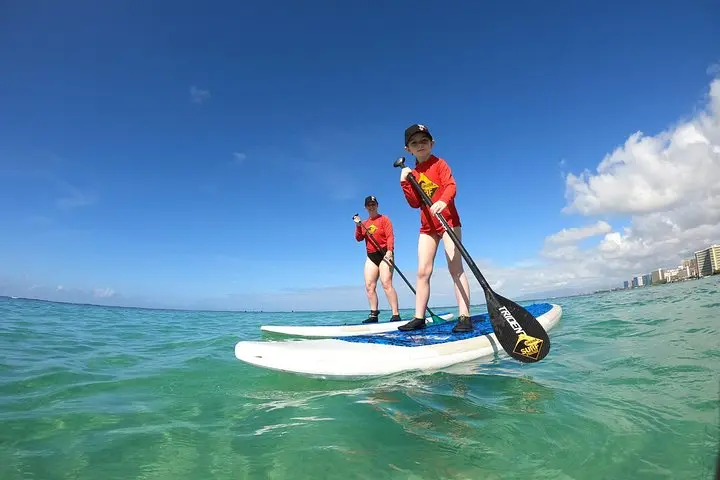
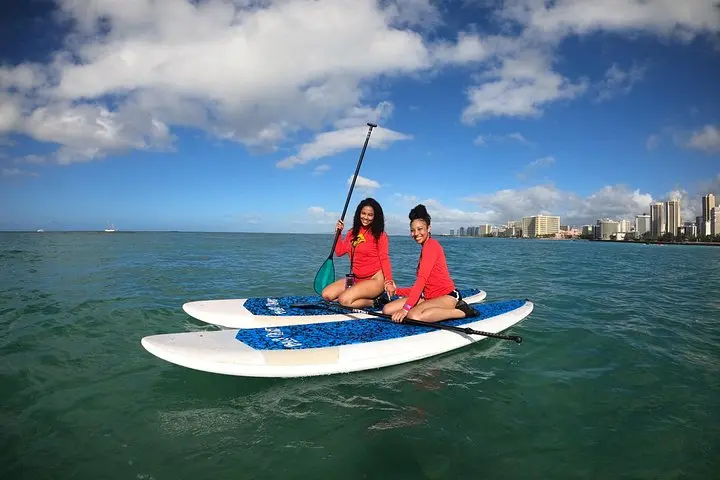
Morning light breaks across Waikiki and the long, pale arc of the beach slides into view—the surf here is forgiving, the reef close enough to colour the water emerald. In a typical Ohana Surf Project lesson you’ll meet at the Waikiki Beach Marriott, gear up on the sand, and let experienced instructors guide you from kneeling to steady standing within a few waves.
Morning light breaks across Waikiki and the long, pale arc of the beach slides into view—the surf here is forgiving, the reef close enough to colour the water emerald. In a typical Ohana Surf Project lesson you’ll meet at the Waikiki Beach Marriott, gear up on the sand, and let experienced instructors guide you from kneeling to steady standing within a few waves.
This stretch of Oʻahu has deep cultural roots in ocean sports: centuries before tourism, Hawaiian aliʻi rode longboards here, and Duke Kahanamoku’s modern-era surfing helped put Waikiki on the map. Geologically the shoreline sits seaward of a fringing coral reef that shapes small, consistent breaks; sandbars and channels can shift with seasonal swell and trade winds.
Expect hands-on coaching in paddling technique, wave reading, and safe re-entry. Instructors emphasize reef-aware movement—short swims, shallow water exits, and avoiding contact with coral. Morning sessions usually offer calmer water and clearer visibility; afternoons bring stronger tradewinds and slightly choppier conditions.
Practical guidance: wear a swimsuit under a quick-dry layer, use reef-safe sunscreen, and hydrate—lessons are active and sun-exposed. For families, lessons are paced for children and beginners; private or semi-private formats let instructors tailor entry zones and progressions. If you can’t swim, notify the school in advance—private arrangements and flotation devices are available. After the lesson, instructors often share photos and local tips—where to spot honu (green sea turtles) or stretch in Kapiolani Park—so you leave with both new skills and a clearer sense of Waikiki’s living shoreline.