THE ADVENTURE COLLECTIVE® · Independent discovery and booking for outdoor travel

Experience Waitomo’s glowworm-lit caverns and Rotorua’s geysers and Māori culture in one long, well-paced day from Auckland. Expect boat rides, guided cave explanation, and geothermal displays with practical tips for timing and footwear.
Experience Waitomo’s glowworm-lit caverns and Rotorua’s geysers and Māori culture in one long, well-paced day from Auckland. Expect boat rides, guided cave explanation, and geothermal displays with practical tips for timing and footwear.
You step off the coach into a calm rural morning and the road smells of damp pasture and distant sulphur. The tour moves like a single thread from Auckland across rolling Waikato farmland to the blackened limestone mouths at Waitomo, then on to Rotorua’s steaming valley where Pōhutu Geyser punctuates the skyline.
Verified experiences and guided adventures in the surrounding area.
Operated by NAVI Tours New Zealand · Auckland, Auckland
You step off the coach into a calm rural morning and the road smells of damp pasture and distant sulphur. The tour moves like a single thread from Auckland across rolling Waikato farmland to the blackened limestone mouths at Waitomo, then on to Rotorua’s steaming valley where Pōhutu Geyser punctuates the skyline.
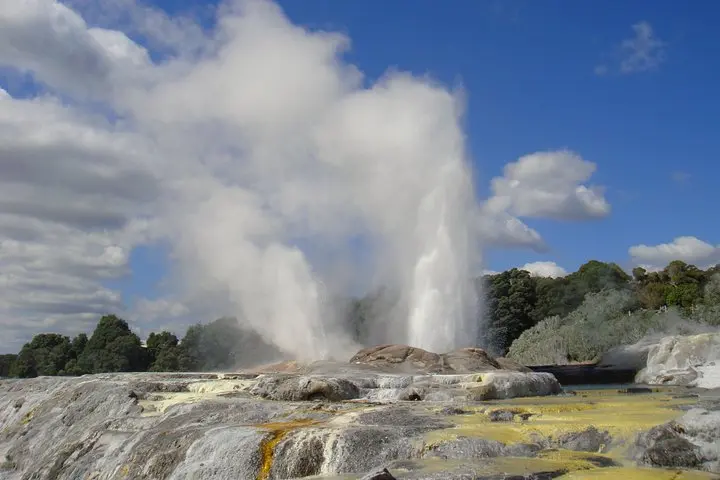
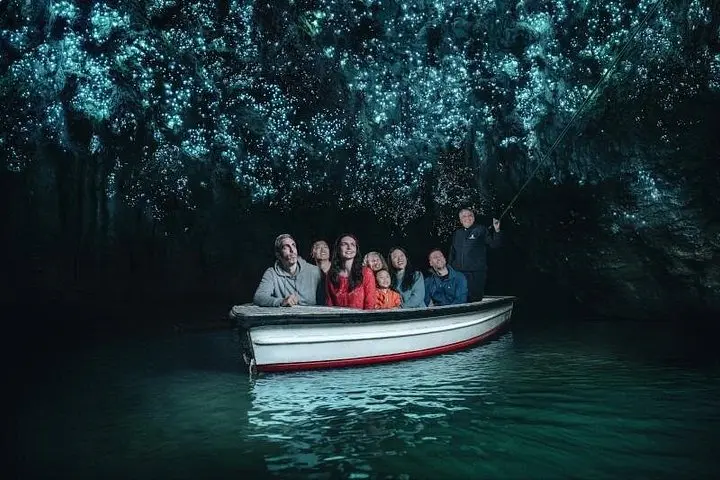
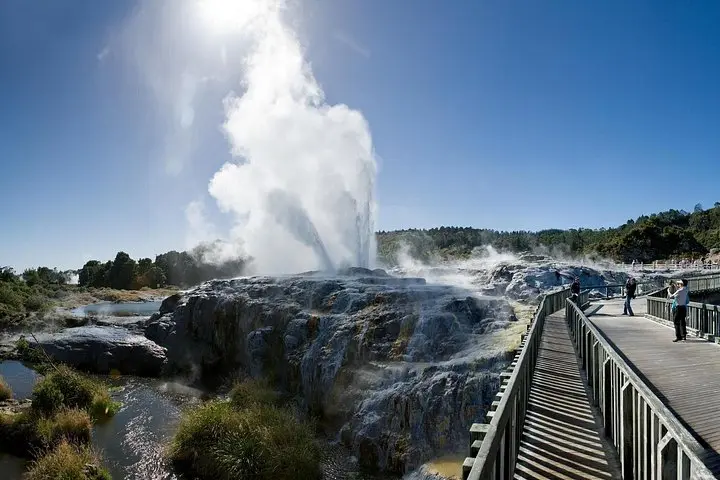
Waitomo’s caves are karst passages carved over millions of years; stalactites and flowstone record long-ago groundwater work. Inside, glowworms – tiny bioluminescent larvae unique to New Zealand – hang like a slow, living starfield above the water as guides explain their life cycle and Maori connections to the land. Later, Te Puia sits in the thermal heart of the Taupō volcanic zone: geysers, boiling mud pools, and silica terraces shaped by geothermal heat and tectonic forces.
Cultural immersion is part of the day. Te Puia is home to the Māori Arts and Crafts Institute where carving and weaving are practiced and explained alongside stories about the iwi and the whenua.
Practical guidance: this is a long day—expect 11–12 hours including coach transfers. Walks are short but surfaces can be wet and uneven in caves and on boardwalks; bring waterproof layers, sturdy shoes, and a refillable bottle. Photography rules vary—no flash in glowworm caverns. There are restroom stops, a guided kiwi viewing at Te Puia, and short interpretive walks. Timing can shift depending on site bookings; check pickup times closely the day before. The itinerary balances natural spectacle and cultural context, offering a compact, accessible way to see two of the North Island’s most dramatic landscapes in one well-organized day.
The full itinerary runs about 11–12 hours (approximately 690 minutes) including coach travel, site visits, and lunch breaks.
Yes—admission fees for Waitomo and Te Puia and return transfers from Auckland CBD are included.
Possibly, but the operator warns this tour is long and may not fit cruise ship schedules—confirm timing before booking.
Walks are short but caves have steps and low lighting; infants can use strollers at meeting points but cave access may be limited for some mobility-impaired visitors—ask the operator in advance.
NAVI Tours New Zealand operates guided outdoor trips and adventures with an emphasis on safety, stewardship, and memorable experiences.

You step off the coach into a calm rural morning and the road smells of damp pasture and distant sulphur. The tour moves like a single thread from Auckland across rolling Waikato farmland to the blackened limestone mouths at Waitomo, then on to Rotorua’s steaming valley where Pōhutu Geyser punctuates the skyline.
You step off the coach into a calm rural morning and the road smells of damp pasture and distant sulphur. The tour moves like a single thread from Auckland across rolling Waikato farmland to the blackened limestone mouths at Waitomo, then on to Rotorua’s steaming valley where Pōhutu Geyser punctuates the skyline.
Waitomo’s caves are karst passages carved over millions of years; stalactites and flowstone record long-ago groundwater work. Inside, glowworms – tiny bioluminescent larvae unique to New Zealand – hang like a slow, living starfield above the water as guides explain their life cycle and Maori connections to the land. Later, Te Puia sits in the thermal heart of the Taupō volcanic zone: geysers, boiling mud pools, and silica terraces shaped by geothermal heat and tectonic forces.
Cultural immersion is part of the day. Te Puia is home to the Māori Arts and Crafts Institute where carving and weaving are practiced and explained alongside stories about the iwi and the whenua.
Practical guidance: this is a long day—expect 11–12 hours including coach transfers. Walks are short but surfaces can be wet and uneven in caves and on boardwalks; bring waterproof layers, sturdy shoes, and a refillable bottle. Photography rules vary—no flash in glowworm caverns. There are restroom stops, a guided kiwi viewing at Te Puia, and short interpretive walks. Timing can shift depending on site bookings; check pickup times closely the day before. The itinerary balances natural spectacle and cultural context, offering a compact, accessible way to see two of the North Island’s most dramatic landscapes in one well-organized day.