THE ADVENTURE COLLECTIVE® · Independent discovery and booking for outdoor travel
Walk a three-hour route through Stanley Park’s last old-growth stands with a knowledgeable guide. See 600+ year-old Douglas firs, 1,000-year cedars, and learn the human and natural history that preserved these giants.
Walk a three-hour route through Stanley Park’s last old-growth stands with a knowledgeable guide. See 600+ year-old Douglas firs, 1,000-year cedars, and learn the human and natural history that preserved these giants.
Fog lifts off the seawall as you step into the park and the city noise thins; trunks thicken and the air cools. Under a canopy of needle and leaf, Douglas firs and cedars loom like living columns — some more than 600 years old, cedars exceeding a millennium — while your guide points out hidden giants that most visitors miss.
Verified experiences and guided adventures in the surrounding area.
Operated by Ancient Trees of Vancouver · Vancouver, British Columbia
Fog lifts off the seawall as you step into the park and the city noise thins; trunks thicken and the air cools. Under a canopy of needle and leaf, Douglas firs and cedars loom like living columns — some more than 600 years old, cedars exceeding a millennium — while your guide points out hidden giants that most visitors miss.
This guided three-hour walk traces pockets of the last old-growth forest inside Stanley Park and ties the living trees to human stories: the Coast Salish peoples who used this land for millennia, the park's formal layout from the late 1800s, and the early postcards and maps that help locate trees long obscured by urban growth. Geologically, the park sits on glacially scoured bedrock and drumlins; soil pockets and sheltered hollows let ancient conifers survive amid a city shoreline.
Expect uneven forest trails, roots, short stairways and soft, sometimes muddy ground after rain. The guide uses archival photos and interpretation to explain ecological roles—canopy, understory, fungi—and contemporary threats like invasive species and development pressure.
Practical notes: the tour covers roughly three hours of mostly easy walking with frequent stops. Wear sturdy shoes, a waterproof layer, and bring water and a camera. Mornings are quieter for bird activity; late afternoons sharpen the light through the branches. The route is within walking distance of downtown Vancouver, runs in small groups, and is suitable for a wide range of fitness levels. Leave no trace, respect marked areas, and listen for the wind moving needles — the forest will tell you its age if you pay attention.
The meeting point is within walking distance of downtown Vancouver in Stanley Park—your booking confirmation lists the exact meeting location and nearby transit options.
The tour is family-friendly but trails are uneven and include roots and short stair sections; lightweight off-road strollers are not recommended.
Service animals are allowed; pets are generally not permitted due to conservation concerns—check with the operator if in doubt.
Tours run in light rain—dress for wet weather. For a full refund, cancel at least 24 hours before departure per the operator’s policy.
Ancient Trees of Vancouver operates guided outdoor trips and adventures with an emphasis on safety, stewardship, and memorable experiences.
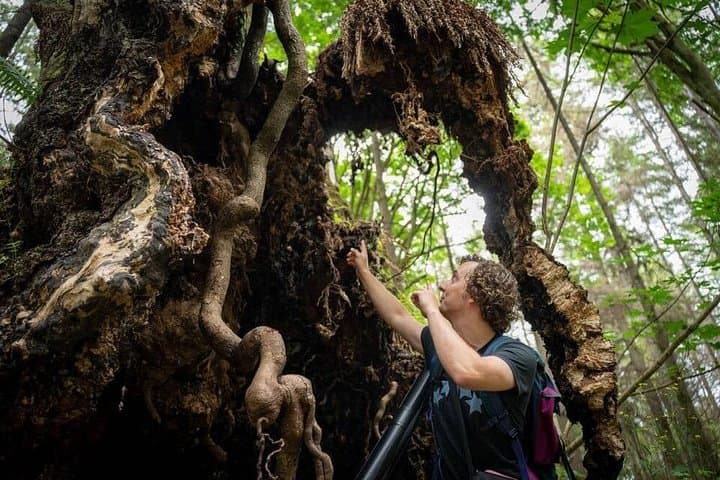

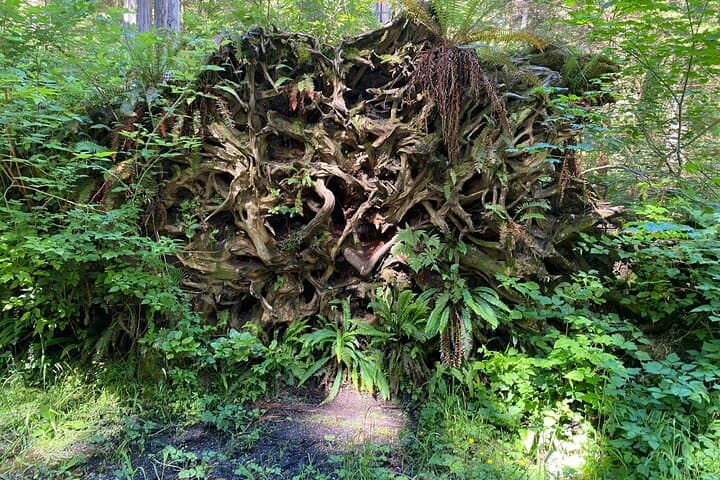

Fog lifts off the seawall as you step into the park and the city noise thins; trunks thicken and the air cools. Under a canopy of needle and leaf, Douglas firs and cedars loom like living columns — some more than 600 years old, cedars exceeding a millennium — while your guide points out hidden giants that most visitors miss.
Fog lifts off the seawall as you step into the park and the city noise thins; trunks thicken and the air cools. Under a canopy of needle and leaf, Douglas firs and cedars loom like living columns — some more than 600 years old, cedars exceeding a millennium — while your guide points out hidden giants that most visitors miss.
This guided three-hour walk traces pockets of the last old-growth forest inside Stanley Park and ties the living trees to human stories: the Coast Salish peoples who used this land for millennia, the park's formal layout from the late 1800s, and the early postcards and maps that help locate trees long obscured by urban growth. Geologically, the park sits on glacially scoured bedrock and drumlins; soil pockets and sheltered hollows let ancient conifers survive amid a city shoreline.
Expect uneven forest trails, roots, short stairways and soft, sometimes muddy ground after rain. The guide uses archival photos and interpretation to explain ecological roles—canopy, understory, fungi—and contemporary threats like invasive species and development pressure.
Practical notes: the tour covers roughly three hours of mostly easy walking with frequent stops. Wear sturdy shoes, a waterproof layer, and bring water and a camera. Mornings are quieter for bird activity; late afternoons sharpen the light through the branches. The route is within walking distance of downtown Vancouver, runs in small groups, and is suitable for a wide range of fitness levels. Leave no trace, respect marked areas, and listen for the wind moving needles — the forest will tell you its age if you pay attention.
