THE ADVENTURE COLLECTIVE® · Independent discovery and booking for outdoor travel

Spend 90 minutes in a welfare-focused sanctuary on Phuket observing and feeding Asian elephants at safe stations while learning traditional Thai practices like rubber tapping and coconut-milk making. This ethical encounter emphasizes observation, education, and cultural context over riding or bathing.
Spend 90 minutes in a welfare-focused sanctuary on Phuket observing and feeding Asian elephants at safe stations while learning traditional Thai practices like rubber tapping and coconut-milk making. This ethical encounter emphasizes observation, education, and cultural context over riding or bathing.
A warm, humid morning on southern Phuket: you step from an air-conditioned van into a low, green ridge where the trunks of Asian elephants cut through the light like living pillars. The park keeps distance and calm—the fences and mahouts choreograph safe exchanges while the animals move freely, foraging and resting in shade.
Verified experiences and guided adventures in the surrounding area.
Operated by Bukit Elephant Park · Phuket, Phuket
A warm, humid morning on southern Phuket: you step from an air-conditioned van into a low, green ridge where the trunks of Asian elephants cut through the light like living pillars. The park keeps distance and calm—the fences and mahouts choreograph safe exchanges while the animals move freely, foraging and resting in shade.
This short, 90-minute program centers on observation and feeding rather than riding or bathing. The guides explain the elephants’ role in regional history—how working elephants shaped agricultural life and logging routes—and how modern sanctuaries shift toward rehabilitation and humane care. Geologically, the park sits on Phuket’s granite foothills, where soil and rubber plantations reflect the island’s plantation-era economy; cultural elements like rubber tapping and coconut-milk demonstrations connect the visit to daily Thai life.
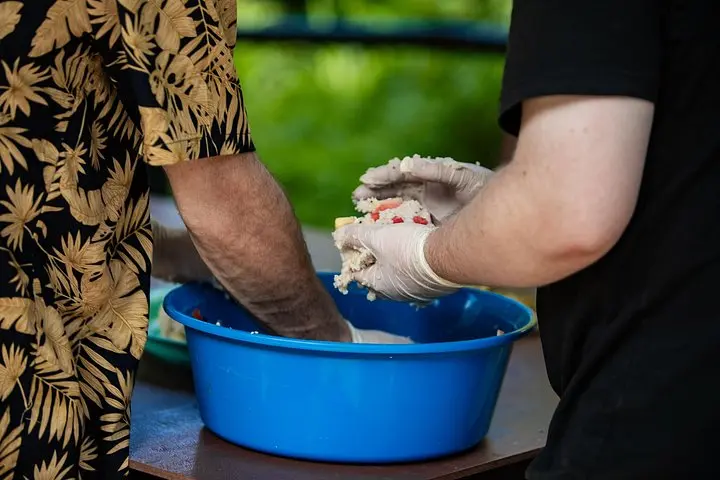
Expect hands-on moments within safe boundaries: rolling rice-and-fruit balls, passing them through a fence, and watching trunks accept food with surprising gentleness. Photography is allowed but without flash; loud noise and drones are prohibited to avoid stressing the animals. Practicalities matter—bring breathable clothing, sun protection, and closed-toe shoes (boots provided in rainy periods). Tours run in small groups at morning, late morning, and afternoon slots and include round-trip shared transfers from many Phuket hotels.
For travelers, the experience is equal parts wildlife observation and cultural primer: you’ll leave with clearer ideas about elephant welfare, practical Thai rural skills, and a stack of vivid photos taken at respectful distance. Follow guides’ instructions closely—your calm behavior is the best gift to the animals.
No; this park focuses on observation and feeding with strict no-riding, no-bathing policies to prioritize elephant welfare.
Yes—shared, air-conditioned transfers from many Phuket hotels are included; confirm pickup point when booking.
Duplicate field removed
Avoid loud toys, drones, flash photography, and any food not authorized by guides to prevent accidental harm to elephants.
Bukit Elephant Park operates guided outdoor trips and adventures with an emphasis on safety, stewardship, and memorable experiences.
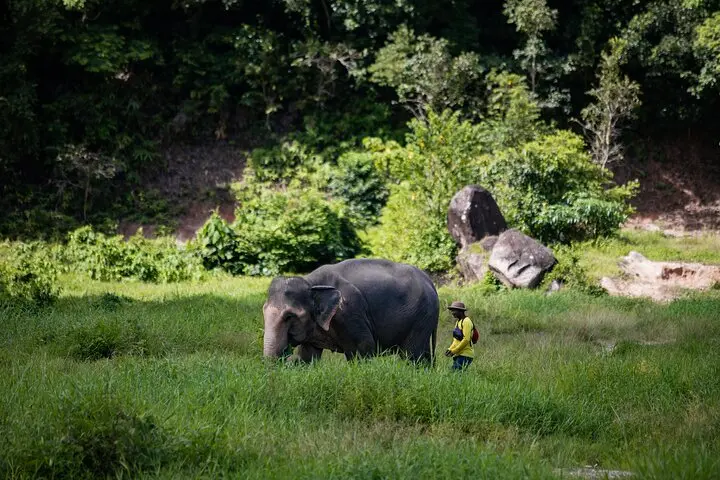


A warm, humid morning on southern Phuket: you step from an air-conditioned van into a low, green ridge where the trunks of Asian elephants cut through the light like living pillars. The park keeps distance and calm—the fences and mahouts choreograph safe exchanges while the animals move freely, foraging and resting in shade.
A warm, humid morning on southern Phuket: you step from an air-conditioned van into a low, green ridge where the trunks of Asian elephants cut through the light like living pillars. The park keeps distance and calm—the fences and mahouts choreograph safe exchanges while the animals move freely, foraging and resting in shade.
This short, 90-minute program centers on observation and feeding rather than riding or bathing. The guides explain the elephants’ role in regional history—how working elephants shaped agricultural life and logging routes—and how modern sanctuaries shift toward rehabilitation and humane care. Geologically, the park sits on Phuket’s granite foothills, where soil and rubber plantations reflect the island’s plantation-era economy; cultural elements like rubber tapping and coconut-milk demonstrations connect the visit to daily Thai life.
Expect hands-on moments within safe boundaries: rolling rice-and-fruit balls, passing them through a fence, and watching trunks accept food with surprising gentleness. Photography is allowed but without flash; loud noise and drones are prohibited to avoid stressing the animals. Practicalities matter—bring breathable clothing, sun protection, and closed-toe shoes (boots provided in rainy periods). Tours run in small groups at morning, late morning, and afternoon slots and include round-trip shared transfers from many Phuket hotels.
For travelers, the experience is equal parts wildlife observation and cultural primer: you’ll leave with clearer ideas about elephant welfare, practical Thai rural skills, and a stack of vivid photos taken at respectful distance. Follow guides’ instructions closely—your calm behavior is the best gift to the animals.