THE ADVENTURE COLLECTIVE® · Independent discovery and booking for outdoor travel

Trace Charles Darwin’s early footsteps through Shrewsbury with a self-guided audio tour. Two hours of walking delivers Tudor streets, riverside parks, and the specific places that shaped a young naturalist’s curiosity.
Trace Charles Darwin’s early footsteps through Shrewsbury with a self-guided audio tour. Two hours of walking delivers Tudor streets, riverside parks, and the specific places that shaped a young naturalist’s curiosity.
You start on the cobbled forecourt of Shrewsbury Castle, headphones in, and the town opens like a well-read field notebook: Tudor timber frames, the slow curl of the River Severn, and green spaces where a young Charles Darwin first learned to watch. The audio guide cues you to look up at carved eaves, down at worn flagstones, and along hedgerows where ideas took shape.
Verified experiences and guided adventures in the surrounding area.
Operated by VoiceMap Audio Tours · Shrewsbury, Shropshire
You start on the cobbled forecourt of Shrewsbury Castle, headphones in, and the town opens like a well-read field notebook: Tudor timber frames, the slow curl of the River Severn, and green spaces where a young Charles Darwin first learned to watch. The audio guide cues you to look up at carved eaves, down at worn flagstones, and along hedgerows where ideas took shape.
Shrewsbury is a medieval market town with Roman origins and a river meander that has guided settlement patterns for centuries. Buildings from the 16th and 17th centuries sit beside Georgian facades; St. Chad’s circular church and the Abbey reflect layers of ecclesiastical power and local lore. Geologically, the surrounding Shropshire Hills are formed from Silurian and Ordovician rocks—hills that once framed the horizons of Darwin’s youth and fed his curiosity about change over time.
Culturally, the town’s streets echo with stories: from Shakespearean connections to The Cadfael Chronicles, and the Lion Inn where Darwin planned his voyage. This self-guided format gives you pace—linger in Quarry Park or the Dingle to study plants the way Darwin might have, or speed through Wyle Cop to keep schedule.
Practical guidance: download the VoiceMap track and maps for offline use, wear supportive walking shoes for cobbles and gentle slopes, and allow two to two-and-a-half hours with time to stop. Visit early morning or late afternoon for softer light and fewer crowds, and bring a charged phone and a small bottle of water. The route balances history, landscape observation, and easy walking—an urban hike with a scientific pedigree.
The audio tour runs about 2 to 2.5 hours; you can pause to explore sites like Quarry Park and Dingle Gardens which may extend total time.
It’s fully self-guided—download the VoiceMap app, enter your unique code, and the GPS-triggered audio will guide you.
Many streets are paved and accessible, but there are cobbled sections and some steps; accessibility may vary so check specific stretches ahead.
After booking you’ll receive a code under 'Before You Go'—install VoiceMap, enter the code, and download the tour for offline use.
VoiceMap Audio Tours operates guided outdoor trips and adventures with an emphasis on safety, stewardship, and memorable experiences.
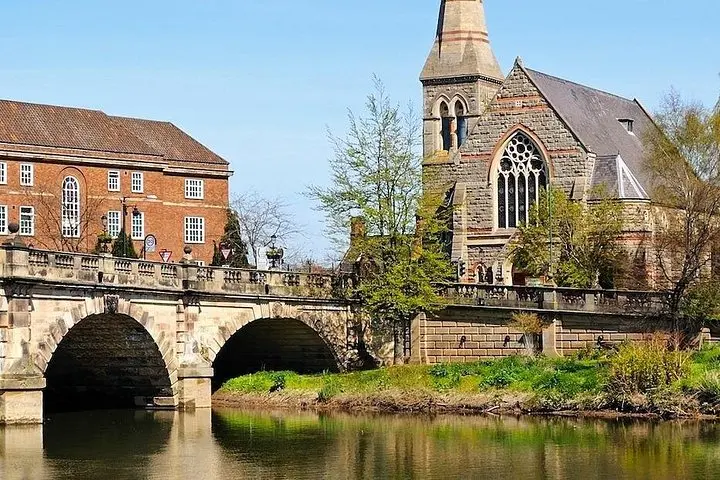
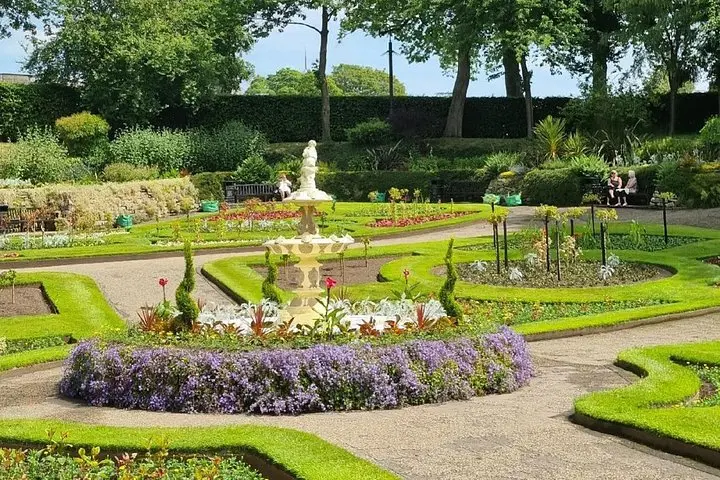

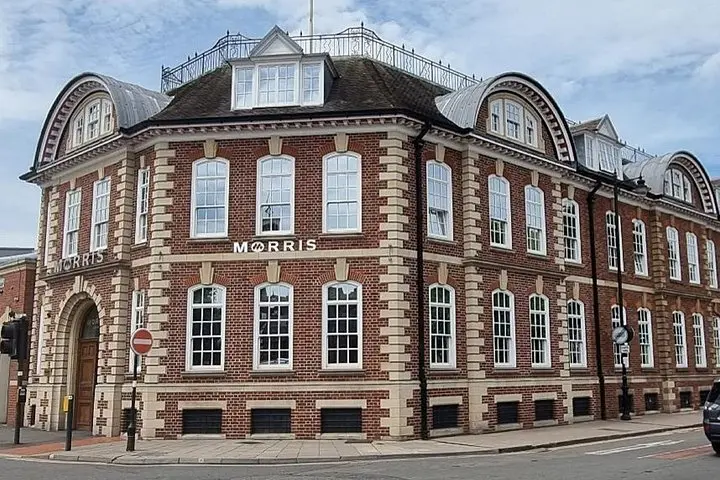
You start on the cobbled forecourt of Shrewsbury Castle, headphones in, and the town opens like a well-read field notebook: Tudor timber frames, the slow curl of the River Severn, and green spaces where a young Charles Darwin first learned to watch. The audio guide cues you to look up at carved eaves, down at worn flagstones, and along hedgerows where ideas took shape.
You start on the cobbled forecourt of Shrewsbury Castle, headphones in, and the town opens like a well-read field notebook: Tudor timber frames, the slow curl of the River Severn, and green spaces where a young Charles Darwin first learned to watch. The audio guide cues you to look up at carved eaves, down at worn flagstones, and along hedgerows where ideas took shape.
Shrewsbury is a medieval market town with Roman origins and a river meander that has guided settlement patterns for centuries. Buildings from the 16th and 17th centuries sit beside Georgian facades; St. Chad’s circular church and the Abbey reflect layers of ecclesiastical power and local lore. Geologically, the surrounding Shropshire Hills are formed from Silurian and Ordovician rocks—hills that once framed the horizons of Darwin’s youth and fed his curiosity about change over time.
Culturally, the town’s streets echo with stories: from Shakespearean connections to The Cadfael Chronicles, and the Lion Inn where Darwin planned his voyage. This self-guided format gives you pace—linger in Quarry Park or the Dingle to study plants the way Darwin might have, or speed through Wyle Cop to keep schedule.
Practical guidance: download the VoiceMap track and maps for offline use, wear supportive walking shoes for cobbles and gentle slopes, and allow two to two-and-a-half hours with time to stop. Visit early morning or late afternoon for softer light and fewer crowds, and bring a charged phone and a small bottle of water. The route balances history, landscape observation, and easy walking—an urban hike with a scientific pedigree.