THE ADVENTURE COLLECTIVE® · Independent discovery and booking for outdoor travel

Trace St. Francis’s footsteps across green hills and medieval towns on a private seven-night Umbria tour. Visit Assisi, Gubbio, Spello and Spoleto with guided access to key Franciscan sites and comfortable hotel or farmhouse stays.
Trace St. Francis’s footsteps across green hills and medieval towns on a private seven-night Umbria tour. Visit Assisi, Gubbio, Spello and Spoleto with guided access to key Franciscan sites and comfortable hotel or farmhouse stays.
The morning air in Umbria tastes of olive oil and stone; you step out from a farmhouse and the low hills unfold like pages of history. Narrow lanes lead to Roman arches, bell towers puncture the sky, and the Basilica domes of Assisi keep watch as you follow the route where St. Francis once moved between villages.
Verified experiences and guided adventures in the surrounding area.
Operated by SORPRENDIMI UMBRIA · Assisi, Umbria
The morning air in Umbria tastes of olive oil and stone; you step out from a farmhouse and the low hills unfold like pages of history. Narrow lanes lead to Roman arches, bell towers puncture the sky, and the Basilica domes of Assisi keep watch as you follow the route where St. Francis once moved between villages.
This seven-night guided itinerary threads Gubbio, Assisi, Spello, Bevagna, Montefalco and Spoleto—towns whose medieval streets, frescoed churches and olive terraces tell a layered story of faith, art and rural life. Geologically the region is gentle: rolling limestone and clay hills carved by irrigation and centuries of cultivation, with panoramic ridgelines known locally as the "Balcony of Umbria" in Montefalco. Cultural highlights center on Franciscan sites—the Porziuncola, San Damiano and the Basilica of San Francesco—each place offering artworks, relics and pilgrimage significance.
Expect mostly low-impact walking: cobbled streets, short uphill climbs to hilltop viewpoints (daily elevation changes typically under a few hundred metres), and coach transfers between towns. Terrain is urban and rural—packed earth farm tracks, stairways through medieval centers and paved village roads. The rhythm of the tour is unhurried: mornings of guided visits, afternoons for market stalls and local cuisine.
Practical guidance: bring sturdy walking shoes for uneven cobbles, a light waterproof layer for sudden showers, and a daypack for water, a camera and modest dress for churches. Travel light between farmhouses and hotels; plan for breakfast-included mornings and multiple short excursions each day.
Most days include several short walks around towns and to viewpoints; transfers by coach connect villages so total daily walking is usually light to moderate.
The tour notes that scheduled excursions and entrance fees are included, but confirm specifics with the operator for special exhibitions or optional sites.
The itinerary is described as suitable for all fitness levels, but many historic town centers have steps and uneven surfaces—advise the operator about mobility needs before booking.
Private tours typically offer guides in major languages; check the booking page or request your preferred language when reserving.
SORPRENDIMI UMBRIA operates guided outdoor trips and adventures with an emphasis on safety, stewardship, and memorable experiences.
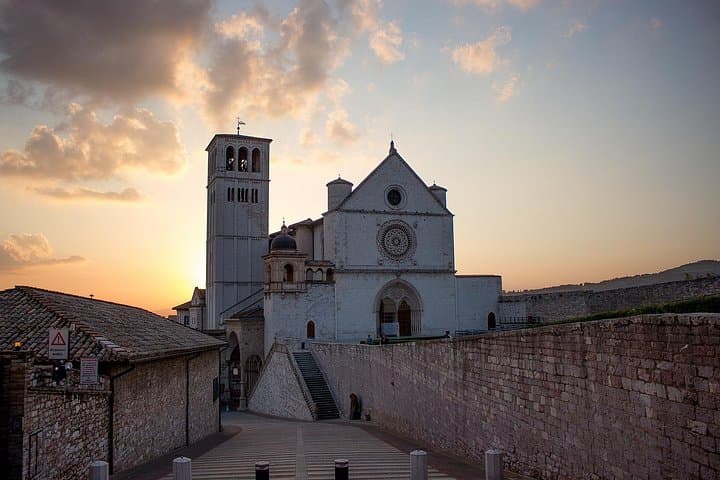


The morning air in Umbria tastes of olive oil and stone; you step out from a farmhouse and the low hills unfold like pages of history. Narrow lanes lead to Roman arches, bell towers puncture the sky, and the Basilica domes of Assisi keep watch as you follow the route where St. Francis once moved between villages.
The morning air in Umbria tastes of olive oil and stone; you step out from a farmhouse and the low hills unfold like pages of history. Narrow lanes lead to Roman arches, bell towers puncture the sky, and the Basilica domes of Assisi keep watch as you follow the route where St. Francis once moved between villages.
This seven-night guided itinerary threads Gubbio, Assisi, Spello, Bevagna, Montefalco and Spoleto—towns whose medieval streets, frescoed churches and olive terraces tell a layered story of faith, art and rural life. Geologically the region is gentle: rolling limestone and clay hills carved by irrigation and centuries of cultivation, with panoramic ridgelines known locally as the "Balcony of Umbria" in Montefalco. Cultural highlights center on Franciscan sites—the Porziuncola, San Damiano and the Basilica of San Francesco—each place offering artworks, relics and pilgrimage significance.
Expect mostly low-impact walking: cobbled streets, short uphill climbs to hilltop viewpoints (daily elevation changes typically under a few hundred metres), and coach transfers between towns. Terrain is urban and rural—packed earth farm tracks, stairways through medieval centers and paved village roads. The rhythm of the tour is unhurried: mornings of guided visits, afternoons for market stalls and local cuisine.
Practical guidance: bring sturdy walking shoes for uneven cobbles, a light waterproof layer for sudden showers, and a daypack for water, a camera and modest dress for churches. Travel light between farmhouses and hotels; plan for breakfast-included mornings and multiple short excursions each day.