THE ADVENTURE COLLECTIVE® · Independent discovery and booking for outdoor travel

Move between two centuries in a single half-day: explore the crumbling 16th-century ruins of Panamá Viejo, then stroll the ornate streets of Casco Antiguo. This combo tour blends archaeology, colonial architecture and practical guidance for hotel and cruise visitors.
Move between two centuries in a single half-day: explore the crumbling 16th-century ruins of Panamá Viejo, then stroll the ornate streets of Casco Antiguo. This combo tour blends archaeology, colonial architecture and practical guidance for hotel and cruise visitors.
You step off the coach into heat that makes the stone shimmer; gulls wheel where the old harbor opens to the Pacific and the city’s skyline watches from across the bay. The tour moves between two eras: the columned stones and broken cisterns of Panamá Viejo, where the original 1519 settlement was burned and abandoned, and the narrow, coral-stone streets of Casco Antiguo, the French-Spanish Quarter rebuilt in the late 17th century.
Verified experiences and guided adventures in the surrounding area.
You step off the coach into heat that makes the stone shimmer; gulls wheel where the old harbor opens to the Pacific and the city’s skyline watches from across the bay. The tour moves between two eras: the columned stones and broken cisterns of Panamá Viejo, where the original 1519 settlement was burned and abandoned, and the narrow, coral-stone streets of Casco Antiguo, the French-Spanish Quarter rebuilt in the late 17th century.
Panamá Viejo’s ruins reveal layered geology—coastal plain sediments undercut by saltwater, its fragments preserved as an open-air archaeological park. Casco Antiguo answers with baroque facades, tiled courtyards and apartments converted to cafes; the architecture reflects Spanish, French and Italian influences that shaped the city after Henry Morgan’s 1671 raid. Local vendors sell coffee and empanadas; rooftop viewpoints give a clear line of sight to the modern skyscrapers across the bay, a reminder of Panama’s role as a crossroads.
Practical guidance: expect 4–5 hours of mostly flat walking on cobbles and packed earth. Bring sun protection and a refillable water bottle—shade is intermittent and tropical sun is intense. A guided stroll covers key sites with a free hour to explore Casco Antiguo’s plazas and museums on your own; if arriving by cruise, plan at least 30–45 minutes buffer for embarkation logistics. Keep valuables secure—streets are safe but busy—and wear soles that manage uneven pavement. Timing your visit for early morning or late afternoon gives softer light for photos and cooler walking conditions.
The tour lasts about 4.5 hours and includes guided visits to the Panamá Viejo archaeological site and a walking tour of Casco Antiguo, plus free time to explore the historic district.
Yes—many operators pick up at Fuerte Amador cruise port; allow extra time for embarkation and disembarkation and confirm pick-up details when booking.
No major climbs—terrain is mostly flat but includes uneven cobblestones and some dirt paths at the ruins, so stable footwear is recommended.
Yes—participants typically have about an hour of free time in Casco Antiguo to visit small museums, markets, or rooftop bars; check opening hours and entry fees independently.
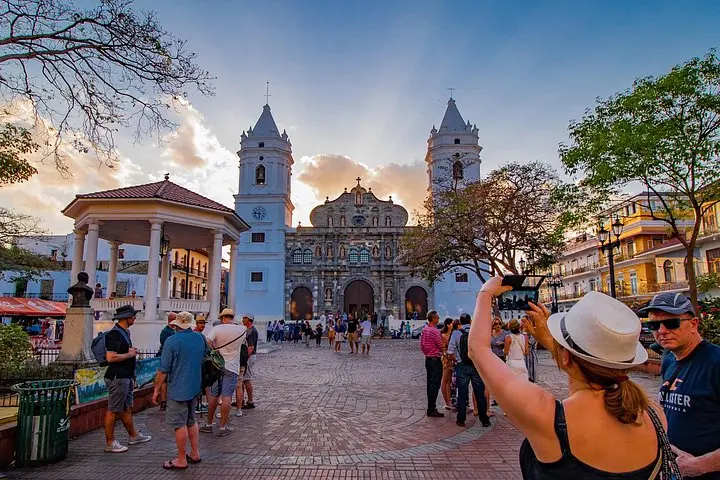
You step off the coach into heat that makes the stone shimmer; gulls wheel where the old harbor opens to the Pacific and the city’s skyline watches from across the bay. The tour moves between two eras: the columned stones and broken cisterns of Panamá Viejo, where the original 1519 settlement was burned and abandoned, and the narrow, coral-stone streets of Casco Antiguo, the French-Spanish Quarter rebuilt in the late 17th century.
You step off the coach into heat that makes the stone shimmer; gulls wheel where the old harbor opens to the Pacific and the city’s skyline watches from across the bay. The tour moves between two eras: the columned stones and broken cisterns of Panamá Viejo, where the original 1519 settlement was burned and abandoned, and the narrow, coral-stone streets of Casco Antiguo, the French-Spanish Quarter rebuilt in the late 17th century.
Panamá Viejo’s ruins reveal layered geology—coastal plain sediments undercut by saltwater, its fragments preserved as an open-air archaeological park. Casco Antiguo answers with baroque facades, tiled courtyards and apartments converted to cafes; the architecture reflects Spanish, French and Italian influences that shaped the city after Henry Morgan’s 1671 raid. Local vendors sell coffee and empanadas; rooftop viewpoints give a clear line of sight to the modern skyscrapers across the bay, a reminder of Panama’s role as a crossroads.
Practical guidance: expect 4–5 hours of mostly flat walking on cobbles and packed earth. Bring sun protection and a refillable water bottle—shade is intermittent and tropical sun is intense. A guided stroll covers key sites with a free hour to explore Casco Antiguo’s plazas and museums on your own; if arriving by cruise, plan at least 30–45 minutes buffer for embarkation logistics. Keep valuables secure—streets are safe but busy—and wear soles that manage uneven pavement. Timing your visit for early morning or late afternoon gives softer light for photos and cooler walking conditions.