THE ADVENTURE COLLECTIVE® · Independent discovery and booking for outdoor travel

Walk the cobbled streets from Market Place to the UNESCO World Heritage cathedral on this 90‑minute guided tour. Learn about Prince Bishops, medieval life and riverside mills while pausing for the city’s best framed views.
Walk the cobbled streets from Market Place to the UNESCO World Heritage cathedral on this 90‑minute guided tour. Learn about Prince Bishops, medieval life and riverside mills while pausing for the city’s best framed views.
A chilly breeze from the River Wear cuts across the Market Place as the group gathers beneath the shadow of the 19th-century Guildhall. Cobblestones click underfoot and the guide’s voice threads through narrow streets, drawing attention to stone carvings, statue plinths and the changed roofs that mark centuries of use.
Verified experiences and guided adventures in the surrounding area.
Operated by Walkabout Durham · Durham, County Durham
A chilly breeze from the River Wear cuts across the Market Place as the group gathers beneath the shadow of the 19th-century Guildhall. Cobblestones click underfoot and the guide’s voice threads through narrow streets, drawing attention to stone carvings, statue plinths and the changed roofs that mark centuries of use.
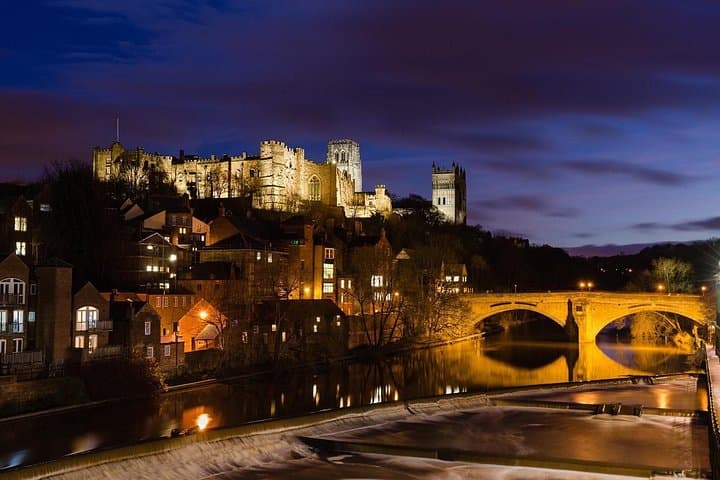
Durham’s compact center is a living medieval map: a castle-turned-university, a Romanesque cathedral founded in the 11th century and streets shaped by river traffic and monastic control. The city’s topography — a peninsula carved by the Wear — made it strategically defensible and culturally influential; the Prince Bishops once governed both church and county. Along the riverside, old mills and bridges recall industrial eras, while the Bailey’s colleges show how education layered onto ecclesiastical power.
The tour moves from Market Place to Framwellgate and Prebends Bridge, pausing for framed views of the cathedral and castle. Guides emphasize social history as much as architecture: market life, medieval rivalries with Scots, and local university traditions.
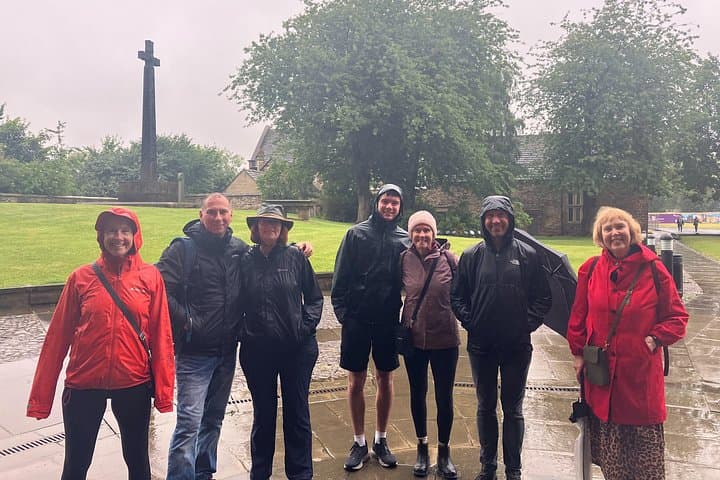
Practical notes: this is a 90‑minute, low‑impact walking tour that stays on public footpaths and does not enter buildings. Expect uneven cobbles and short flights of stone steps; comfortable shoes and a light waterproof are advisable. Morning or late‑afternoon departures avoid peak coach times and offer better light for photos. Public transport links place you minutes from the meeting point; the operator recommends cancelling 24 hours ahead for a full refund. Bring a charged phone and a small pack for layers and water — the city rewards slow, observant walking with details that reveal a long, contested history.
The meeting point is in Durham Market Place by the 19th-century Town Hall and Guildhall; arrive 10 minutes early to find the guide.
No — this walking tour remains outdoors and provides historical context and views of the cathedral and castle from Palace Green and nearby bridges.
The tour is classed as easy, but it uses cobbled surfaces and steps; wheelchair users should check routes in advance — contact the operator for specific accessibility needs.
For a full refund cancel at least 24 hours before the scheduled departure; later cancellations are not refundable.
Walkabout Durham operates guided outdoor trips and adventures with an emphasis on safety, stewardship, and memorable experiences.
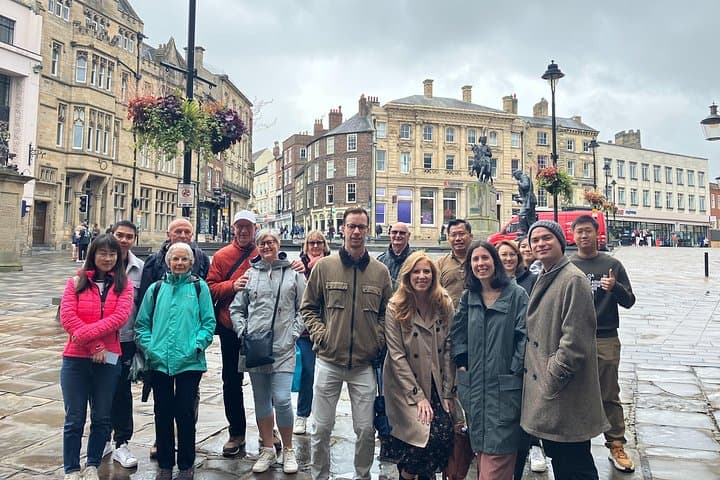
A chilly breeze from the River Wear cuts across the Market Place as the group gathers beneath the shadow of the 19th-century Guildhall. Cobblestones click underfoot and the guide’s voice threads through narrow streets, drawing attention to stone carvings, statue plinths and the changed roofs that mark centuries of use.
A chilly breeze from the River Wear cuts across the Market Place as the group gathers beneath the shadow of the 19th-century Guildhall. Cobblestones click underfoot and the guide’s voice threads through narrow streets, drawing attention to stone carvings, statue plinths and the changed roofs that mark centuries of use.
Durham’s compact center is a living medieval map: a castle-turned-university, a Romanesque cathedral founded in the 11th century and streets shaped by river traffic and monastic control. The city’s topography — a peninsula carved by the Wear — made it strategically defensible and culturally influential; the Prince Bishops once governed both church and county. Along the riverside, old mills and bridges recall industrial eras, while the Bailey’s colleges show how education layered onto ecclesiastical power.
The tour moves from Market Place to Framwellgate and Prebends Bridge, pausing for framed views of the cathedral and castle. Guides emphasize social history as much as architecture: market life, medieval rivalries with Scots, and local university traditions.
Practical notes: this is a 90‑minute, low‑impact walking tour that stays on public footpaths and does not enter buildings. Expect uneven cobbles and short flights of stone steps; comfortable shoes and a light waterproof are advisable. Morning or late‑afternoon departures avoid peak coach times and offer better light for photos. Public transport links place you minutes from the meeting point; the operator recommends cancelling 24 hours ahead for a full refund. Bring a charged phone and a small pack for layers and water — the city rewards slow, observant walking with details that reveal a long, contested history.