THE ADVENTURE COLLECTIVE® · Independent discovery and booking for outdoor travel
Trace the spiral of ancient seas on a guided walk through El Torcal’s sculpted limestone. This small-group outing highlights ammonite fossils, karst geology and sweeping Andalusian panoramas while navigating unmarked routes that only local guides regularly use.
Trace the spiral of ancient seas on a guided walk through El Torcal’s sculpted limestone. This small-group outing highlights ammonite fossils, karst geology and sweeping Andalusian panoramas while navigating unmarked routes that only local guides regularly use.
A low wind pushes over a plateau of fractured limestone as your small group threads between sculpted towers of rock. The guide pauses at a slab polished by rain and points to spiral impressions—ammonites fossilized when this was seabed millions of years ago. Light throws long shadows across the karst pavement; the plain around Antequera opens to the north, Sierra Nevada hazy on the horizon.
Verified experiences and guided adventures in the surrounding area.
Operated by Visita Antequera · Antequera, Andalusia
A low wind pushes over a plateau of fractured limestone as your small group threads between sculpted towers of rock. The guide pauses at a slab polished by rain and points to spiral impressions—ammonites fossilized when this was seabed millions of years ago. Light throws long shadows across the karst pavement; the plain around Antequera opens to the north, Sierra Nevada hazy on the horizon.
El Torcal is a classic karst landscape—limestone eroded into pinnacles, hollows and narrow corridors. The Route of the Ammonites follows an unmarked track that a local guide uses to locate fossil beds and vantage points. The Antequera region also contains the Antequera Dolmens, a UNESCO World Heritage site (inscribed 2016), and long human stories of shepherding and quarrying that shaped local trails.
Expect rocky, uneven terrain at roughly 1,000–1,200 meters altitude, short sections of loose scree and low scrub between rock yards. The guided outing is designed for hikers with moderate fitness: steady 3–4 hour walking with frequent stops for geology and landscape interpretation. Photographic opportunities abound—wide panoramas and micro details in fractured stone—while the guide keeps the group on safe lines across the unmarked route.
Practical: wear sturdy boots with ankle support, layers for wind and sun, bring at least 1.5 L of water and a light wind shell. Morning light is best for fossils and cooler temperatures; check weather because wind and fog can reduce visibility. The walk is compact, interpretive and rooted in geology—ideal for anyone curious about the earth beneath their feet.
The route is rated moderate: uneven limestone and some loose scree require sure footing, but no technical climbing—good balance and moderate fitness suffice.
Yes—guides point out ammonite impressions and other shell fossils in exposed bedding planes; they are visible but often small and require close inspection.
Small children with steady footing and supervised older travelers in good condition can manage, but it’s not recommended for people with balance problems or low fitness.
Tours can be canceled for bad weather; wind and fog reduce visibility and safety on the plateau, and operators typically offer a refund if canceled within policy.
Visita Antequera operates guided outdoor trips and adventures with an emphasis on safety, stewardship, and memorable experiences.
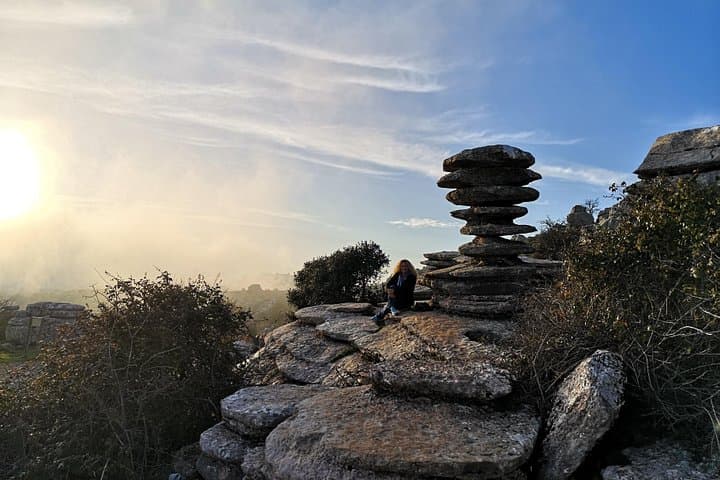
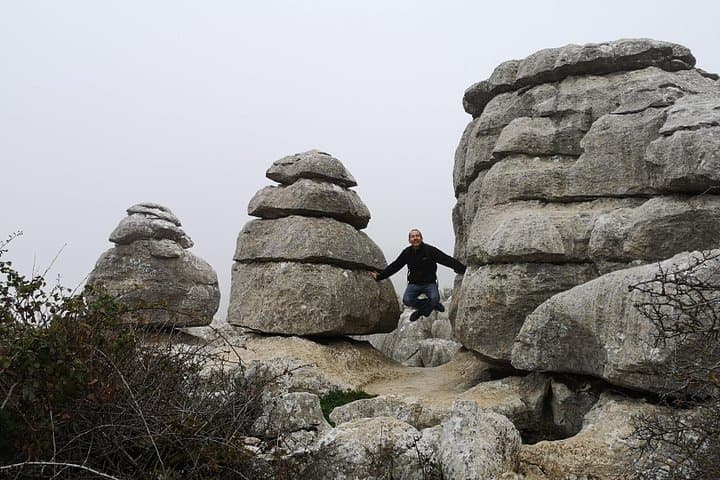
A low wind pushes over a plateau of fractured limestone as your small group threads between sculpted towers of rock. The guide pauses at a slab polished by rain and points to spiral impressions—ammonites fossilized when this was seabed millions of years ago. Light throws long shadows across the karst pavement; the plain around Antequera opens to the north, Sierra Nevada hazy on the horizon.
A low wind pushes over a plateau of fractured limestone as your small group threads between sculpted towers of rock. The guide pauses at a slab polished by rain and points to spiral impressions—ammonites fossilized when this was seabed millions of years ago. Light throws long shadows across the karst pavement; the plain around Antequera opens to the north, Sierra Nevada hazy on the horizon.
El Torcal is a classic karst landscape—limestone eroded into pinnacles, hollows and narrow corridors. The Route of the Ammonites follows an unmarked track that a local guide uses to locate fossil beds and vantage points. The Antequera region also contains the Antequera Dolmens, a UNESCO World Heritage site (inscribed 2016), and long human stories of shepherding and quarrying that shaped local trails.
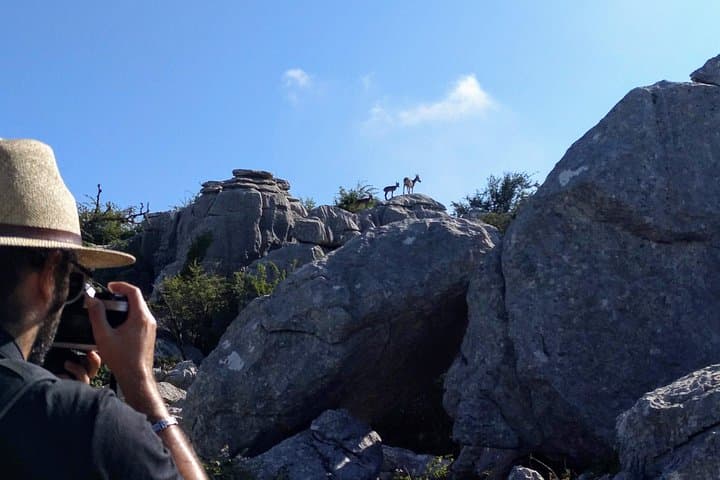
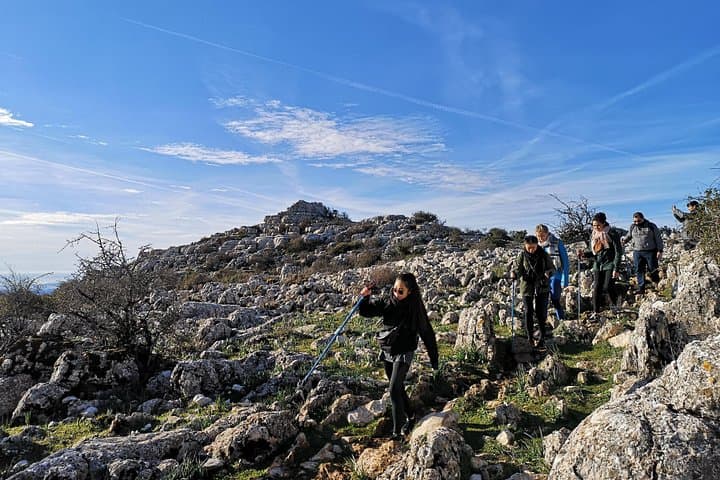
Expect rocky, uneven terrain at roughly 1,000–1,200 meters altitude, short sections of loose scree and low scrub between rock yards. The guided outing is designed for hikers with moderate fitness: steady 3–4 hour walking with frequent stops for geology and landscape interpretation. Photographic opportunities abound—wide panoramas and micro details in fractured stone—while the guide keeps the group on safe lines across the unmarked route.
Practical: wear sturdy boots with ankle support, layers for wind and sun, bring at least 1.5 L of water and a light wind shell. Morning light is best for fossils and cooler temperatures; check weather because wind and fog can reduce visibility. The walk is compact, interpretive and rooted in geology—ideal for anyone curious about the earth beneath their feet.
