THE ADVENTURE COLLECTIVE® · Independent discovery and booking for outdoor travel

Follow a fragment of the E4 and the same stones ancient worshipers used as you descend from the Livadi plateau to Delphi’s sanctuary. Expect dramatic views over olive groves and the Corinthian Gulf, a 650 m altitude change, and technical downhill sections.
Follow a fragment of the E4 and the same stones ancient worshipers used as you descend from the Livadi plateau to Delphi’s sanctuary. Expect dramatic views over olive groves and the Corinthian Gulf, a 650 m altitude change, and technical downhill sections.
You step onto a ribbon of worn limestone at 1,200 m on the Livadi plateau and the mountain exhales—cool air pushing down into cedar and fir. The trail immediately begins to unspool: stone steps, slick with centuries of feet, give way to single-track packed dirt that threads through laurel and low pines. Below, the olive grove opens out and the Corinthian Gulf flashes silver between ridges of the Peloponnese.
Verified experiences and guided adventures in the surrounding area.
Operated by TREKKING HELLAS · Delphi, Phocis
You step onto a ribbon of worn limestone at 1,200 m on the Livadi plateau and the mountain exhales—cool air pushing down into cedar and fir. The trail immediately begins to unspool: stone steps, slick with centuries of feet, give way to single-track packed dirt that threads through laurel and low pines. Below, the olive grove opens out and the Corinthian Gulf flashes silver between ridges of the Peloponnese.
This route follows a section of the E4 European long‑distance path and the same ancient footpath pilgrims used centuries ago to travel between Delphi’s sanctuary and the Corycian Grotto where Pan was venerated. Geologically, you move from the higher, karstic slopes of Mount Parnassos down into Mediterranean terraces—limestone slabs, gravelly runoff and terraces of terraced olives chart the change.
Culturally the path is a living link to classical ritual and rural mountain life; shepherd huts, stone walls and scattered chapels punctuate the descent. Expect tight switchbacks, exposed rock sections and sweeping outlooks that reward every drop of elevation—about 650 m—from alpine plateaus to warmer valley air.
Practical guide: plan on 4–5 hours on the trail, moderate-to-challenging fitness, and no archaeological-site entry included with the hike. Wear grippy boots and consider poles for the steep descent. Bring 2 L water, layered clothing, and sun protection; start early to avoid heat and late‑day weather changes. The operator limits groups to eight and provides snacks and liability insurance—book mobile tickets in advance, and respect trail etiquette: stay on the route, pack out waste, and leave artifacts untouched.
No, this is a hiking tour only; entrance or guided visits to the Archaeological Site of Delphi are not included.
The hike involves roughly 650 m of altitude change over technical terrain and is best for fit hikers comfortable with long downhill sections and uneven rock.
The hike starts on the Livadi plateau around 1,200 m; group sizes are capped at eight participants for this guided tour.
This tour is not recommended for those with spinal or serious mobility issues, pregnant travelers, or anyone unable to manage steep, uneven trails.
TREKKING HELLAS operates guided outdoor trips and adventures with an emphasis on safety, stewardship, and memorable experiences.
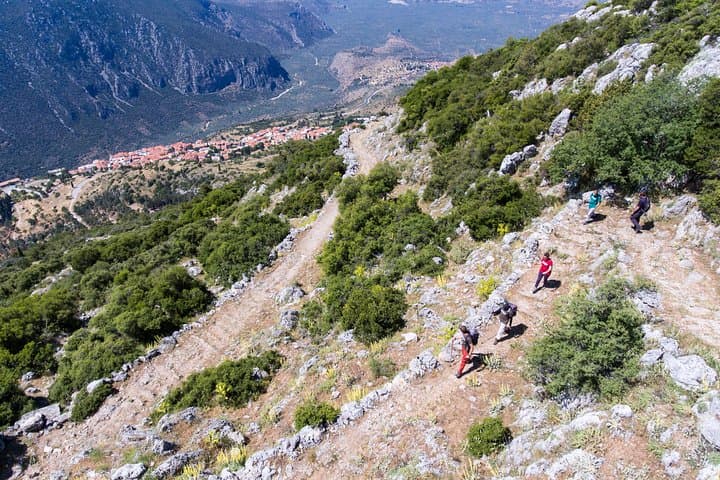


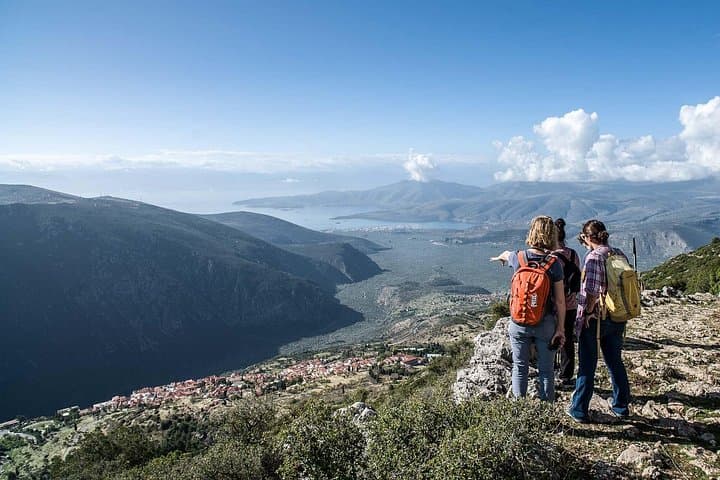
You step onto a ribbon of worn limestone at 1,200 m on the Livadi plateau and the mountain exhales—cool air pushing down into cedar and fir. The trail immediately begins to unspool: stone steps, slick with centuries of feet, give way to single-track packed dirt that threads through laurel and low pines. Below, the olive grove opens out and the Corinthian Gulf flashes silver between ridges of the Peloponnese.
You step onto a ribbon of worn limestone at 1,200 m on the Livadi plateau and the mountain exhales—cool air pushing down into cedar and fir. The trail immediately begins to unspool: stone steps, slick with centuries of feet, give way to single-track packed dirt that threads through laurel and low pines. Below, the olive grove opens out and the Corinthian Gulf flashes silver between ridges of the Peloponnese.
This route follows a section of the E4 European long‑distance path and the same ancient footpath pilgrims used centuries ago to travel between Delphi’s sanctuary and the Corycian Grotto where Pan was venerated. Geologically, you move from the higher, karstic slopes of Mount Parnassos down into Mediterranean terraces—limestone slabs, gravelly runoff and terraces of terraced olives chart the change.
Culturally the path is a living link to classical ritual and rural mountain life; shepherd huts, stone walls and scattered chapels punctuate the descent. Expect tight switchbacks, exposed rock sections and sweeping outlooks that reward every drop of elevation—about 650 m—from alpine plateaus to warmer valley air.
Practical guide: plan on 4–5 hours on the trail, moderate-to-challenging fitness, and no archaeological-site entry included with the hike. Wear grippy boots and consider poles for the steep descent. Bring 2 L water, layered clothing, and sun protection; start early to avoid heat and late‑day weather changes. The operator limits groups to eight and provides snacks and liability insurance—book mobile tickets in advance, and respect trail etiquette: stay on the route, pack out waste, and leave artifacts untouched.