THE ADVENTURE COLLECTIVE® · Independent discovery and booking for outdoor travel

Spend a full day tracing Ghana’s coastal history from Cape Coast Castle to Assin Manso Slave River Park. This private tour blends on-site history, local culture and practical logistics for a thoughtful, accessible visit.
Spend a full day tracing Ghana’s coastal history from Cape Coast Castle to Assin Manso Slave River Park. This private tour blends on-site history, local culture and practical logistics for a thoughtful, accessible visit.
A salt breeze from the Gulf of Guinea pushes across the ramparts as visitors step from an air-conditioned van into the bright courtyard of Cape Coast Castle. The stone keeps the day's heat and the voices of the past — guides point to cramped dungeons and the high windows through which captives saw the ocean for the last time.
Verified experiences and guided adventures in the surrounding area.
Operated by Nsroma Adventures · Cape Coast, Central Region
A salt breeze from the Gulf of Guinea pushes across the ramparts as visitors step from an air-conditioned van into the bright courtyard of Cape Coast Castle. The stone keeps the day's heat and the voices of the past — guides point to cramped dungeons and the high windows through which captives saw the ocean for the last time.
This full-day, private tour threads together sites that mark Ghana's central role in the trans-Atlantic slave trade: Cape Coast Castle (a UNESCO World Heritage Site built in the 1650s), the reflective pools and walking grounds at Assin Manso Slave River Park, and fishing communities along the Central Coast. Geology here is simple — coastal sandstone and laterite shelves meet the Atlantic, shaping low cliffs, mangrove-lined estuaries and sheltered fishing beaches that sustained Fante communities for centuries.
Culturally, the region mixes Fante traditions, colonial-era fortifications and present-day ritual; local guides often weave oral histories with documented accounts to bring context to each doorway and chain-marked brick.
Practical guidance: expect 8–10 hours with two-hour stops at major sites, uneven stone steps inside forts, and short walks on packed dirt. Bring sun protection, modest clothing for memorial sites, and small cash for local vendors. The day includes bottled water, snacks and lunch, and uses air-conditioned transport with onboard Wi‑Fi.
This is not a casual photo stop but a considered visit: allow time to listen, reflect and follow the guide through spaces where history is still palpable.
The private tour runs about 8–10 hours and includes Cape Coast Castle (admission included), Assin Manso Slave River Park, and coastal stops with lunch at Hans Cottage Crocodile Hotel.
Some sites and the vehicle are wheelchair accessible, but interior castle spaces have narrow staircases that are not accessible; check with the operator for specific needs.
The tour includes bottled water, snacks and a lunch (as listed), and transport is by air‑conditioned vehicle with onboard Wi‑Fi.
Photography is generally allowed, but guides may request respectful behavior in memorial areas; avoid flash in dim interiors and follow site rules.
Nsroma Adventures operates guided outdoor trips and adventures with an emphasis on safety, stewardship, and memorable experiences.
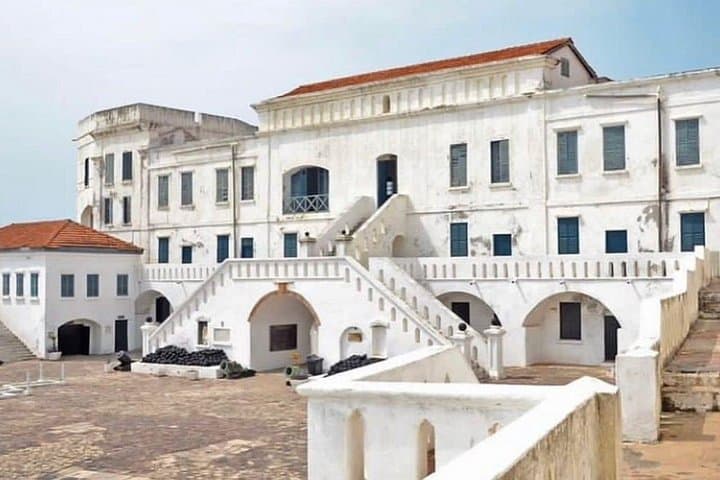


A salt breeze from the Gulf of Guinea pushes across the ramparts as visitors step from an air-conditioned van into the bright courtyard of Cape Coast Castle. The stone keeps the day's heat and the voices of the past — guides point to cramped dungeons and the high windows through which captives saw the ocean for the last time.
A salt breeze from the Gulf of Guinea pushes across the ramparts as visitors step from an air-conditioned van into the bright courtyard of Cape Coast Castle. The stone keeps the day's heat and the voices of the past — guides point to cramped dungeons and the high windows through which captives saw the ocean for the last time.
This full-day, private tour threads together sites that mark Ghana's central role in the trans-Atlantic slave trade: Cape Coast Castle (a UNESCO World Heritage Site built in the 1650s), the reflective pools and walking grounds at Assin Manso Slave River Park, and fishing communities along the Central Coast. Geology here is simple — coastal sandstone and laterite shelves meet the Atlantic, shaping low cliffs, mangrove-lined estuaries and sheltered fishing beaches that sustained Fante communities for centuries.
Culturally, the region mixes Fante traditions, colonial-era fortifications and present-day ritual; local guides often weave oral histories with documented accounts to bring context to each doorway and chain-marked brick.
Practical guidance: expect 8–10 hours with two-hour stops at major sites, uneven stone steps inside forts, and short walks on packed dirt. Bring sun protection, modest clothing for memorial sites, and small cash for local vendors. The day includes bottled water, snacks and lunch, and uses air-conditioned transport with onboard Wi‑Fi.
This is not a casual photo stop but a considered visit: allow time to listen, reflect and follow the guide through spaces where history is still palpable.