THE ADVENTURE COLLECTIVE® · Independent discovery and booking for outdoor travel

Walk 1.45 miles of repurposed railroad on this 75-minute small-group tour of Manhattan’s High Line. Licensed guides weave urban history, architecture, and horticulture into a compact, accessible city hike.
Walk 1.45 miles of repurposed railroad on this 75-minute small-group tour of Manhattan’s High Line. Licensed guides weave urban history, architecture, and horticulture into a compact, accessible city hike.
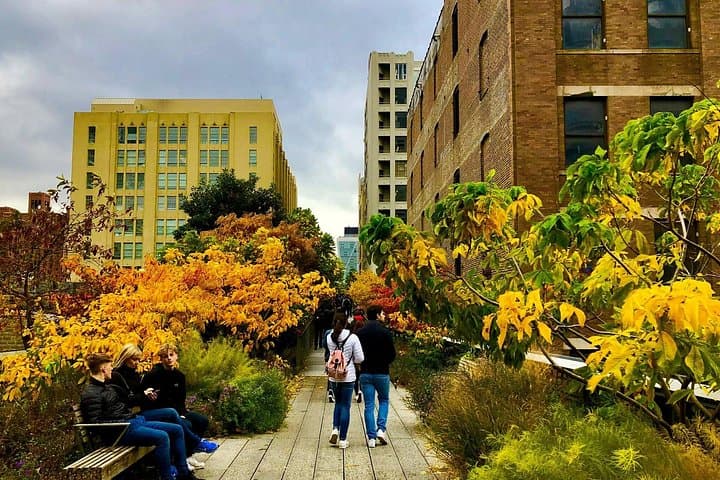
You step up the iron stair and the city changes pitch—horns and subway rumbles drop an octave and the narrower world of the High Line opens: chest-high grasses, benches cut into old railbeds, the angled glass of new towers reflecting a sky you thought Manhattan had sold. The tour begins at the staircase by 500 West 30th Street, where your guide spreads a compact map and points out what the elevated rails once carried—coal, rivets, and the shipping arteries of a different New York.
Verified experiences and guided adventures in the surrounding area.
Operated by Manhattan Walking Tour · New York, NY
You step up the iron stair and the city changes pitch—horns and subway rumbles drop an octave and the narrower world of the High Line opens: chest-high grasses, benches cut into old railbeds, the angled glass of new towers reflecting a sky you thought Manhattan had sold. The tour begins at the staircase by 500 West 30th Street, where your guide spreads a compact map and points out what the elevated rails once carried—coal, rivets, and the shipping arteries of a different New York.
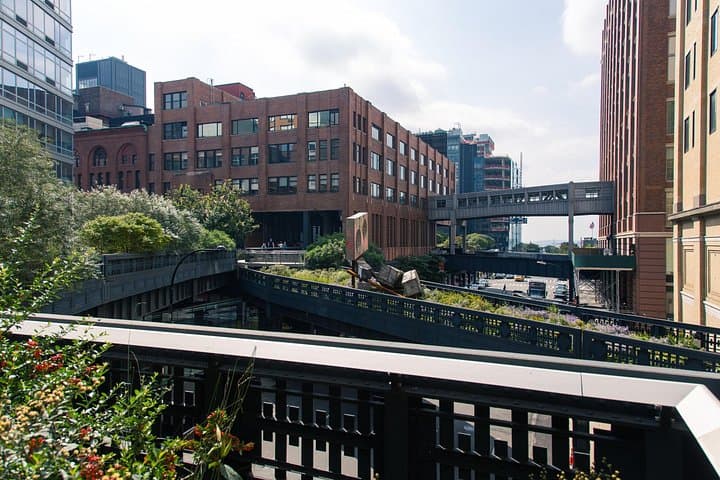
The High Line is 1.45 miles of raised greenway repurposed from a 1930s freight spur. Its transformation—championed by neighborhood activists and the nonprofit Friends of the High Line—turned derelict steel into a public promenade, with the first section opening in 2009. The route threads modern design with leftover infrastructure: tracks that reappear as sculptural lines, plantings based on native species, and unexpected public art tucked between Chelsea warehouses and Hudson River views.
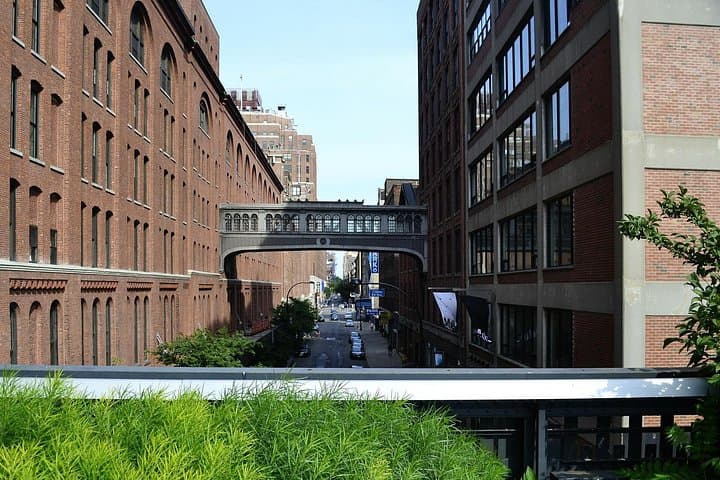
Geology and city collide here: you’re walking where Manhattan’s bedrock meets reclaimed riverfront blocks, and the air tastes of river salts and roasted coffee from Chelsea Market below. The park’s elevation is modest—roughly 20–30 feet above street level—so the effort is minimal and the payoff is perspective: an intimate avenue above the street grid, where apartment windows and gallery facades reveal the city at eye level.
Practically, this small-group tour runs about 75 minutes and covers roughly 0.8–1.2 miles depending on route and photo stops. Expect mostly boardwalks, ramps and short flights of stairs; the route is wheelchair accessible on ramps and elevators at some access points, but confirm with the operator if you need elevator access from the W 30th entrance. Your licensed guide layers anecdotes—industrial decline, the seedy years, and the campaign to save the rail—into on-the-ground context about the plant palette and the public art rotating through the park.
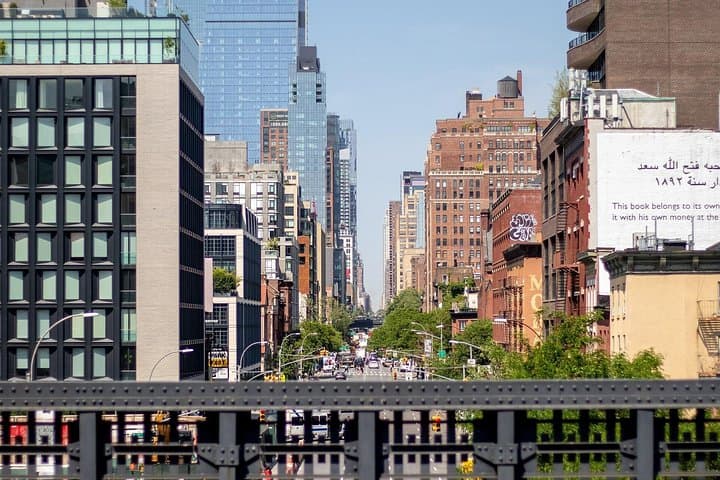
Go early in spring for fresh plant buds, or late afternoon in summer when shadows sharpen and the Chelsea piers glitter. Bring a filled water bottle and comfortable shoes; the pace is casual but you’ll stand for short talks. Cameras do well at eye-level frames: look back toward the cityscape to capture the elevated angle, or frame the river at 20th Street for cleaner horizons. Public transit drops you two blocks away—this is an urban stroll with the guidance and local stories that turn a walk into a short history lesson and a living museum.
Meet the guide at the High Line staircase next to 500 West 30th Street, across from the Little Spain food court entrance.
Yes—most of the High Line is wheelchair accessible via ramps and elevators; notify the operator if you require elevator access from the W 30th entrance.
Expect roughly 0.8–1.2 miles over 75 minutes with several stops for stories and viewpoints; terrain is flat with ramps and short stairs.
Strollers are allowed and the route is stroller-friendly, though some access points use stairs—confirm meeting-point elevator options if needed.
Service animals are allowed; general pet policies follow city park rules—check with the operator for tour-specific guidelines.
For a full refund cancel at least 24 hours before the scheduled departure; same-day cancellations are typically non-refundable.
Manhattan Walking Tour operates guided outdoor trips and adventures with an emphasis on safety, stewardship, and memorable experiences.
You step up the iron stair and the city changes pitch—horns and subway rumbles drop an octave and the narrower world of the High Line opens: chest-high grasses, benches cut into old railbeds, the angled glass of new towers reflecting a sky you thought Manhattan had sold. The tour begins at the staircase by 500 West 30th Street, where your guide spreads a compact map and points out what the elevated rails once carried—coal, rivets, and the shipping arteries of a different New York.
You step up the iron stair and the city changes pitch—horns and subway rumbles drop an octave and the narrower world of the High Line opens: chest-high grasses, benches cut into old railbeds, the angled glass of new towers reflecting a sky you thought Manhattan had sold. The tour begins at the staircase by 500 West 30th Street, where your guide spreads a compact map and points out what the elevated rails once carried—coal, rivets, and the shipping arteries of a different New York.
The High Line is 1.45 miles of raised greenway repurposed from a 1930s freight spur. Its transformation—championed by neighborhood activists and the nonprofit Friends of the High Line—turned derelict steel into a public promenade, with the first section opening in 2009. The route threads modern design with leftover infrastructure: tracks that reappear as sculptural lines, plantings based on native species, and unexpected public art tucked between Chelsea warehouses and Hudson River views.
Geology and city collide here: you’re walking where Manhattan’s bedrock meets reclaimed riverfront blocks, and the air tastes of river salts and roasted coffee from Chelsea Market below. The park’s elevation is modest—roughly 20–30 feet above street level—so the effort is minimal and the payoff is perspective: an intimate avenue above the street grid, where apartment windows and gallery facades reveal the city at eye level.
Practically, this small-group tour runs about 75 minutes and covers roughly 0.8–1.2 miles depending on route and photo stops. Expect mostly boardwalks, ramps and short flights of stairs; the route is wheelchair accessible on ramps and elevators at some access points, but confirm with the operator if you need elevator access from the W 30th entrance. Your licensed guide layers anecdotes—industrial decline, the seedy years, and the campaign to save the rail—into on-the-ground context about the plant palette and the public art rotating through the park.
Go early in spring for fresh plant buds, or late afternoon in summer when shadows sharpen and the Chelsea piers glitter. Bring a filled water bottle and comfortable shoes; the pace is casual but you’ll stand for short talks. Cameras do well at eye-level frames: look back toward the cityscape to capture the elevated angle, or frame the river at 20th Street for cleaner horizons. Public transit drops you two blocks away—this is an urban stroll with the guidance and local stories that turn a walk into a short history lesson and a living museum.