THE ADVENTURE COLLECTIVE® · Independent discovery and booking for outdoor travel
Walk the former Nazi Party Rally Grounds with a local guide who pairs architectural detail with cultural reckoning. This two-hour tour visits the Kongresshalle, Great Street and Zeppelinfeld while explaining the Nuremberg Laws and Trials and how the city teaches this difficult past.
Walk the former Nazi Party Rally Grounds with a local guide who pairs architectural detail with cultural reckoning. This two-hour tour visits the Kongresshalle, Great Street and Zeppelinfeld while explaining the Nuremberg Laws and Trials and how the city teaches this difficult past.
You step from tram into a wide, open sweep of grass and stone; the air carries the echo of shouted speeches long ended and the hush of people walking slowly over granite.
Verified experiences and guided adventures in the surrounding area.
Operated by Nuremberg Free Walking Tour · Nuremberg, Bavaria
You step from tram into a wide, open sweep of grass and stone; the air carries the echo of shouted speeches long ended and the hush of people walking slowly over granite.
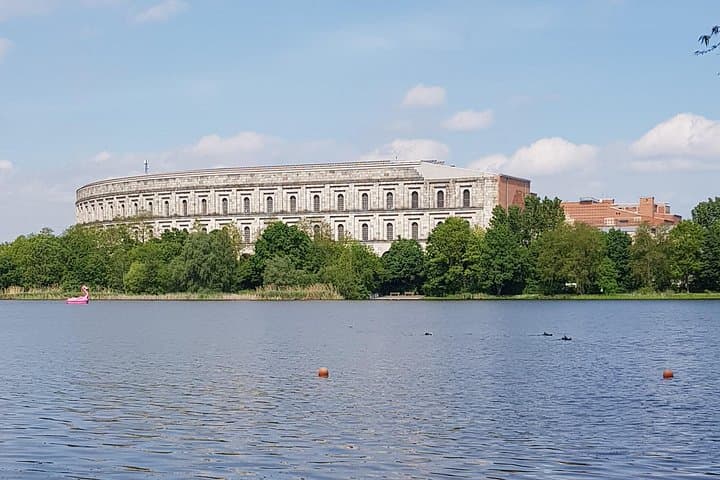
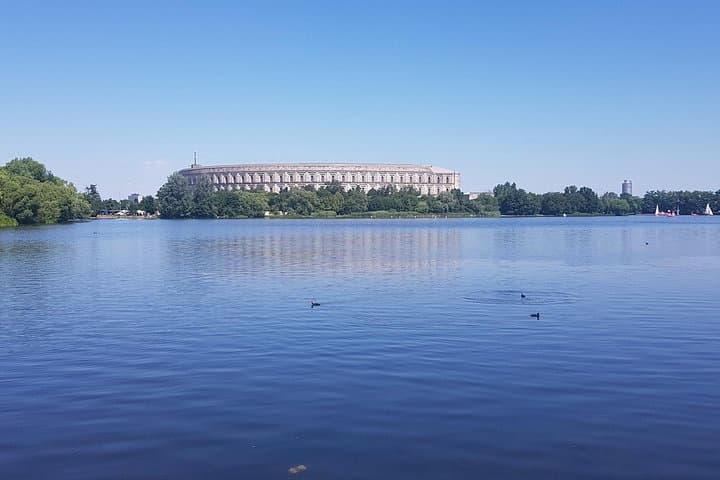
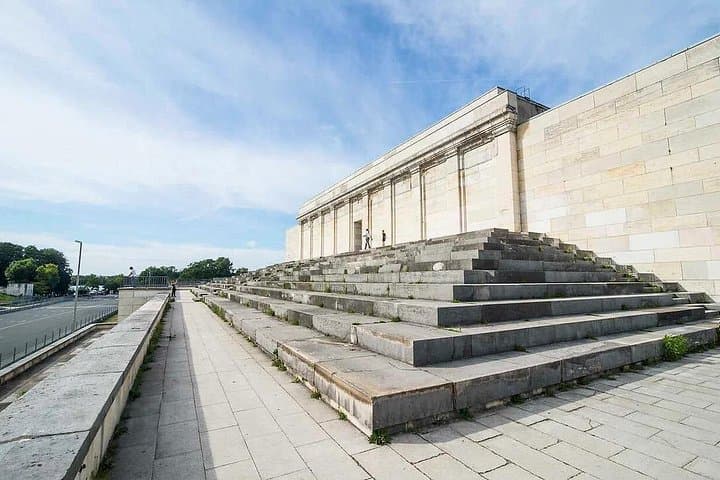
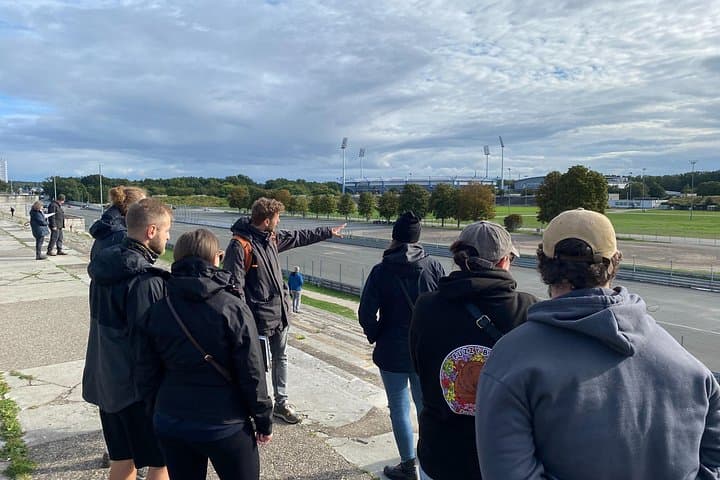
The tour moves through the Kongresshalle's hulking arches, along the Great Street and across the Zeppelinfeld, where concrete and carved steps still suggest staged power. Your guide, a Nuremberg local, frames each stop with precise fact and human context — the ambitious designs of Speer, the partial ruins left by war, and the later choices Germany made to interpret and teach this past.
Geology here is practical: local sandstone and granite built ceremonial surfaces meant to last. Culture and memory sit atop that stone — the Documentation Center now houses exhibits that trace Nazi ideology, the Nuremberg Laws, and the subsequent Trials that reshaped international law.
Expect measured conversation as much as sightseeing: this is education and reflection more than spectacle. The walk is largely flat across park and parade ground, with some stairs at the Kongresshalle.
Practical guidance: wear sturdy walking shoes, bring water and a light rain layer, and allow roughly 2–2.5 hours. Tours often discuss sensitive material; children and those seeking a lighter overview should check content with the operator in advance. Public transit serves the site and guided groups are typically 25 people or fewer.
You’ll leave with a clearer sense of how physical spaces were designed to persuade, how postwar Germany reclaimed the ground, and why remembering in detail matters as much as seeing.
The guided itinerary runs about 135 minutes (roughly 2–2.5 hours) and covers multiple outdoor sites within the rally grounds.
The material is historically heavy and includes discussion of persecution and trials; ask the operator about age-appropriate options before booking.
Many areas, including public transport access and parts of the Documentation Center, are wheelchair accessible, but some outdoor sections have uneven ground.
Admission to indoor museums is not included by default — check the tour listing or ask the guide if entry fees are part of your booking.
Nuremberg Free Walking Tour operates guided outdoor trips and adventures with an emphasis on safety, stewardship, and memorable experiences.
You step from tram into a wide, open sweep of grass and stone; the air carries the echo of shouted speeches long ended and the hush of people walking slowly over granite.
You step from tram into a wide, open sweep of grass and stone; the air carries the echo of shouted speeches long ended and the hush of people walking slowly over granite.
The tour moves through the Kongresshalle's hulking arches, along the Great Street and across the Zeppelinfeld, where concrete and carved steps still suggest staged power. Your guide, a Nuremberg local, frames each stop with precise fact and human context — the ambitious designs of Speer, the partial ruins left by war, and the later choices Germany made to interpret and teach this past.
Geology here is practical: local sandstone and granite built ceremonial surfaces meant to last. Culture and memory sit atop that stone — the Documentation Center now houses exhibits that trace Nazi ideology, the Nuremberg Laws, and the subsequent Trials that reshaped international law.
Expect measured conversation as much as sightseeing: this is education and reflection more than spectacle. The walk is largely flat across park and parade ground, with some stairs at the Kongresshalle.
Practical guidance: wear sturdy walking shoes, bring water and a light rain layer, and allow roughly 2–2.5 hours. Tours often discuss sensitive material; children and those seeking a lighter overview should check content with the operator in advance. Public transit serves the site and guided groups are typically 25 people or fewer.
You’ll leave with a clearer sense of how physical spaces were designed to persuade, how postwar Germany reclaimed the ground, and why remembering in detail matters as much as seeing.
