THE ADVENTURE COLLECTIVE® · Independent discovery and booking for outdoor travel

Step through the Clock Tower and into Cartagena’s walled center on a 2.5-hour small-group walking tour. Explore plazas, colonial architecture, street art in Getsemaní, and practical tips for navigating cobbled streets and tropical sun.
Step through the Clock Tower and into Cartagena’s walled center on a 2.5-hour small-group walking tour. Explore plazas, colonial architecture, street art in Getsemaní, and practical tips for navigating cobbled streets and tropical sun.
You pass under the Clock Tower and the city opens like a map folded along color and shadow — streets of ochre and cobalt, wooden balconies that lean over your shoulders, churches whose bells mark slow, precise intervals. The Caribbean breeze dares you to slow your pace and listen: vendors calling, distant waves, a guide pointing out dates carved into stone.
Verified experiences and guided adventures in the surrounding area.
Operated by Hanging out in cartagena · Cartagena, Bolívar
You pass under the Clock Tower and the city opens like a map folded along color and shadow — streets of ochre and cobalt, wooden balconies that lean over your shoulders, churches whose bells mark slow, precise intervals. The Caribbean breeze dares you to slow your pace and listen: vendors calling, distant waves, a guide pointing out dates carved into stone.
Cartagena de Indias was founded in the 16th century by Pedro de Heredia and fortified with walls and bastions to repel pirates and competing empires. The stones underfoot are part of that history — coral-derived limestone from the coastal plain and mangrove soils reclaimed and built over during Spanish rule. The historic center preserves colonial urban patterns: plazas (Plaza de los Coches, Bolivar Park), arcades, and fortified gates that frame views of the sea.
Culture here is outward and audible — Afro-Caribbean rhythms, street food stalls in Getsemaní, and public art that chronicles modern Cartagena alongside colonial relics. Look for Botero’s sculpture, the Portal de las Reinas, and alleys where murals and hanging flags create instant portrait backdrops.
Practical guidance: tours begin at the Clock Tower and run about 2–3 hours over mostly flat cobblestones; expect moderate walking with some uneven surfaces and brief standing. Wear breathable shoes, sun protection, and bring water and small cash for snacks or crafts. Morning or late-afternoon departures avoid the strongest sun; the guide will pace stops for context and photos. This walk is an efficient way to read the city with your feet — bring curiosity and closed-toe shoes.
The tour starts at the Clock Tower (Torre del Reloj) at the main entrance to the walled city—arrive a few minutes early for the guide’s introduction.
Stroller access is available for infants, and some flat sections are passable, but cobblestones and narrow lanes can be challenging—contact the operator if you need accommodations.
This walking tour covers public plazas, streets, and exteriors; entrance fees to museums or indoor sites are typically not included unless specified.
Guides are accredited local professionals; language availability varies—check booking details or request language preferences in advance.
Hanging out in cartagena operates guided outdoor trips and adventures with an emphasis on safety, stewardship, and memorable experiences.


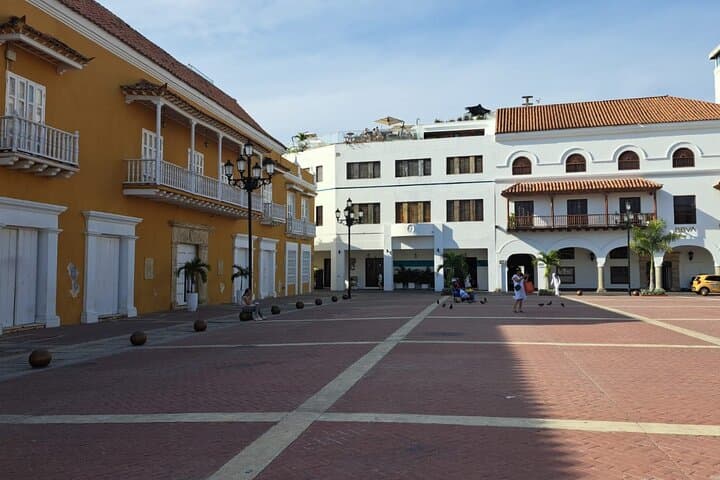
You pass under the Clock Tower and the city opens like a map folded along color and shadow — streets of ochre and cobalt, wooden balconies that lean over your shoulders, churches whose bells mark slow, precise intervals. The Caribbean breeze dares you to slow your pace and listen: vendors calling, distant waves, a guide pointing out dates carved into stone.
You pass under the Clock Tower and the city opens like a map folded along color and shadow — streets of ochre and cobalt, wooden balconies that lean over your shoulders, churches whose bells mark slow, precise intervals. The Caribbean breeze dares you to slow your pace and listen: vendors calling, distant waves, a guide pointing out dates carved into stone.
Cartagena de Indias was founded in the 16th century by Pedro de Heredia and fortified with walls and bastions to repel pirates and competing empires. The stones underfoot are part of that history — coral-derived limestone from the coastal plain and mangrove soils reclaimed and built over during Spanish rule. The historic center preserves colonial urban patterns: plazas (Plaza de los Coches, Bolivar Park), arcades, and fortified gates that frame views of the sea.
Culture here is outward and audible — Afro-Caribbean rhythms, street food stalls in Getsemaní, and public art that chronicles modern Cartagena alongside colonial relics. Look for Botero’s sculpture, the Portal de las Reinas, and alleys where murals and hanging flags create instant portrait backdrops.
Practical guidance: tours begin at the Clock Tower and run about 2–3 hours over mostly flat cobblestones; expect moderate walking with some uneven surfaces and brief standing. Wear breathable shoes, sun protection, and bring water and small cash for snacks or crafts. Morning or late-afternoon departures avoid the strongest sun; the guide will pace stops for context and photos. This walk is an efficient way to read the city with your feet — bring curiosity and closed-toe shoes.