THE ADVENTURE COLLECTIVE® · Independent discovery and booking for outdoor travel

Trace the WWI land fortifications from Paloheinä into Helsinki’s Central Park with a historian guide. This 3-hour walk reveals granite ridges, earthworks and the local stories behind Finland’s early 20th-century defenses.
Trace the WWI land fortifications from Paloheinä into Helsinki’s Central Park with a historian guide. This 3-hour walk reveals granite ridges, earthworks and the local stories behind Finland’s early 20th-century defenses.
The walk begins under tall pines at Paloheinä, where the forest exhales cold, resin-scented air and a narrow trail angles inland toward low stone ridges and earthworks. As you step off the city grid the landscape tightens—rocky outcrops, moss-carpeted trenches and overgrown gun platforms that still hold the weight of history.
Verified experiences and guided adventures in the surrounding area.
Operated by Tourist Guide Phillip · Helsinki, Uusimaa
The walk begins under tall pines at Paloheinä, where the forest exhales cold, resin-scented air and a narrow trail angles inland toward low stone ridges and earthworks. As you step off the city grid the landscape tightens—rocky outcrops, moss-carpeted trenches and overgrown gun platforms that still hold the weight of history.
Between 1914 and 1918 Russian military engineers extended coastal defenses inland to protect Saint Petersburg, using local stone and field-built earthworks. The route threads geology and history: ancient granite outcrops weathered into cliffs and shallow channels that made practical defensive lines, while wartime labor left scars that have since softened under heather and birch.
A professional historian and anthropologist leads the tour, translating archival detail into the lived terrain—soldier routines, construction techniques, and how local labor shaped the works. Along the way you’ll hear about Helsinki’s strategic role in Baltic geopolitics and how these fortifications linked to the sea fortress system centered on Viapori (Suomenlinna).
Practically speaking, expect 3 hours of walking on mixed forest paths, gravel service roads and occasional uneven rock; total distance is roughly 4–6 km with modest elevation changes under 100 m. Wear sturdy walking shoes, dress in layers, and bring water and a compact rain shell—Paloheinä’s weather can change quickly. Public transport reaches the start, and the guide provides context that makes every bunker, traverse, and slope read like a map of early 20th-century strategy.
The tour lasts about 3 hours and covers roughly 4–6 km with modest elevation gain; it’s moderately strenuous due to uneven footing rather than steep climbs.
The trail includes rocky sections and uneven ground and is not recommended for those with significant mobility limitations or back problems; children used to hiking can participate with supervision.
The listed guide is a professional historian and anthropologist experienced in English; verify language availability when booking.
Paloheinä is reachable by Helsinki public buses from the city center; check local transit schedules and arrive 10–15 minutes early.
Tourist Guide Phillip operates guided outdoor trips and adventures with an emphasis on safety, stewardship, and memorable experiences.
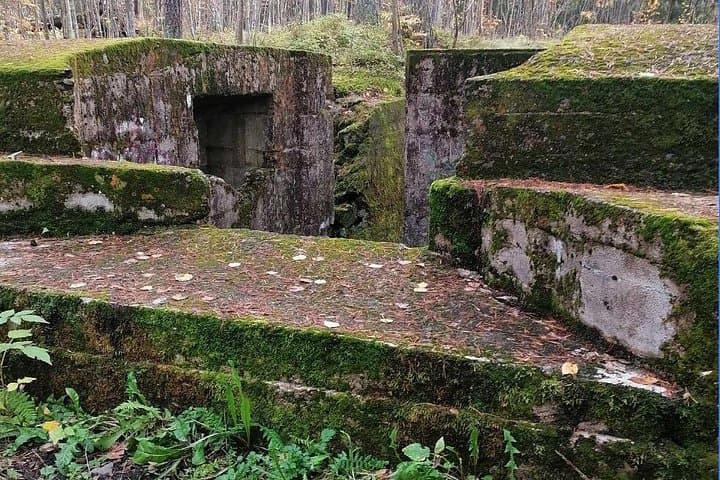
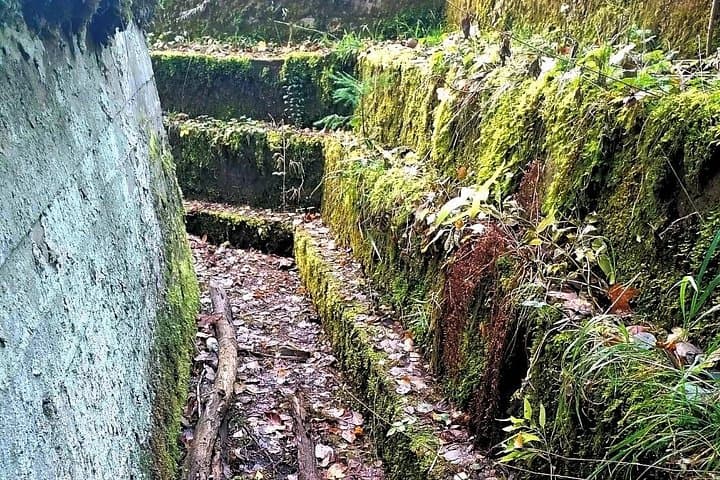
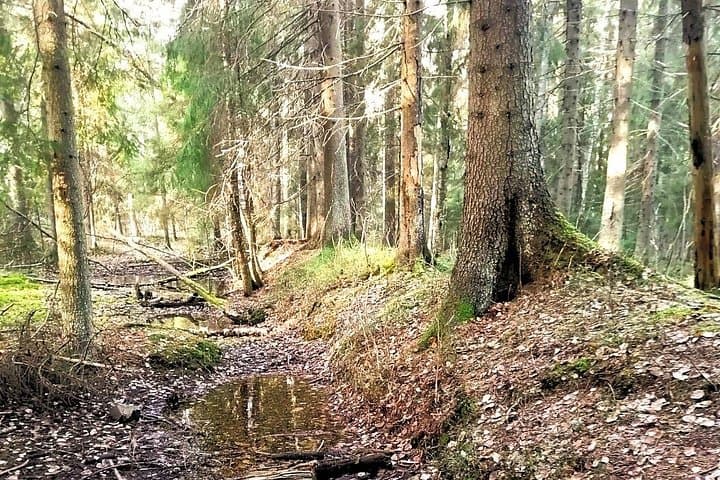
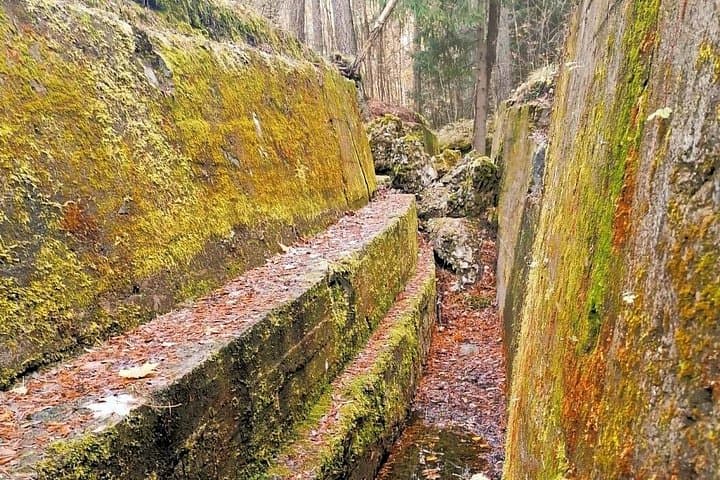
The walk begins under tall pines at Paloheinä, where the forest exhales cold, resin-scented air and a narrow trail angles inland toward low stone ridges and earthworks. As you step off the city grid the landscape tightens—rocky outcrops, moss-carpeted trenches and overgrown gun platforms that still hold the weight of history.
The walk begins under tall pines at Paloheinä, where the forest exhales cold, resin-scented air and a narrow trail angles inland toward low stone ridges and earthworks. As you step off the city grid the landscape tightens—rocky outcrops, moss-carpeted trenches and overgrown gun platforms that still hold the weight of history.
Between 1914 and 1918 Russian military engineers extended coastal defenses inland to protect Saint Petersburg, using local stone and field-built earthworks. The route threads geology and history: ancient granite outcrops weathered into cliffs and shallow channels that made practical defensive lines, while wartime labor left scars that have since softened under heather and birch.
A professional historian and anthropologist leads the tour, translating archival detail into the lived terrain—soldier routines, construction techniques, and how local labor shaped the works. Along the way you’ll hear about Helsinki’s strategic role in Baltic geopolitics and how these fortifications linked to the sea fortress system centered on Viapori (Suomenlinna).
Practically speaking, expect 3 hours of walking on mixed forest paths, gravel service roads and occasional uneven rock; total distance is roughly 4–6 km with modest elevation changes under 100 m. Wear sturdy walking shoes, dress in layers, and bring water and a compact rain shell—Paloheinä’s weather can change quickly. Public transport reaches the start, and the guide provides context that makes every bunker, traverse, and slope read like a map of early 20th-century strategy.