THE ADVENTURE COLLECTIVE® · Independent discovery and booking for outdoor travel

A four-hour small-group walking tour that moves from Prague Castle to Wenceslas Square, covering a thousand years of history through open-air storytelling. Ideal for travelers who want context, viewpoints, and practical local tips rather than museum interiors.
A four-hour small-group walking tour that moves from Prague Castle to Wenceslas Square, covering a thousand years of history through open-air storytelling. Ideal for travelers who want context, viewpoints, and practical local tips rather than museum interiors.
You step off the tram into a square where cobblestones slope toward the Vltava and the castle crowns the skyline—Prague announces itself by sound: church bells, tram brakes, conversation in several languages. This four-hour exterior walk threads Hradčany, Lesser Town, the Charles Bridge, Old Town and Wenceslas Square, moving through visible layers of history at a steady, conversational pace.
Verified experiences and guided adventures in the surrounding area.
Operated by Hatwalks Prague · Prague, Prague
You step off the tram into a square where cobblestones slope toward the Vltava and the castle crowns the skyline—Prague announces itself by sound: church bells, tram brakes, conversation in several languages. This four-hour exterior walk threads Hradčany, Lesser Town, the Charles Bridge, Old Town and Wenceslas Square, moving through visible layers of history at a steady, conversational pace.
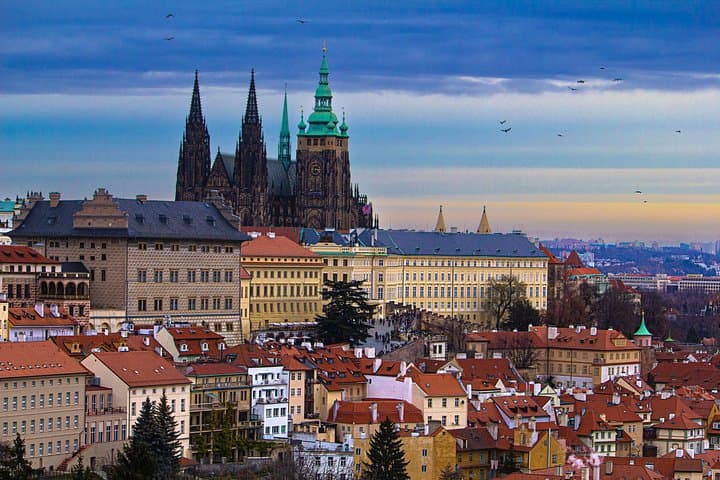
Geology and urban form are obvious in the climb from river to castle: the city perches on rolling sections of the Bohemian Massif and the Vltava carved the valley that determined medieval routes and modern boulevards. Cultural crossroads shaped the architecture—Romanesque foundations give way to Gothic spires at St. Vitus, Baroque palaces in Lesser Town, and Art Nouveau flourishes nearer Wenceslas. The route touches Jewish Prague and sites linked to Kafka, Mozart and the 20th-century revolutions, offering context rather than museum narration.
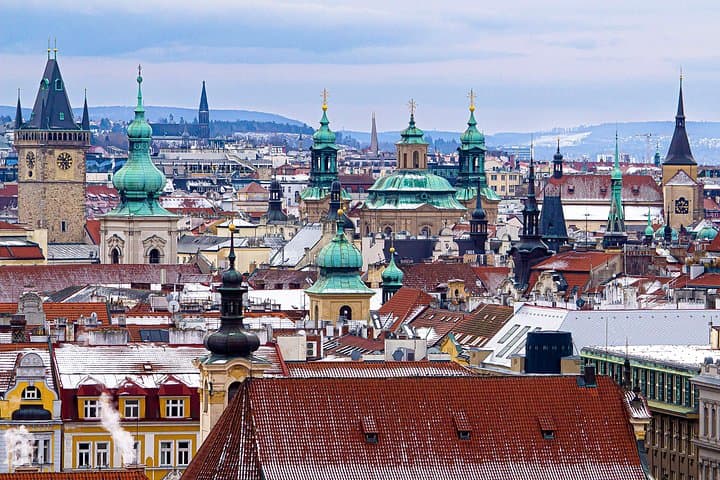
Expect frequent stops for storytelling, views over red roofs and the river, and close reads of façades and squares rather than interior visits. Small groups mean room for questions; the pace is moderate and largely flat with one uphill approach to the castle precinct.
Practical guidance: start early to avoid midday crowds on Charles Bridge, bring a refillable water bottle and layered clothing for sudden weather shifts, and wear supportive shoes for uneven cobbles. Public transport is efficient for return trips. This is a citywalk built for people who want history underfoot and clear, local insights on how Prague’s public spaces came to be and how they still work today.
No—this tour is exterior-only; admissions to interiors (Prague Castle museums, synagogues) are not included but can be arranged separately.
The route includes cobblestones and some short slopes; strollers can be used but wheelchair access is limited in parts—contact the operator for specific accessibility options.
Tours are typically in English; small-group formats allow conversational Q&A—confirm language at booking if you need a different language.
The tour runs in most weather; bring waterproof layers. In heavy storms the operator may advise rescheduling per their cancellation policy.
Hatwalks Prague operates guided outdoor trips and adventures with an emphasis on safety, stewardship, and memorable experiences.


You step off the tram into a square where cobblestones slope toward the Vltava and the castle crowns the skyline—Prague announces itself by sound: church bells, tram brakes, conversation in several languages. This four-hour exterior walk threads Hradčany, Lesser Town, the Charles Bridge, Old Town and Wenceslas Square, moving through visible layers of history at a steady, conversational pace.
You step off the tram into a square where cobblestones slope toward the Vltava and the castle crowns the skyline—Prague announces itself by sound: church bells, tram brakes, conversation in several languages. This four-hour exterior walk threads Hradčany, Lesser Town, the Charles Bridge, Old Town and Wenceslas Square, moving through visible layers of history at a steady, conversational pace.
Geology and urban form are obvious in the climb from river to castle: the city perches on rolling sections of the Bohemian Massif and the Vltava carved the valley that determined medieval routes and modern boulevards. Cultural crossroads shaped the architecture—Romanesque foundations give way to Gothic spires at St. Vitus, Baroque palaces in Lesser Town, and Art Nouveau flourishes nearer Wenceslas. The route touches Jewish Prague and sites linked to Kafka, Mozart and the 20th-century revolutions, offering context rather than museum narration.
Expect frequent stops for storytelling, views over red roofs and the river, and close reads of façades and squares rather than interior visits. Small groups mean room for questions; the pace is moderate and largely flat with one uphill approach to the castle precinct.
Practical guidance: start early to avoid midday crowds on Charles Bridge, bring a refillable water bottle and layered clothing for sudden weather shifts, and wear supportive shoes for uneven cobbles. Public transport is efficient for return trips. This is a citywalk built for people who want history underfoot and clear, local insights on how Prague’s public spaces came to be and how they still work today.