THE ADVENTURE COLLECTIVE® · Independent discovery and booking for outdoor travel

Join an actor-led two-hour walking tour that turns Glasgow’s streets into live theatre. Expect witty storytelling at civic landmarks, Victorian architecture, and a finale near Glasgow Cross that leaves you ready to explore further.
Join an actor-led two-hour walking tour that turns Glasgow’s streets into live theatre. Expect witty storytelling at civic landmarks, Victorian architecture, and a finale near Glasgow Cross that leaves you ready to explore further.
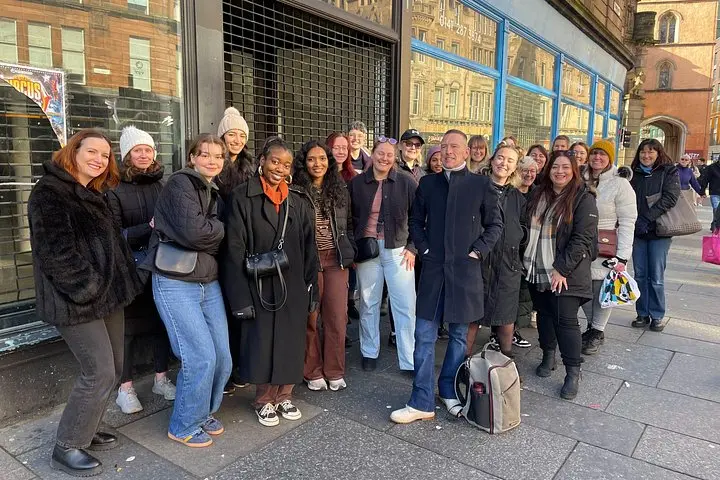
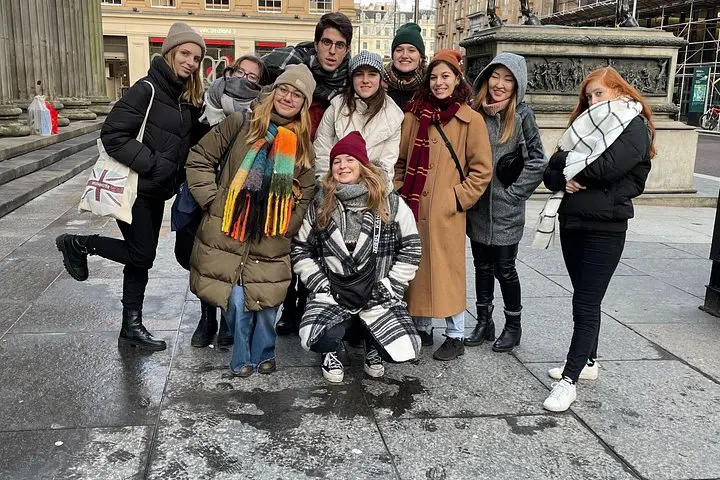
You stand between the bronze lions on George Square as a cluster of actors gathers—wry smiles, clipped accents, and a script that folds the city’s jagged past into witty scenes. For the next two hours the pavement becomes a stage: ten-minute stops at gleaming municipal marble, cheeky statues, and the river’s industrial echoes shift from narration to improv, and back again.
Verified experiences and guided adventures in the surrounding area.
Operated by Gordon Hart · Glasgow, Scotland
You stand between the bronze lions on George Square as a cluster of actors gathers—wry smiles, clipped accents, and a script that folds the city’s jagged past into witty scenes. For the next two hours the pavement becomes a stage: ten-minute stops at gleaming municipal marble, cheeky statues, and the river’s industrial echoes shift from narration to improv, and back again.
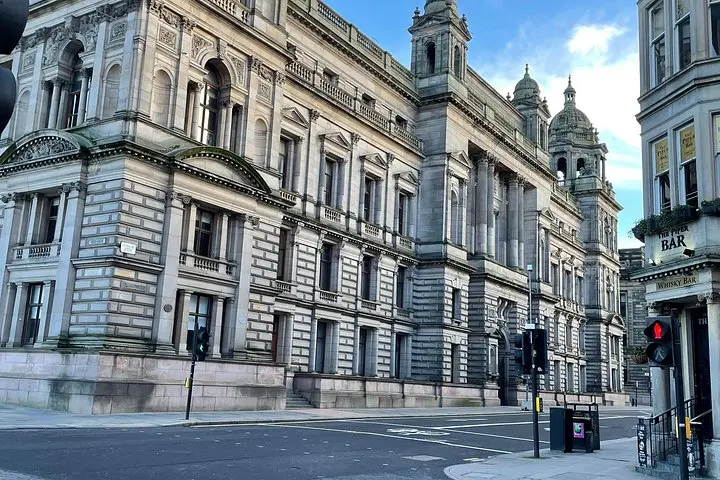
Glasgow’s story is visible in stone and steel. The city rose on the River Clyde’s banks, its shipyards turning tidal power into global trade; Victorian sandstone facades and bold Edwardian municipal buildings map an era of wealth, civic pride, and cinematic sets. You’ll pass Glasgow Cathedral—Scotland’s medieval survivor—and statues that mark literary and scientific figures alongside more infamous characters, offering a compact lesson in social change and empire.
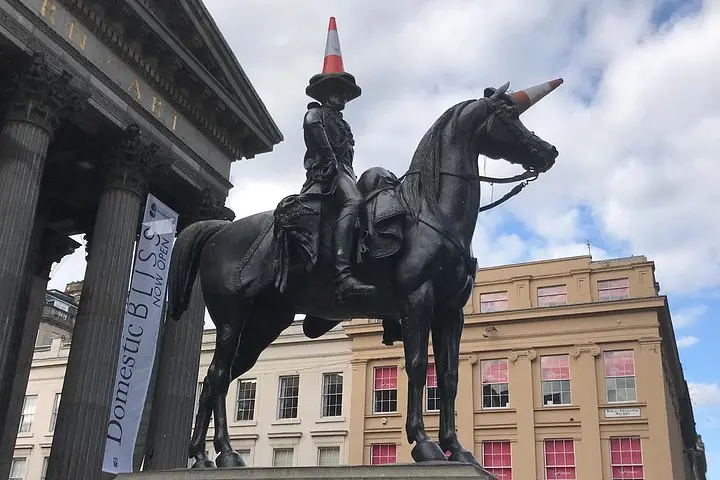
Actors use humour to humanize history: the Duke of Wellington’s cone-topped head gets more than one laugh, while quiet corners point to the city’s mercantile past. Geology peeks through in sandstone hues and the Clyde’s broad curve, the river still daring you to imagine the ships that once dominated its tides.
Practical notes: this is a flat, urban two-hour walk—accessible and stroller-friendly—ending near Glasgow Cross so you can continue independently to the cathedral or nearby cafes. Bring a waterproof layer for sudden rain, comfortable shoes for cobbled streets, and a sense of curiosity: the best moments are the unscripted exchanges between actor and street. Tours are family-friendly, operate in most weather, and are a sharp way to feel Glasgow’s character quickly and enjoyably.
Yes; the route is described as wheelchair- and stroller-accessible with largely flat surfaces and manageable kerb crossings.
This particular tour is English-language, actor-led storytelling; check with the operator for alternate-language options or private tours.
The tour starts at George Square (between the lions) and finishes near Glasgow Cross, close to Glasgow Cathedral, making onward visits easy.
Full refunds are typically available if you cancel at least 24 hours before the scheduled departure; check the operator’s policy for specifics.
Gordon Hart operates guided outdoor trips and adventures with an emphasis on safety, stewardship, and memorable experiences.
You stand between the bronze lions on George Square as a cluster of actors gathers—wry smiles, clipped accents, and a script that folds the city’s jagged past into witty scenes. For the next two hours the pavement becomes a stage: ten-minute stops at gleaming municipal marble, cheeky statues, and the river’s industrial echoes shift from narration to improv, and back again.
You stand between the bronze lions on George Square as a cluster of actors gathers—wry smiles, clipped accents, and a script that folds the city’s jagged past into witty scenes. For the next two hours the pavement becomes a stage: ten-minute stops at gleaming municipal marble, cheeky statues, and the river’s industrial echoes shift from narration to improv, and back again.
Glasgow’s story is visible in stone and steel. The city rose on the River Clyde’s banks, its shipyards turning tidal power into global trade; Victorian sandstone facades and bold Edwardian municipal buildings map an era of wealth, civic pride, and cinematic sets. You’ll pass Glasgow Cathedral—Scotland’s medieval survivor—and statues that mark literary and scientific figures alongside more infamous characters, offering a compact lesson in social change and empire.
Actors use humour to humanize history: the Duke of Wellington’s cone-topped head gets more than one laugh, while quiet corners point to the city’s mercantile past. Geology peeks through in sandstone hues and the Clyde’s broad curve, the river still daring you to imagine the ships that once dominated its tides.
Practical notes: this is a flat, urban two-hour walk—accessible and stroller-friendly—ending near Glasgow Cross so you can continue independently to the cathedral or nearby cafes. Bring a waterproof layer for sudden rain, comfortable shoes for cobbled streets, and a sense of curiosity: the best moments are the unscripted exchanges between actor and street. Tours are family-friendly, operate in most weather, and are a sharp way to feel Glasgow’s character quickly and enjoyably.