THE ADVENTURE COLLECTIVE® · Independent discovery and booking for outdoor travel

Trace the footsteps of one of history’s most notorious mysteries on a private, research-driven walk through Whitechapel. This intimate 2.5-hour tour pairs archival detail with the city’s unchanged alleys for a measured, atmospheric look at the Jack the Ripper cases.
Trace the footsteps of one of history’s most notorious mysteries on a private, research-driven walk through Whitechapel. This intimate 2.5-hour tour pairs archival detail with the city’s unchanged alleys for a measured, atmospheric look at the Jack the Ripper cases.
The tour begins a short step from Whitechapel Station where evening light catches the worn brick and the Thames' cold wind seems to push you down the road. Your guide leads the group through narrow lanes and market streets, pausing at the exact doorways and alleys where the canonical victims were found; the city feels like an active memory, its stone and iron pointing to stories that refuse to go quiet.
Verified experiences and guided adventures in the surrounding area.
Operated by Tours Of The UK · London, England
The tour begins a short step from Whitechapel Station where evening light catches the worn brick and the Thames' cold wind seems to push you down the road. Your guide leads the group through narrow lanes and market streets, pausing at the exact doorways and alleys where the canonical victims were found; the city feels like an active memory, its stone and iron pointing to stories that refuse to go quiet.
Whitechapel’s streets are Victorian layers built over marshy Thames silt, with surviving Georgian terraces and the later redbrick of council housing. The tour threads history, policing, and media culture: inquests at the Working Lads Institute, the press frenzy that named “Jack the Ripper,” and how evolving forensic ideas have reframed suspects. Expect local color too — Spitalfields’ market stalls, the old Smithfield lanes, and how poverty, policing practices, and urban migration shaped the late 19th century East End.
Practical guidance follows a scholar’s pacing: the walk is roughly 2–3 hours with repeated short stops, mostly on flat but uneven pavement and occasional cobbles. Guides rely on primary records, not sensationalism, so bring focused questions. Photography is allowed, but respect private properties and memorials. Best times are late afternoon or early evening for atmosphere and cooler conditions; avoid lone-night wandering after the tour. Wear supportive shoes, layer for wind off the river, and charge your phone for notes or maps. For travelers wanting context, pair this walk with visits to the Museum of London Docklands or local archives to deepen the story.
The tour starts a short walk from Whitechapel Station and finishes near Spitalfields Market; exact meeting details are provided on booking.
Children can join, but the subject matter is graphic and best suited for older teens; stroller access is possible on most sections.
Guides focus on contemporary records and academic consensus while explaining how modern forensics has re-evaluated evidence — speculation is framed as such.
Yes, photography is allowed on public streets, but please avoid intruding on private properties or memorials and follow your guide’s directions.
Tours Of The UK operates guided outdoor trips and adventures with an emphasis on safety, stewardship, and memorable experiences.
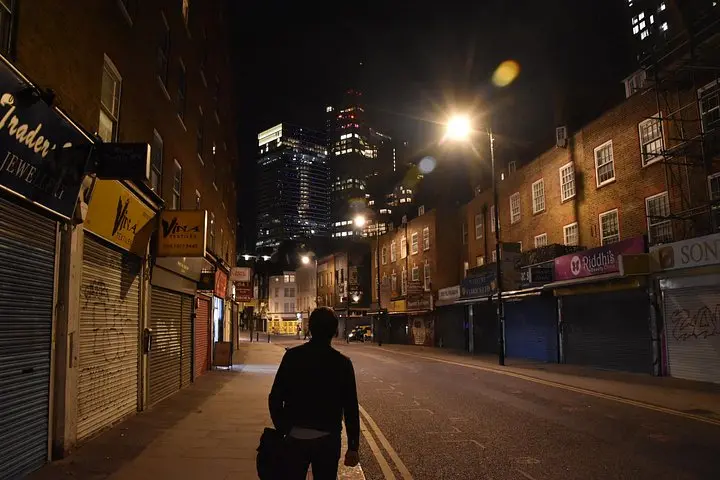

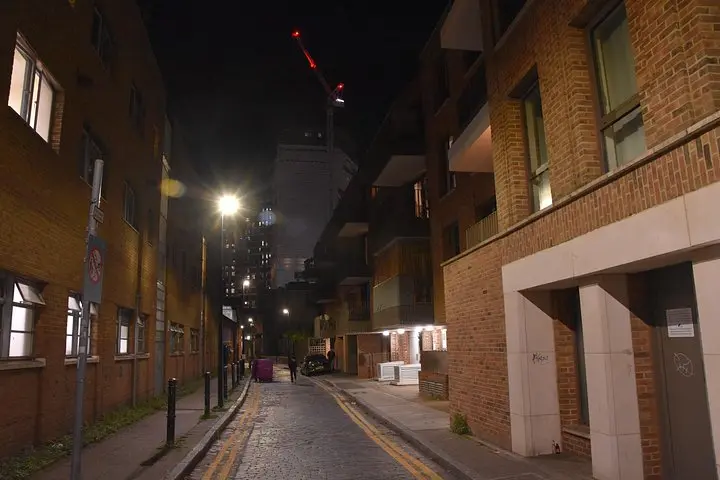
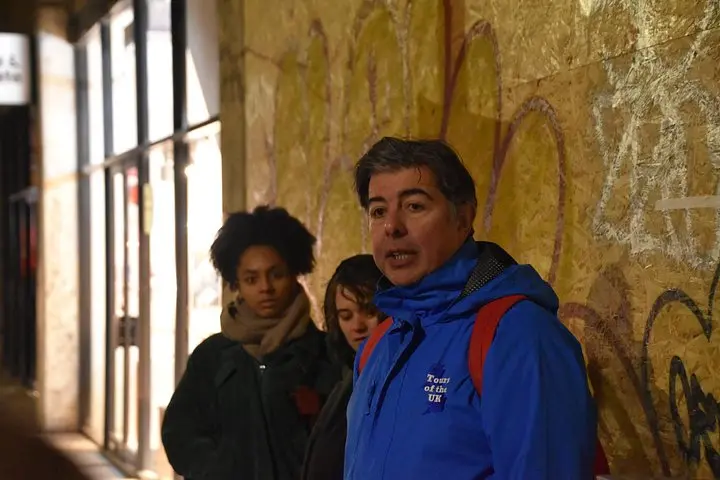
The tour begins a short step from Whitechapel Station where evening light catches the worn brick and the Thames' cold wind seems to push you down the road. Your guide leads the group through narrow lanes and market streets, pausing at the exact doorways and alleys where the canonical victims were found; the city feels like an active memory, its stone and iron pointing to stories that refuse to go quiet.
The tour begins a short step from Whitechapel Station where evening light catches the worn brick and the Thames' cold wind seems to push you down the road. Your guide leads the group through narrow lanes and market streets, pausing at the exact doorways and alleys where the canonical victims were found; the city feels like an active memory, its stone and iron pointing to stories that refuse to go quiet.
Whitechapel’s streets are Victorian layers built over marshy Thames silt, with surviving Georgian terraces and the later redbrick of council housing. The tour threads history, policing, and media culture: inquests at the Working Lads Institute, the press frenzy that named “Jack the Ripper,” and how evolving forensic ideas have reframed suspects. Expect local color too — Spitalfields’ market stalls, the old Smithfield lanes, and how poverty, policing practices, and urban migration shaped the late 19th century East End.
Practical guidance follows a scholar’s pacing: the walk is roughly 2–3 hours with repeated short stops, mostly on flat but uneven pavement and occasional cobbles. Guides rely on primary records, not sensationalism, so bring focused questions. Photography is allowed, but respect private properties and memorials. Best times are late afternoon or early evening for atmosphere and cooler conditions; avoid lone-night wandering after the tour. Wear supportive shoes, layer for wind off the river, and charge your phone for notes or maps. For travelers wanting context, pair this walk with visits to the Museum of London Docklands or local archives to deepen the story.