THE ADVENTURE COLLECTIVE® · Independent discovery and booking for outdoor travel

Swap long vehicle safaris for a day that gets you walking beneath Mount Meru, paddling quiet lakes, and watching plains wildlife at close range. This guided full-day tour from Arusha blends short hikes, game drives, and lakeside views for a compact but varied Tanzania experience.
Swap long vehicle safaris for a day that gets you walking beneath Mount Meru, paddling quiet lakes, and watching plains wildlife at close range. This guided full-day tour from Arusha blends short hikes, game drives, and lakeside views for a compact but varied Tanzania experience.
The morning air on the road from Arusha tastes faintly of coffee and diesel as the van peels away from town and climbs toward the park gate. By the time the trees thin and the gravel crunches underfoot, Mount Meru fills the sky: a broad volcanic shoulder crowned with clouds. This is not the long, vehicle-bound safari many expect; it’s a day designed to get you out of the jeep and into the species-rich terrain beneath Meru’s shadow—walking tracks, wide plains, and the glassy Momella Lakes.
Verified experiences and guided adventures in the surrounding area.
Operated by PERFECT WILDERNESS TOURS AND SAFARIS · Arusha, Arusha Region
The morning air on the road from Arusha tastes faintly of coffee and diesel as the van peels away from town and climbs toward the park gate. By the time the trees thin and the gravel crunches underfoot, Mount Meru fills the sky: a broad volcanic shoulder crowned with clouds. This is not the long, vehicle-bound safari many expect; it’s a day designed to get you out of the jeep and into the species-rich terrain beneath Meru’s shadow—walking tracks, wide plains, and the glassy Momella Lakes.
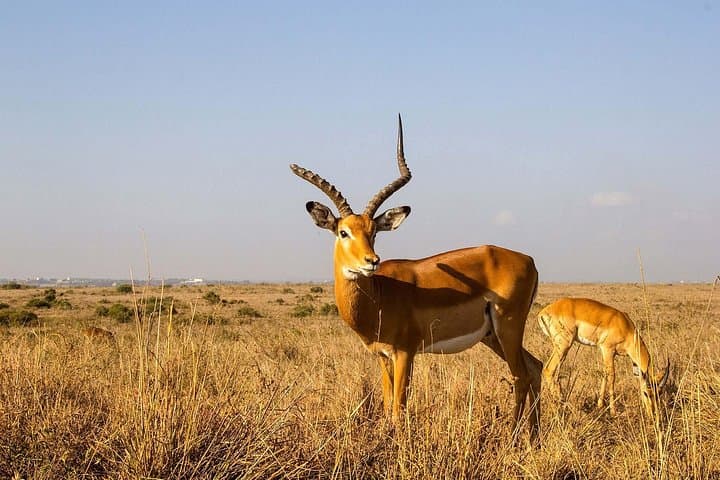
Arusha National Park covers a compact but varied landscape: montane forest on the lower flanks of Mount Meru, open grasslands that attract grazing ungulates, and a string of salt and freshwater lakes that host flamingos and hippos. The park’s geology reads like a primer on East African volcanism—stratovolcanic slopes giving way to eroded calderas and shallow basins where water gathers. Historically, the area has been a crossroads of cultures; the town of Arusha grew around trade routes and coffee farms that still stripe the approach road.
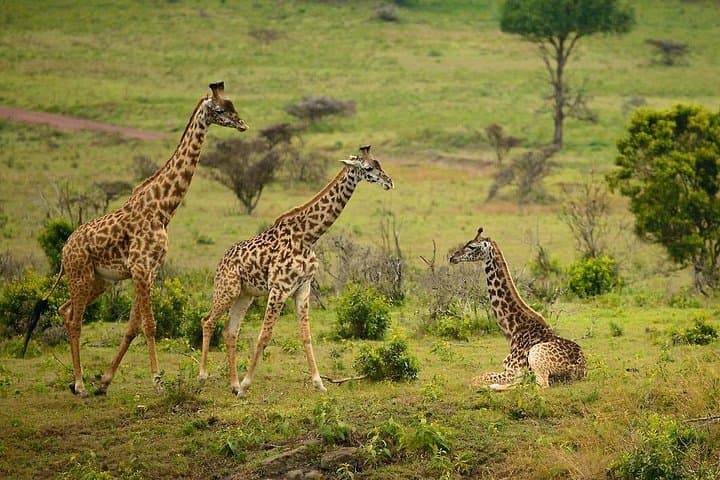
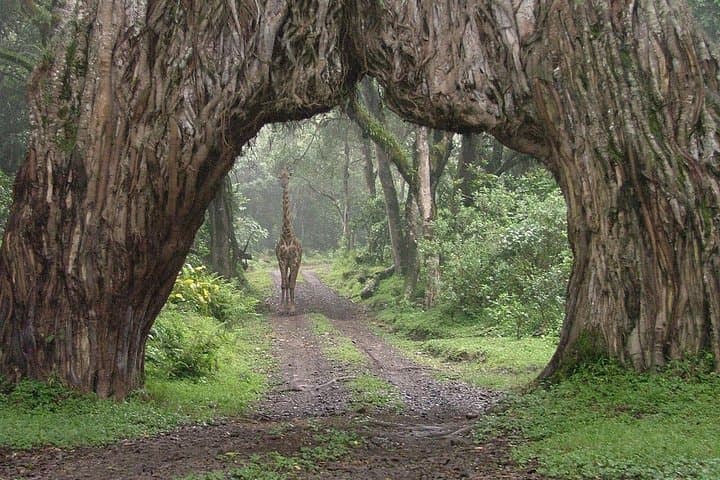
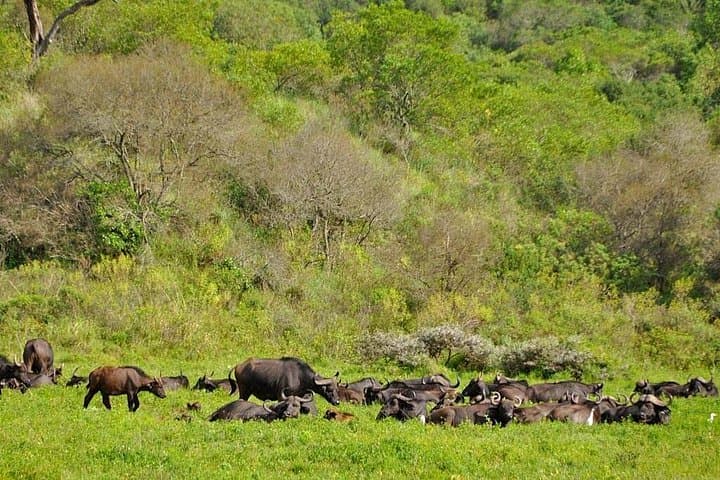
Your guide will usually meet you with park permits and an armed ranger before setting out on a relaxed walking safari. Expect to move slowly—tracks are uneven, and wildlife often reveals itself in brief, deliberate moments: a troop of black-and-white colobus moving through canopy, stately giraffes browsing acacia, or buffalo standing guard near watering holes. After the walk, the route drops toward the Momella Lakes, a quieter scene of reflective water and reed beds where optional canoeing is available. A picnic lunch here—often under a fever tree—offers expansive views of the lakes and the distant outline of Kilimanjaro on clear days.
This day tour is practical and accessible: it combines short hikes, gravel-road driving in a 4x4, and at-your-pace game drives. It’s also a chance to see how Tanzanian rangers and local guides balance wildlife protection with public access; park fees contribute directly to conservation and community programs.
Practicalities: the tour is full-day (about eight hours), starts with a hotel pickup in Arusha, and includes bottled water, park fees, and a professional guide; bring a small picnic upgrade fee if you want a lakeside lunch provided. Wear sturdy walking shoes, sun protection, and layers for the shifting highland weather. Photographers should plan for morning and late-afternoon light—these windows deliver the best animal activity and the most dramatic views of Meru and the lakes.
For travelers who want to stretch a legs-on safari into a single day, this guided tour delivers variety and proximity to big features—volcanic slopes, lake reflections, and open plains—without the multi-day commitment of a classic Serengeti circuit.
The full-day tour runs about 8 hours, including hotel pickup, walking safari, lunch at Momella Lakes (optional), and afternoon game drives.
Yes—park fees and ranger fees for Arusha National Park are included in the tour price.
Walks are moderate and suitable for most fitness levels; paths can be uneven and include short ascents toward Mount Meru’s lower slopes.
Children can join, but the operator notes a minimum of two people per booking and infant seats are available—check age and safety recommendations with the supplier.
Canoe safaris on Momella Lakes are optional and typically cost extra; the picnic lunch at the lakes is also an additional fee (around $10 USD).
Hotel pickup in Arusha is arranged (about 15 minutes before departure). Airport pickup is possible but usually incurs an extra USD 20 fee.
PERFECT WILDERNESS TOURS AND SAFARIS operates guided outdoor trips and adventures with an emphasis on safety, stewardship, and memorable experiences.
The morning air on the road from Arusha tastes faintly of coffee and diesel as the van peels away from town and climbs toward the park gate. By the time the trees thin and the gravel crunches underfoot, Mount Meru fills the sky: a broad volcanic shoulder crowned with clouds. This is not the long, vehicle-bound safari many expect; it’s a day designed to get you out of the jeep and into the species-rich terrain beneath Meru’s shadow—walking tracks, wide plains, and the glassy Momella Lakes.
The morning air on the road from Arusha tastes faintly of coffee and diesel as the van peels away from town and climbs toward the park gate. By the time the trees thin and the gravel crunches underfoot, Mount Meru fills the sky: a broad volcanic shoulder crowned with clouds. This is not the long, vehicle-bound safari many expect; it’s a day designed to get you out of the jeep and into the species-rich terrain beneath Meru’s shadow—walking tracks, wide plains, and the glassy Momella Lakes.
Arusha National Park covers a compact but varied landscape: montane forest on the lower flanks of Mount Meru, open grasslands that attract grazing ungulates, and a string of salt and freshwater lakes that host flamingos and hippos. The park’s geology reads like a primer on East African volcanism—stratovolcanic slopes giving way to eroded calderas and shallow basins where water gathers. Historically, the area has been a crossroads of cultures; the town of Arusha grew around trade routes and coffee farms that still stripe the approach road.
Your guide will usually meet you with park permits and an armed ranger before setting out on a relaxed walking safari. Expect to move slowly—tracks are uneven, and wildlife often reveals itself in brief, deliberate moments: a troop of black-and-white colobus moving through canopy, stately giraffes browsing acacia, or buffalo standing guard near watering holes. After the walk, the route drops toward the Momella Lakes, a quieter scene of reflective water and reed beds where optional canoeing is available. A picnic lunch here—often under a fever tree—offers expansive views of the lakes and the distant outline of Kilimanjaro on clear days.
This day tour is practical and accessible: it combines short hikes, gravel-road driving in a 4x4, and at-your-pace game drives. It’s also a chance to see how Tanzanian rangers and local guides balance wildlife protection with public access; park fees contribute directly to conservation and community programs.
Practicalities: the tour is full-day (about eight hours), starts with a hotel pickup in Arusha, and includes bottled water, park fees, and a professional guide; bring a small picnic upgrade fee if you want a lakeside lunch provided. Wear sturdy walking shoes, sun protection, and layers for the shifting highland weather. Photographers should plan for morning and late-afternoon light—these windows deliver the best animal activity and the most dramatic views of Meru and the lakes.
For travelers who want to stretch a legs-on safari into a single day, this guided tour delivers variety and proximity to big features—volcanic slopes, lake reflections, and open plains—without the multi-day commitment of a classic Serengeti circuit.