THE ADVENTURE COLLECTIVE® · Independent discovery and booking for outdoor travel

Two hours of narrow lanes, basilicas and market life: this guided walk links Trastevere’s lively squares with the historic Jewish Ghetto. Expect close-up history, stonework that predates modern Rome, and practical tips for navigating uneven cobbles.
Two hours of narrow lanes, basilicas and market life: this guided walk links Trastevere’s lively squares with the historic Jewish Ghetto. Expect close-up history, stonework that predates modern Rome, and practical tips for navigating uneven cobbles.
The tour begins where the cobbles tilt toward the Tiber and the air carries the scent of espresso and wood smoke. In two hours a guide threads a compact route between Trastevere’s warm piazzas and the narrow lanes of the Jewish Ghetto, placing travelers at street level with the city’s layered past.
Verified experiences and guided adventures in the surrounding area.
Operated by RomAbout Tours · Rome, Lazio
The tour begins where the cobbles tilt toward the Tiber and the air carries the scent of espresso and wood smoke. In two hours a guide threads a compact route between Trastevere’s warm piazzas and the narrow lanes of the Jewish Ghetto, placing travelers at street level with the city’s layered past.
Trastevere grew from a working-class quarter of fishermen and boatmen into a neighborhood of 12th‑century basilicas and painted façades; the Jewish Ghetto, imposed in the 16th century, holds stories of survival, commerce, and ritual around its morning market squares. Geologically, visitors walk over the Tiber’s alluvial plain where travertine and tufa were quarried and repurposed into Rome’s arches and amphitheaters — you’ll pass stonework that literally carries pieces of older Rome.
Culturally the tour balances sacred architecture, market rhythms, and food lore: salted cod and suppli vendors, synagogue facades, and plazas that still gather locals at dusk. The guide will point out architectural details, the market’s daily cadence, and the social history that shaped both quarters.
Practical guidance: wear supportive walking shoes and bring a refillable water bottle; streets are uneven and sometimes steep. Public transit drops close to both start points, and groups over ten may use headsets for clearer commentary. The route is accessible to most fitness levels but is not suitable for severe back or heart conditions; infants must sit on laps. Morning and late‑afternoon slots avoid peak heat and offer the best light for photos.
The tour lasts two hours with moderate walking on cobbled and sometimes sloped streets; it’s classified as easy but requires steady footing.
Yes — infants must sit on a parent’s lap. The route is family-friendly though narrow streets can be busy.
The itinerary notes select admissions included; your guide will clarify which stops require separate tickets during booking.
The route uses historic streets with uneven surfaces; travelers with significant mobility issues should contact the operator in advance to discuss accessibility options.
RomAbout Tours operates guided outdoor trips and adventures with an emphasis on safety, stewardship, and memorable experiences.

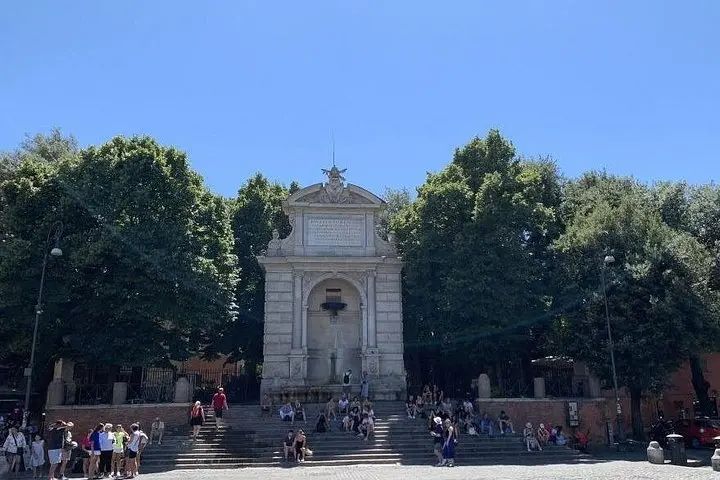


The tour begins where the cobbles tilt toward the Tiber and the air carries the scent of espresso and wood smoke. In two hours a guide threads a compact route between Trastevere’s warm piazzas and the narrow lanes of the Jewish Ghetto, placing travelers at street level with the city’s layered past.
The tour begins where the cobbles tilt toward the Tiber and the air carries the scent of espresso and wood smoke. In two hours a guide threads a compact route between Trastevere’s warm piazzas and the narrow lanes of the Jewish Ghetto, placing travelers at street level with the city’s layered past.
Trastevere grew from a working-class quarter of fishermen and boatmen into a neighborhood of 12th‑century basilicas and painted façades; the Jewish Ghetto, imposed in the 16th century, holds stories of survival, commerce, and ritual around its morning market squares. Geologically, visitors walk over the Tiber’s alluvial plain where travertine and tufa were quarried and repurposed into Rome’s arches and amphitheaters — you’ll pass stonework that literally carries pieces of older Rome.
Culturally the tour balances sacred architecture, market rhythms, and food lore: salted cod and suppli vendors, synagogue facades, and plazas that still gather locals at dusk. The guide will point out architectural details, the market’s daily cadence, and the social history that shaped both quarters.
Practical guidance: wear supportive walking shoes and bring a refillable water bottle; streets are uneven and sometimes steep. Public transit drops close to both start points, and groups over ten may use headsets for clearer commentary. The route is accessible to most fitness levels but is not suitable for severe back or heart conditions; infants must sit on laps. Morning and late‑afternoon slots avoid peak heat and offer the best light for photos.