THE ADVENTURE COLLECTIVE® · Independent discovery and booking for outdoor travel

A high-altitude day hike from Cusco to the dramatic Waqra Pukara ruins above Apurímac Canyon. Expect long travel, steep pitches, thin air, and sweeping canyon views.
A high-altitude day hike from Cusco to the dramatic Waqra Pukara ruins above Apurímac Canyon. Expect long travel, steep pitches, thin air, and sweeping canyon views.
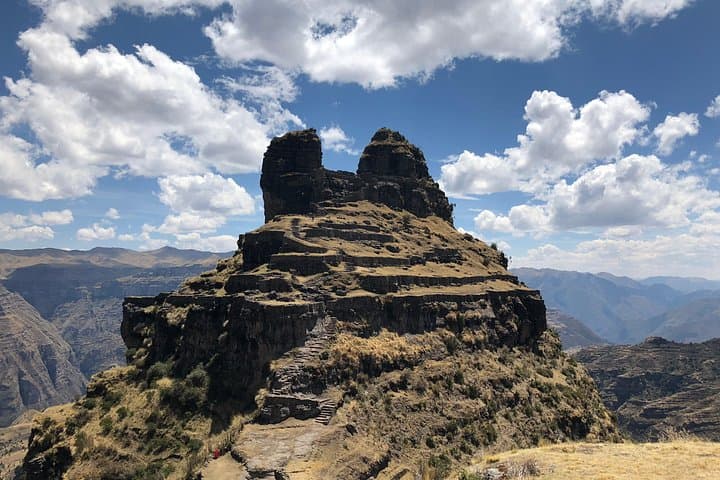
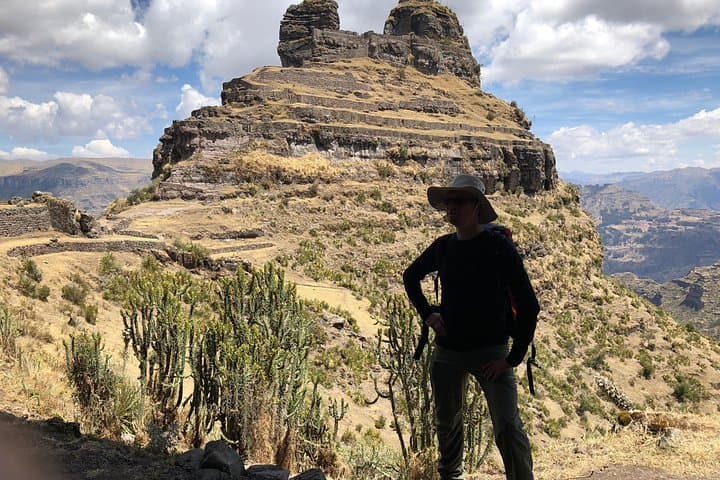
Early light scratches the rim of the Apurímac Canyon as hikers step out of the van and onto a high, wind-whipped puna. The trail climbs and rolls beneath a sky that can refuse and reward you within an hour: thin air sharpens every breath, and the stone outline of Waqra Pukara—“Horn Fortress”—eventually rises like a carved eyebrow above the gorge.
Verified experiences and guided adventures in the surrounding area.
Operated by Inti Sun Trek · Cusco, Cusco Region
Early light scratches the rim of the Apurímac Canyon as hikers step out of the van and onto a high, wind-whipped puna. The trail climbs and rolls beneath a sky that can refuse and reward you within an hour: thin air sharpens every breath, and the stone outline of Waqra Pukara—“Horn Fortress”—eventually rises like a carved eyebrow above the gorge.
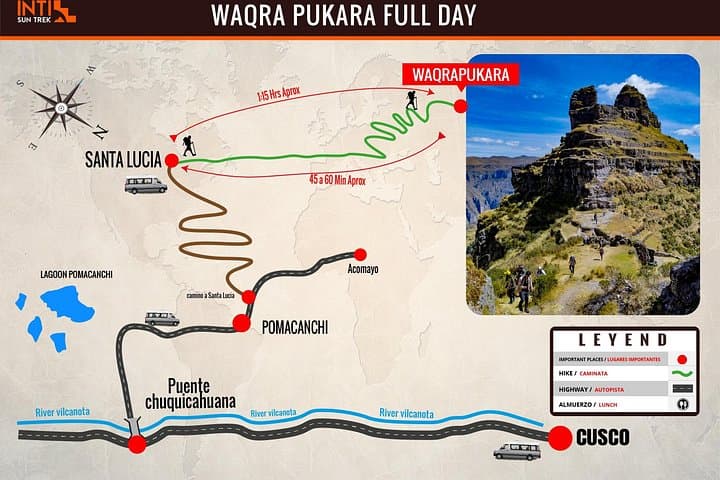
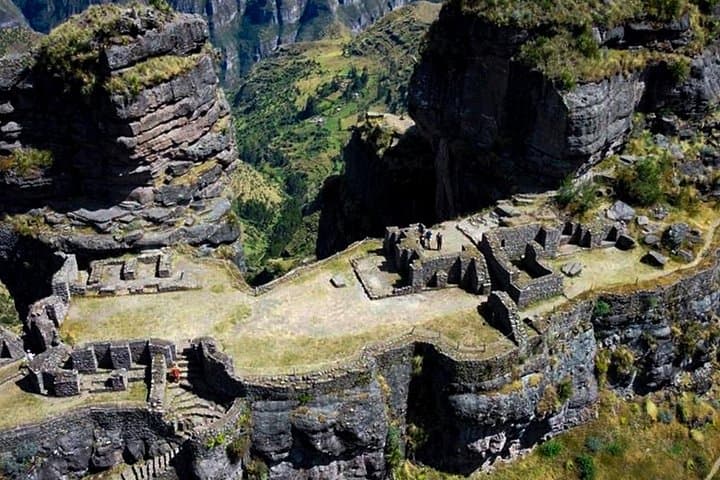
This full-day trek leaves Cusco before dawn and follows old herding routes and Inca-era terraces to reach ruins perched at roughly 4,500–4,800 m. Geologically the canyon is a deep cut through Andean volcanic and sedimentary layers, and the fortress occupies a ridge that gives sweeping views into a braided river far below. Historically, Waqra Pukara is a late-inca/prehispanic site with defensive walls and carved platforms; local communities still maintain cultural ties to the land and practice highland herding.
Expect rocky, uneven trails that gently rise and fall but include some steep pitches; the altitude, not technical difficulty, defines the challenge. Midday can be hot and bright; mornings and evenings are cold and windy—layers are mandatory. Guides provided on organized tours manage logistics, offer local context, and carry first aid.
Practical guidance: acclimatize in Cusco for 48–72 hours if possible, carry 1–2 liters of water, sun protection, and snacks; trekking poles help on descents. Be prepared for long travel time (≈3 hours each way by road) and limited facilities at the site. The hike rewards persistence with expansive canyon vistas and a quieter, off-the-beaten-path glimpse of Andean archaeology.
The trail is rated moderate: non-technical but long and high (up to ~4,800 m); altitude is the primary challenge.
Yes—semi-buffet breakfast and lunch are included on the organized tour; bring extra snacks if you need more energy between meals.
Guides are included and recommended: they handle logistics, provide historical context, and carry first aid.
This trek may not suit travelers with vertigo—the route includes exposed ridgelines and steep overlooks with significant drop-offs.
Inti Sun Trek operates guided outdoor trips and adventures with an emphasis on safety, stewardship, and memorable experiences.
Early light scratches the rim of the Apurímac Canyon as hikers step out of the van and onto a high, wind-whipped puna. The trail climbs and rolls beneath a sky that can refuse and reward you within an hour: thin air sharpens every breath, and the stone outline of Waqra Pukara—“Horn Fortress”—eventually rises like a carved eyebrow above the gorge.
Early light scratches the rim of the Apurímac Canyon as hikers step out of the van and onto a high, wind-whipped puna. The trail climbs and rolls beneath a sky that can refuse and reward you within an hour: thin air sharpens every breath, and the stone outline of Waqra Pukara—“Horn Fortress”—eventually rises like a carved eyebrow above the gorge.
This full-day trek leaves Cusco before dawn and follows old herding routes and Inca-era terraces to reach ruins perched at roughly 4,500–4,800 m. Geologically the canyon is a deep cut through Andean volcanic and sedimentary layers, and the fortress occupies a ridge that gives sweeping views into a braided river far below. Historically, Waqra Pukara is a late-inca/prehispanic site with defensive walls and carved platforms; local communities still maintain cultural ties to the land and practice highland herding.
Expect rocky, uneven trails that gently rise and fall but include some steep pitches; the altitude, not technical difficulty, defines the challenge. Midday can be hot and bright; mornings and evenings are cold and windy—layers are mandatory. Guides provided on organized tours manage logistics, offer local context, and carry first aid.
Practical guidance: acclimatize in Cusco for 48–72 hours if possible, carry 1–2 liters of water, sun protection, and snacks; trekking poles help on descents. Be prepared for long travel time (≈3 hours each way by road) and limited facilities at the site. The hike rewards persistence with expansive canyon vistas and a quieter, off-the-beaten-path glimpse of Andean archaeology.