THE ADVENTURE COLLECTIVE® · Independent discovery and booking for outdoor travel

Walk Warsaw’s reconstructed Old Town from the Warsaw Rising Monument to Castle Square, then see the city from the Vistula on a one‑hour scenic boat. This three‑hour combo blends concise history with riverside panoramas—ideal for first‑time visitors.
Walk Warsaw’s reconstructed Old Town from the Warsaw Rising Monument to Castle Square, then see the city from the Vistula on a one‑hour scenic boat. This three‑hour combo blends concise history with riverside panoramas—ideal for first‑time visitors.
You begin beneath the bronze figures of the Warsaw Rising Monument, a plaza that smells faintly of damp stone and coffee from nearby cafés. The guide’s voice threads history into the cobbles as you move into the Old Town: pastel-fronted townhouses, narrow alleys, and the legend of the mermaid watching over the square.
Verified experiences and guided adventures in the surrounding area.
Operated by WalkTheTalk · Warsaw, Masovian Voivodeship
You begin beneath the bronze figures of the Warsaw Rising Monument, a plaza that smells faintly of damp stone and coffee from nearby cafés. The guide’s voice threads history into the cobbles as you move into the Old Town: pastel-fronted townhouses, narrow alleys, and the legend of the mermaid watching over the square.
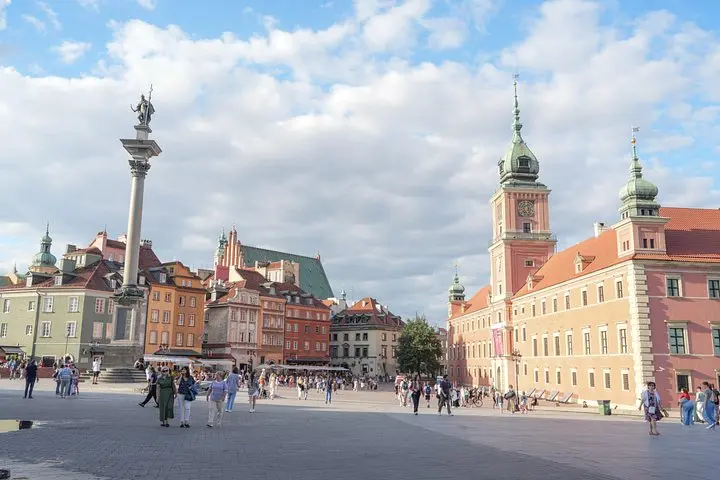
The route traces layers of Warsaw’s past — medieval burgage plots rebuilt after World War II, the Sigismund column standing guard over Castle Square, and Mariensztat’s postwar neighborhood that reclaimed daily life from ruins. Geologically the city sits on glacial plains, but the river provides relief: the Vistula’s boulevards open like a breathing room where modern glass and green roofs of the University Library meet converted industrial blocks in Powiśle.
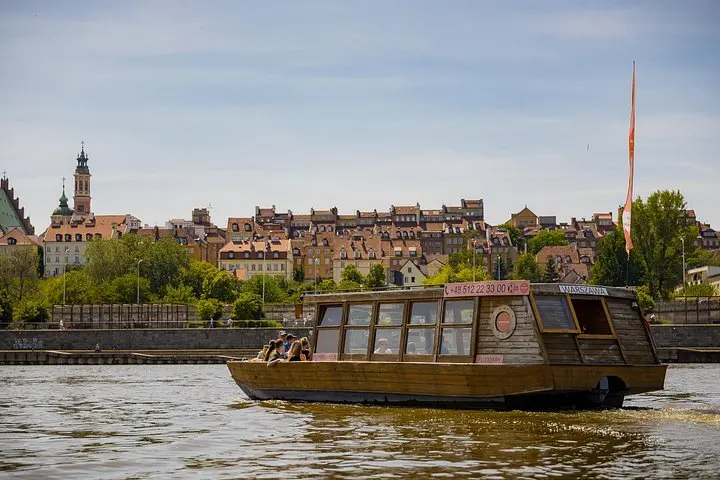
After roughly 60–75 minutes on foot, you board a one-hour scenic boat. From the water the city redraws itself: bridges arching overhead, the Old Town’s towers reflected, and the Copernicus dome cutting a modern silhouette. The pace is deliberate — history on land, panorama on water.
Practical notes: expect cobbles and short stair sections; the tour covers about 2–3 km walking and includes a 1‑hour boat segment. Small-group size keeps questions easy and stops efficient. Bring layered clothing, comfortable footwear, and a refillable bottle; public transport connects easily to the meeting point. For travellers who like compact urban adventures, this is a practical, low-effort way to read Warsaw’s two faces — the city that fought and the river that carries it forward.
The included boat ride lasts about one hour and follows a scenic stretch of the Vistula, offering views of bridges, the Old Town, and modern riverfront developments.
The tour is rated easy but includes cobblestones and short stair sections; the operator notes stroller access and some accommodations for mobility needs—contact them ahead to discuss specifics.
This listing specifies an English‑speaking professional guide; other languages may be available on request but are not guaranteed.
The operator’s policy allows the tour to run in most weather; dress in layers and bring rain protection. Confirm availability if severe weather is forecast.
WalkTheTalk operates guided outdoor trips and adventures with an emphasis on safety, stewardship, and memorable experiences.
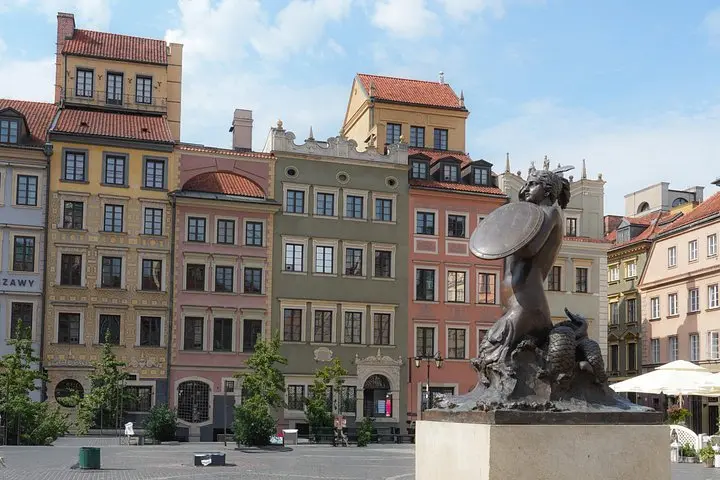
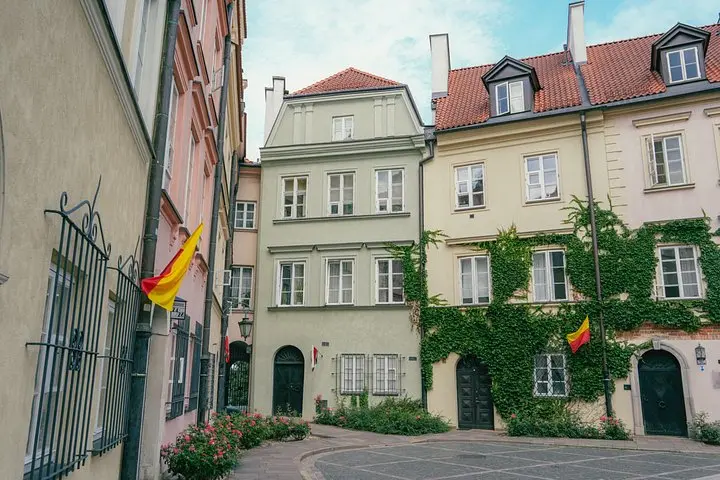
You begin beneath the bronze figures of the Warsaw Rising Monument, a plaza that smells faintly of damp stone and coffee from nearby cafés. The guide’s voice threads history into the cobbles as you move into the Old Town: pastel-fronted townhouses, narrow alleys, and the legend of the mermaid watching over the square.
You begin beneath the bronze figures of the Warsaw Rising Monument, a plaza that smells faintly of damp stone and coffee from nearby cafés. The guide’s voice threads history into the cobbles as you move into the Old Town: pastel-fronted townhouses, narrow alleys, and the legend of the mermaid watching over the square.
The route traces layers of Warsaw’s past — medieval burgage plots rebuilt after World War II, the Sigismund column standing guard over Castle Square, and Mariensztat’s postwar neighborhood that reclaimed daily life from ruins. Geologically the city sits on glacial plains, but the river provides relief: the Vistula’s boulevards open like a breathing room where modern glass and green roofs of the University Library meet converted industrial blocks in Powiśle.
After roughly 60–75 minutes on foot, you board a one-hour scenic boat. From the water the city redraws itself: bridges arching overhead, the Old Town’s towers reflected, and the Copernicus dome cutting a modern silhouette. The pace is deliberate — history on land, panorama on water.
Practical notes: expect cobbles and short stair sections; the tour covers about 2–3 km walking and includes a 1‑hour boat segment. Small-group size keeps questions easy and stops efficient. Bring layered clothing, comfortable footwear, and a refillable bottle; public transport connects easily to the meeting point. For travellers who like compact urban adventures, this is a practical, low-effort way to read Warsaw’s two faces — the city that fought and the river that carries it forward.