THE ADVENTURE COLLECTIVE® · Independent discovery and booking for outdoor travel

Head inland from Negombo for a full-day jeep safari through Wasgamuwa National Park, where large elephant herds, riverine forests and open grasslands define the dry-zone wilderness. This guide explains what to expect, how to prepare, and where to focus your camera and attention.
Head inland from Negombo for a full-day jeep safari through Wasgamuwa National Park, where large elephant herds, riverine forests and open grasslands define the dry-zone wilderness. This guide explains what to expect, how to prepare, and where to focus your camera and attention.
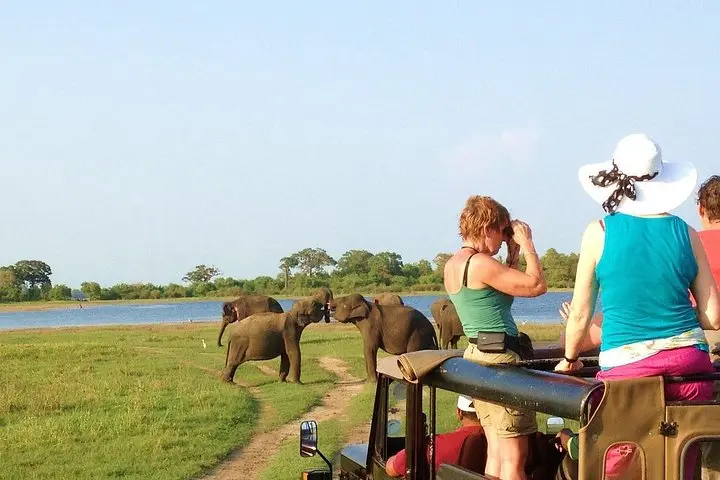
The jeep bumps off the paved road at first light and the dry-zone air snaps awake—the tank waters ahead already steaming as elephants lantern their way to the shore. You arrive into a landscape of open grasslands cut by riverine corridors, where dusty tracks thread between scrub forest and shallow reservoirs that reflect sudden blue sky.
Verified experiences and guided adventures in the surrounding area.
Operated by OTN WORLD PVT LTD · Wasgamuwa (Polonnaruwa District), North Central Province
The jeep bumps off the paved road at first light and the dry-zone air snaps awake—the tank waters ahead already steaming as elephants lantern their way to the shore. You arrive into a landscape of open grasslands cut by riverine corridors, where dusty tracks thread between scrub forest and shallow reservoirs that reflect sudden blue sky.
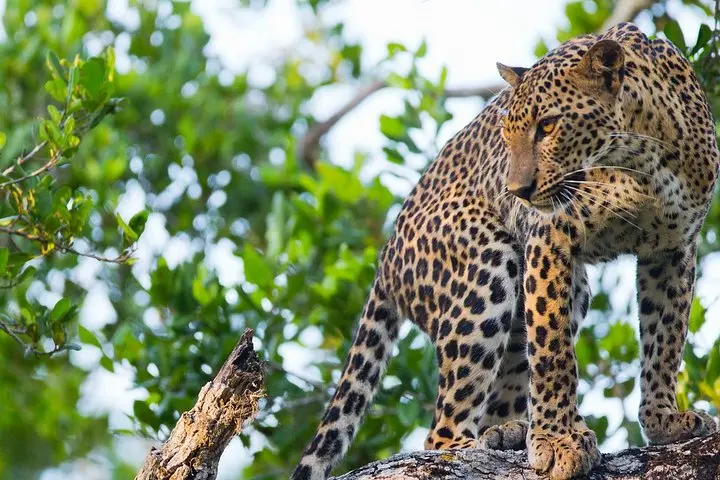
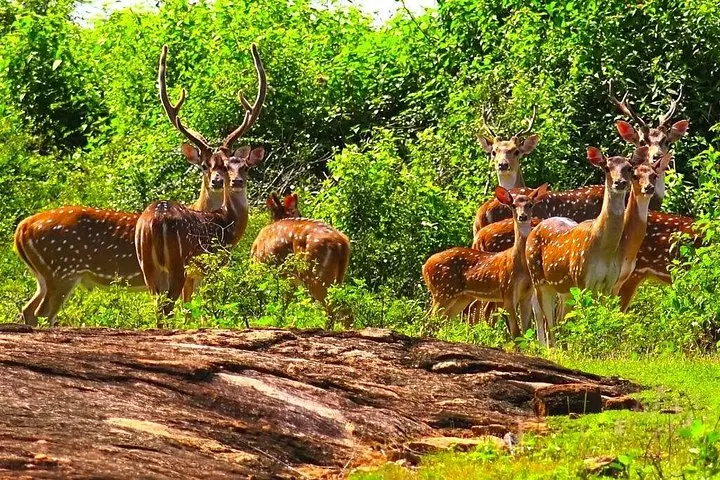
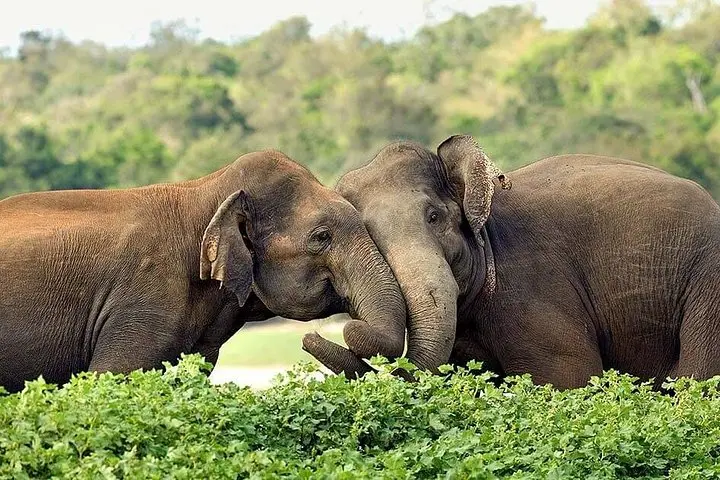
Wasgamuwa National Park, covering roughly 39,322 hectares, sits in Sri Lanka’s dry zone between Kandy and Polonnaruwa. The park was declared a national park in the 1980s to protect migrating elephant herds; today it shelters 150–250 elephants along with leopards, sloth bears, sambhur, and 143 recorded bird species. Geology here is low relief—ancient crystalline rock, sandier alluvial flats and small granite outcrops—so most drives stay level, punctuated by seasonal tanks (man-made reservoirs) that shape animal movement.
Local villages and cattle grazing touch the park boundary, creating a visible human–wildlife interface; guides will note how livestock movements influence where elephants browse. Culture nearby is rural Sinhala: small temples, chena cultivation, and the occasional roadside vendor selling king coconut.
Practical guide: expect an early pickup (often 05:30–06:00), a 3–4 hour drive from Negombo depending on traffic, and a full-day schedule returned by evening. Safari is by jeep; bring sun protection, plenty of water, binoculars and layered light clothing for dust and brief temperature shifts. Stay inside the vehicle, follow the guide’s distance rules, and plan for limited mobile signal inside the park. Morning and late afternoon drives offer the best wildlife viewing; midday is quieter but good for birds and basking reptiles.
Expect roughly 3–4 hours each way depending on traffic and route; pickup is usually early morning to fit a full-day program.
Wasgamuwa is known for regular elephant sightings (estimates 150–250 animals), but wildlife is never guaranteed—timing and luck matter.
Tours typically include bottled water; bring snacks if you prefer, though some operators include a light lunch or stop en route.
The excursion is family-friendly but infants must sit on an adult’s lap in vehicles; long drives and bumpy jeep tracks can be tiring for very young children.
OTN WORLD PVT LTD operates guided outdoor trips and adventures with an emphasis on safety, stewardship, and memorable experiences.
The jeep bumps off the paved road at first light and the dry-zone air snaps awake—the tank waters ahead already steaming as elephants lantern their way to the shore. You arrive into a landscape of open grasslands cut by riverine corridors, where dusty tracks thread between scrub forest and shallow reservoirs that reflect sudden blue sky.
The jeep bumps off the paved road at first light and the dry-zone air snaps awake—the tank waters ahead already steaming as elephants lantern their way to the shore. You arrive into a landscape of open grasslands cut by riverine corridors, where dusty tracks thread between scrub forest and shallow reservoirs that reflect sudden blue sky.
Wasgamuwa National Park, covering roughly 39,322 hectares, sits in Sri Lanka’s dry zone between Kandy and Polonnaruwa. The park was declared a national park in the 1980s to protect migrating elephant herds; today it shelters 150–250 elephants along with leopards, sloth bears, sambhur, and 143 recorded bird species. Geology here is low relief—ancient crystalline rock, sandier alluvial flats and small granite outcrops—so most drives stay level, punctuated by seasonal tanks (man-made reservoirs) that shape animal movement.
Local villages and cattle grazing touch the park boundary, creating a visible human–wildlife interface; guides will note how livestock movements influence where elephants browse. Culture nearby is rural Sinhala: small temples, chena cultivation, and the occasional roadside vendor selling king coconut.
Practical guide: expect an early pickup (often 05:30–06:00), a 3–4 hour drive from Negombo depending on traffic, and a full-day schedule returned by evening. Safari is by jeep; bring sun protection, plenty of water, binoculars and layered light clothing for dust and brief temperature shifts. Stay inside the vehicle, follow the guide’s distance rules, and plan for limited mobile signal inside the park. Morning and late afternoon drives offer the best wildlife viewing; midday is quieter but good for birds and basking reptiles.