THE ADVENTURE COLLECTIVE® · Independent discovery and booking for outdoor travel

Ride the mountain road to Wat Phra That Doi Suthep, climb the naga stair, then continue to a White Meo (Hmong) hilltribe village for close cultural encounters. This half-day run blends a landmark Lanna temple, forested ridge views and a short village visit.
Ride the mountain road to Wat Phra That Doi Suthep, climb the naga stair, then continue to a White Meo (Hmong) hilltribe village for close cultural encounters. This half-day run blends a landmark Lanna temple, forested ridge views and a short village visit.
You climb out of the city air into cooler mountain mist as the van carves up the slopes toward Doi Suthep. Below, Chiang Mai shrinks into roofs and rice paddies; ahead, the temple’s gilded chedi catches noon light and the road opens onto forested ridgelines. The approach prepares you: a naga-lined stairwell of roughly 300 steps, chants from monks, incense smoke drifting across tiled courtyards.
Verified experiences and guided adventures in the surrounding area.
Operated by Tour East Thailand · Chiang Mai, Chiang Mai Province
You climb out of the city air into cooler mountain mist as the van carves up the slopes toward Doi Suthep. Below, Chiang Mai shrinks into roofs and rice paddies; ahead, the temple’s gilded chedi catches noon light and the road opens onto forested ridgelines. The approach prepares you: a naga-lined stairwell of roughly 300 steps, chants from monks, incense smoke drifting across tiled courtyards.
Wat Phra That Doi Suthep dates to the 14th century and is an anchor of Lanna Buddhist practice; its elevated chedi enshrines a relic and frames long views over the Ping River valley. Geologically, Doi Suthep is part of the Thanon Thong Chai range—older metamorphic rock with ridges that hold montane evergreen forest and seasonal waterfalls. A short drive beyond the temple drops you into the White Meo (Hmong) village, where terraced gardens, hand-stitched textiles and simple wooden homes illustrate a lifestyle shaped by altitude and subsistence farming.
On this half-day itinerary expect a mix of paved and short dirt walks, cultural interpretation from a local guide, and repeated photo stops. Practicalities: dress respectfully (no bare shoulders or short shorts at the temple), carry water, and wear shoes with decent grip for stairs and uneven village paths. Morning visits avoid crowds and heat; afternoons bring softer light but more visitors. Be mindful with photography in the village—ask before photographing people and consider small cash purchases to support local households. The tour is compact, sensory and accessible for most travelers who want a quick but meaningful mountain escape from Chiang Mai.
The tour runs about 3.5 hours and typically includes hotel pickup (selected hotels), an English-speaking guide, entrance to the temple and the village visit—confirm exact inclusions with the operator.
The main chedi is reached via a long staircase; a motor road and limited accessible paths are available but access to some areas may be restricted—contact the operator to arrange pickup/drop points and accessibility support.
Yes—small cash amounts are best for souvenirs, snacks, or donations, as card facilities are usually unavailable in hilltribe villages.
Photography is allowed at the temple in most outdoor areas; in the village, always ask permission before photographing people or inside homes to respect privacy and customs.
Tour East Thailand operates guided outdoor trips and adventures with an emphasis on safety, stewardship, and memorable experiences.
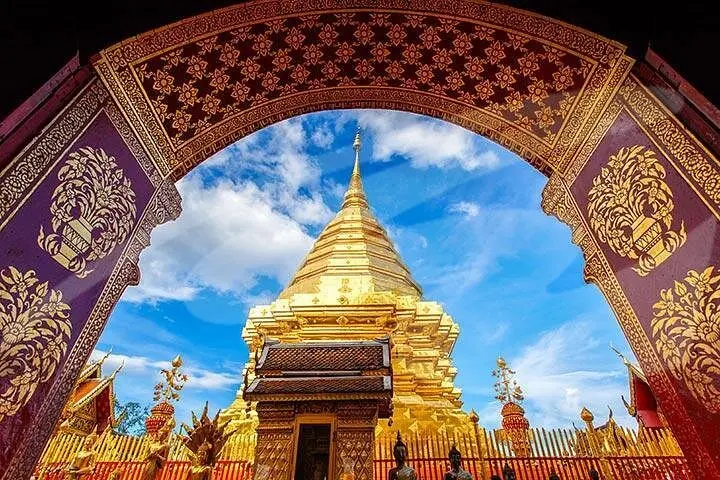
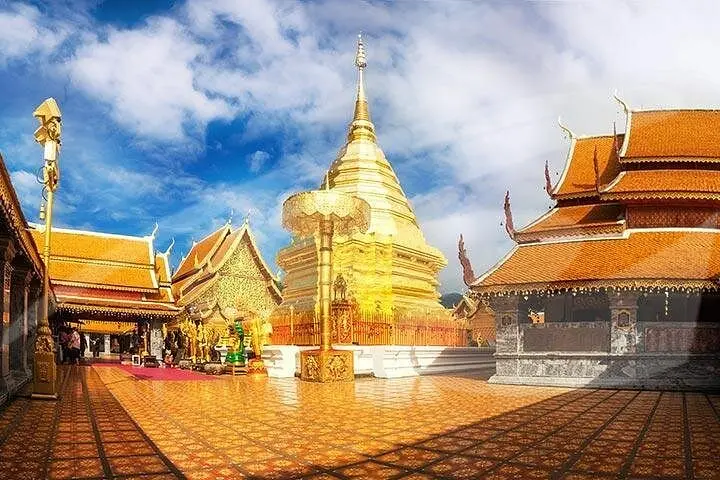
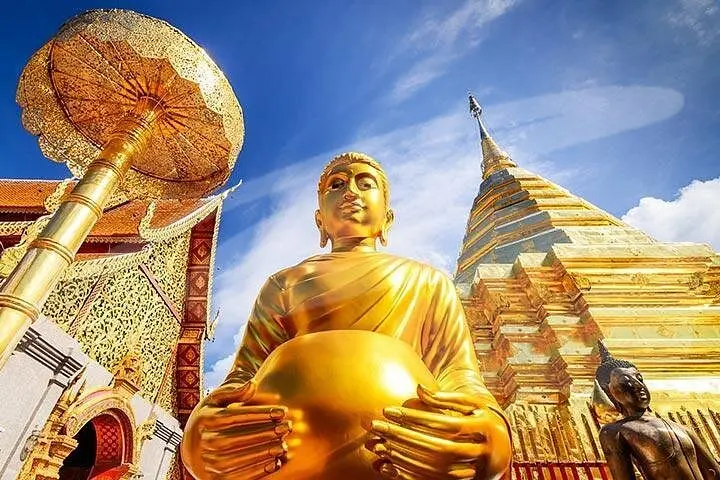
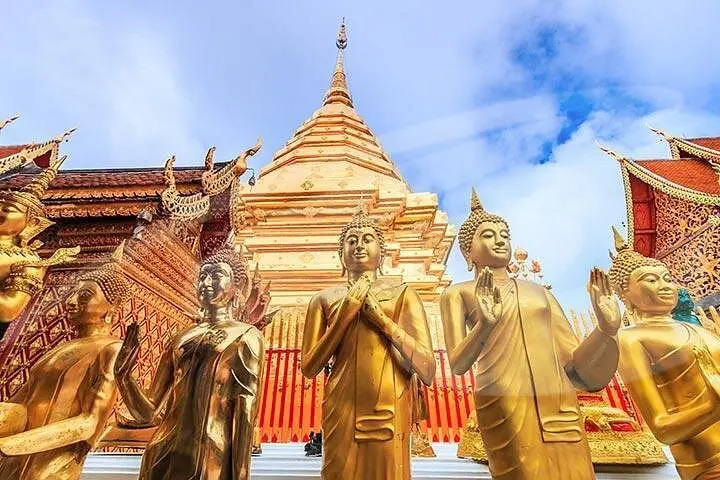
You climb out of the city air into cooler mountain mist as the van carves up the slopes toward Doi Suthep. Below, Chiang Mai shrinks into roofs and rice paddies; ahead, the temple’s gilded chedi catches noon light and the road opens onto forested ridgelines. The approach prepares you: a naga-lined stairwell of roughly 300 steps, chants from monks, incense smoke drifting across tiled courtyards.
You climb out of the city air into cooler mountain mist as the van carves up the slopes toward Doi Suthep. Below, Chiang Mai shrinks into roofs and rice paddies; ahead, the temple’s gilded chedi catches noon light and the road opens onto forested ridgelines. The approach prepares you: a naga-lined stairwell of roughly 300 steps, chants from monks, incense smoke drifting across tiled courtyards.
Wat Phra That Doi Suthep dates to the 14th century and is an anchor of Lanna Buddhist practice; its elevated chedi enshrines a relic and frames long views over the Ping River valley. Geologically, Doi Suthep is part of the Thanon Thong Chai range—older metamorphic rock with ridges that hold montane evergreen forest and seasonal waterfalls. A short drive beyond the temple drops you into the White Meo (Hmong) village, where terraced gardens, hand-stitched textiles and simple wooden homes illustrate a lifestyle shaped by altitude and subsistence farming.
On this half-day itinerary expect a mix of paved and short dirt walks, cultural interpretation from a local guide, and repeated photo stops. Practicalities: dress respectfully (no bare shoulders or short shorts at the temple), carry water, and wear shoes with decent grip for stairs and uneven village paths. Morning visits avoid crowds and heat; afternoons bring softer light but more visitors. Be mindful with photography in the village—ask before photographing people and consider small cash purchases to support local households. The tour is compact, sensory and accessible for most travelers who want a quick but meaningful mountain escape from Chiang Mai.