THE ADVENTURE COLLECTIVE® · Independent discovery and booking for outdoor travel

Walk Waterford’s Viking Triangle and quays on a 2.5‑hour guided route that hits Reginald’s Tower, House of Waterford Crystal and Georgian highlights. Expect cobbles, river views and compact local history narrated by an expert guide.
Walk Waterford’s Viking Triangle and quays on a 2.5‑hour guided route that hits Reginald’s Tower, House of Waterford Crystal and Georgian highlights. Expect cobbles, river views and compact local history narrated by an expert guide.
The cobbles underfoot click like a metronome as the River Suir slides by, daring you to slow and listen. You step into a compact city where stone and water mark a history of arrival and trade: Viking shipwrights here in AD 914, merchants in the Georgian age, and modern artisans in the shadow of the quays.
Verified experiences and guided adventures in the surrounding area.
Operated by LetzGo City Tours · Waterford, County Waterford
The cobbles underfoot click like a metronome as the River Suir slides by, daring you to slow and listen. You step into a compact city where stone and water mark a history of arrival and trade: Viking shipwrights here in AD 914, merchants in the Georgian age, and modern artisans in the shadow of the quays.
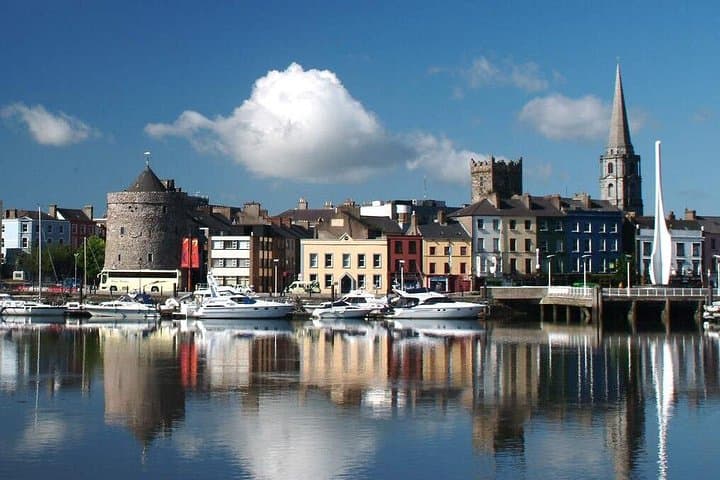
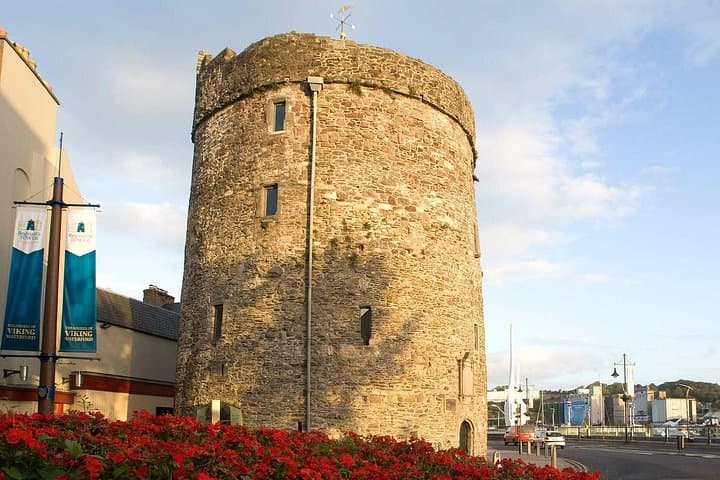
Guides steer the group through the Viking Triangle to Reginald’s Tower — Ireland’s oldest civic building — then onward past the House of Waterford Crystal and the elegant Bishop’s Palace. The route threads medieval lanes, Georgian facades, and civic monuments; each stop is short, pointed, and rooted in local story. Geology shows in the river-born gravels and reclaimed quays; architecture charts political shifts from Norse to Norman to Georgian rule.
Culturally, Waterford still wears its maritime past: the quayside clock tower and harbor tell of emigration and eighteenth-century trade. The replica Viking longboat and the giant wooden sword dramatize that era without overwhelming the small-city scale.
Practically, expect 2–3 hours of walking over uneven surfaces, cobbles and stairs. Comfortable shoes and a waterproof layer are non-negotiable; the city’s compactness means frequent stops and photo opportunities. The tour is approachable for most visitors but not suited to wheeled mobility aids due to historic streets. Bring a light daypack, a charged phone for photos, and spare change for museum entry if you want to explore further after the tour. Arrive with curiosity and leave with a clearer map of how Waterford shaped—and was shaped by—sea, stone, and trade.
No, admission fees to some attractions are not included; the guide provides exterior narration at key stops and will advise if you can enter independently afterwards.
Yes—children are welcome but must be accompanied by an adult; terrain and pace are family‑friendly though some short stairs are involved.
Tours are guided in English and operate as shared tours with up to 20 participants, offering an interactive, conversational format.
The tour operates in most weather conditions; dress appropriately. If the operator cancels for other reasons you’ll be notified per the booking policy.
LetzGo City Tours operates guided outdoor trips and adventures with an emphasis on safety, stewardship, and memorable experiences.

The cobbles underfoot click like a metronome as the River Suir slides by, daring you to slow and listen. You step into a compact city where stone and water mark a history of arrival and trade: Viking shipwrights here in AD 914, merchants in the Georgian age, and modern artisans in the shadow of the quays.
The cobbles underfoot click like a metronome as the River Suir slides by, daring you to slow and listen. You step into a compact city where stone and water mark a history of arrival and trade: Viking shipwrights here in AD 914, merchants in the Georgian age, and modern artisans in the shadow of the quays.
Guides steer the group through the Viking Triangle to Reginald’s Tower — Ireland’s oldest civic building — then onward past the House of Waterford Crystal and the elegant Bishop’s Palace. The route threads medieval lanes, Georgian facades, and civic monuments; each stop is short, pointed, and rooted in local story. Geology shows in the river-born gravels and reclaimed quays; architecture charts political shifts from Norse to Norman to Georgian rule.
Culturally, Waterford still wears its maritime past: the quayside clock tower and harbor tell of emigration and eighteenth-century trade. The replica Viking longboat and the giant wooden sword dramatize that era without overwhelming the small-city scale.
Practically, expect 2–3 hours of walking over uneven surfaces, cobbles and stairs. Comfortable shoes and a waterproof layer are non-negotiable; the city’s compactness means frequent stops and photo opportunities. The tour is approachable for most visitors but not suited to wheeled mobility aids due to historic streets. Bring a light daypack, a charged phone for photos, and spare change for museum entry if you want to explore further after the tour. Arrive with curiosity and leave with a clearer map of how Waterford shaped—and was shaped by—sea, stone, and trade.