THE ADVENTURE COLLECTIVE® · Independent discovery and booking for outdoor travel

Cut loose on a guided 90-minute waverunner tour from Okaloosa Island to Choctawhatchee Bay and the Gulf, seeking dolphins, turtles and manatees. Learn local patterns, gear up with a boater safety card if required, and enjoy a guided wildlife search followed by open-ride time.
Cut loose on a guided 90-minute waverunner tour from Okaloosa Island to Choctawhatchee Bay and the Gulf, seeking dolphins, turtles and manatees. Learn local patterns, gear up with a boater safety card if required, and enjoy a guided wildlife search followed by open-ride time.
The morning air on Okaloosa Island tastes of salt and fuel as guides ease a string of two-seater waverunners onto Choctawhatchee Bay. You’ll feel the machines hum beneath you, then the guide’s shout: dolphins ahead. The group threads through green water that flats into the Gulf, cliffs absent but sandbars and oyster beds shaping currents and feeding grounds where marine life gathers.
Verified experiences and guided adventures in the surrounding area.
Operated by Power Up Watersports · Fort Walton Beach, Florida
The morning air on Okaloosa Island tastes of salt and fuel as guides ease a string of two-seater waverunners onto Choctawhatchee Bay. You’ll feel the machines hum beneath you, then the guide’s shout: dolphins ahead. The group threads through green water that flats into the Gulf, cliffs absent but sandbars and oyster beds shaping currents and feeding grounds where marine life gathers.
This stretch of the Emerald Coast has been a working waterway for generations—first the Muscogee and other Indigenous peoples, later fishing communities and coastal trade. Geologically it’s recent sand: barrier islands, shifting in storms, with shallow bays rich in seagrass that sustain dolphins, sea turtles and resident manatees. Local culture still orients around the water—pier fishing, family runs to Crab Island and small marinas tucked under Brooks Bridge.
Expect a guided 90-minute outing that spends roughly an hour searching for wildlife, then gives you 20–30 minutes of open waverunner time. Guides know the seasonal haunts and sighting patterns but cannot guarantee animals. The ride covers bay and nearshore Gulf water, with shallow sandbars, moderate chop and occasional cross-current near inlets. Practicalities: Florida requires a boater-safety certificate if you were born on or after Jan 1, 1988; life vests and instruction are provided. Bring reef-safe sunscreen, a quick-dry towel and a secure method for small valuables—or leave them ashore. Plan departures in calmer morning windows for smoother seas and better sightings. Respect wildlife: observe at a distance, avoid chasing pods, and follow your guide’s directions for safe, legal interaction.
Yes—Florida law requires a boater safety card to operate a personal watercraft if you were born on or after January 1, 1988; passengers do not need the card.
No—guides are experienced at locating dolphins and other wildlife, but sightings are natural phenomena and cannot be guaranteed.
All passengers must be at least 8 years old per the operator’s insurance policy; drivers should meet the age and certification requirements.
If conditions are unsafe the operator will attempt to reschedule or issue a refund; cancellations are allowed up to 24 hours before departure for a full refund.
Power Up Watersports operates guided outdoor trips and adventures with an emphasis on safety, stewardship, and memorable experiences.
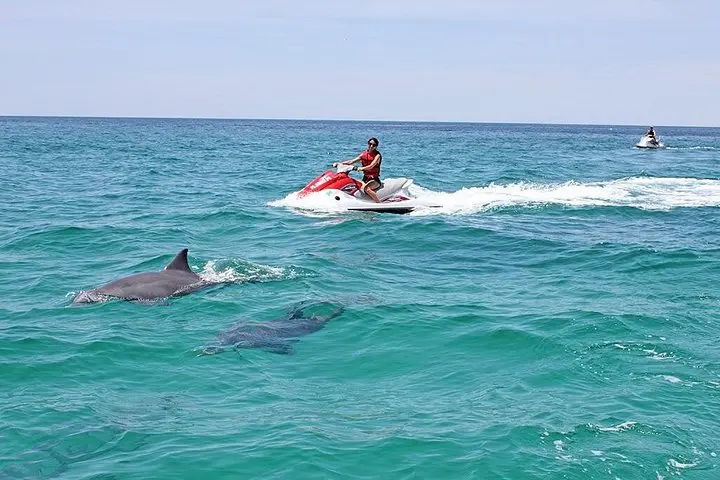
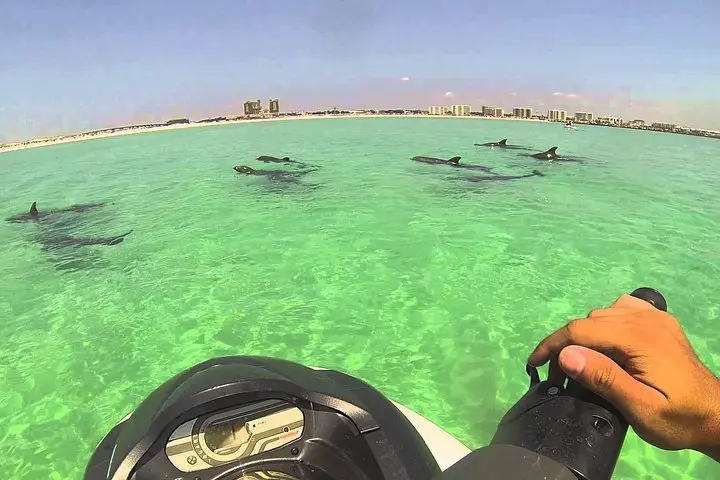
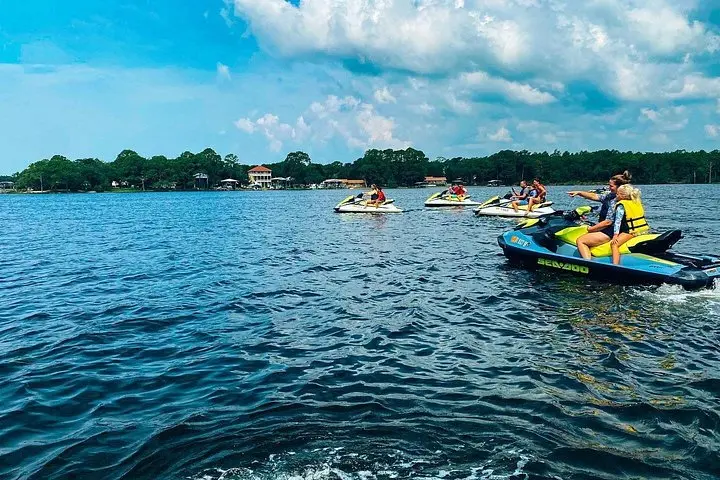
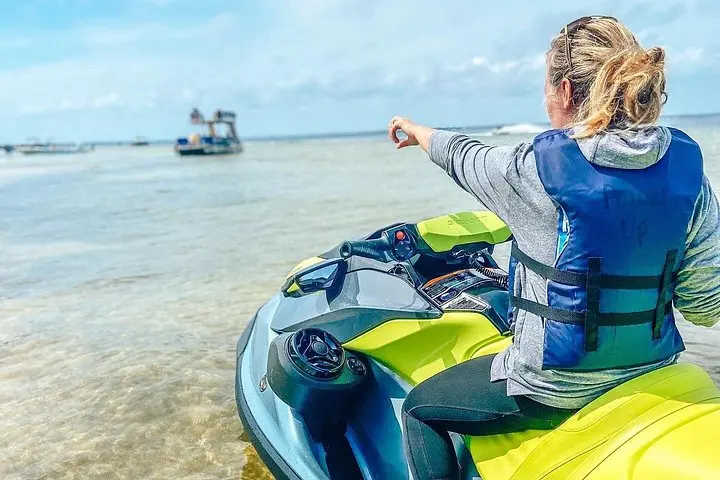
The morning air on Okaloosa Island tastes of salt and fuel as guides ease a string of two-seater waverunners onto Choctawhatchee Bay. You’ll feel the machines hum beneath you, then the guide’s shout: dolphins ahead. The group threads through green water that flats into the Gulf, cliffs absent but sandbars and oyster beds shaping currents and feeding grounds where marine life gathers.
The morning air on Okaloosa Island tastes of salt and fuel as guides ease a string of two-seater waverunners onto Choctawhatchee Bay. You’ll feel the machines hum beneath you, then the guide’s shout: dolphins ahead. The group threads through green water that flats into the Gulf, cliffs absent but sandbars and oyster beds shaping currents and feeding grounds where marine life gathers.
This stretch of the Emerald Coast has been a working waterway for generations—first the Muscogee and other Indigenous peoples, later fishing communities and coastal trade. Geologically it’s recent sand: barrier islands, shifting in storms, with shallow bays rich in seagrass that sustain dolphins, sea turtles and resident manatees. Local culture still orients around the water—pier fishing, family runs to Crab Island and small marinas tucked under Brooks Bridge.
Expect a guided 90-minute outing that spends roughly an hour searching for wildlife, then gives you 20–30 minutes of open waverunner time. Guides know the seasonal haunts and sighting patterns but cannot guarantee animals. The ride covers bay and nearshore Gulf water, with shallow sandbars, moderate chop and occasional cross-current near inlets. Practicalities: Florida requires a boater-safety certificate if you were born on or after Jan 1, 1988; life vests and instruction are provided. Bring reef-safe sunscreen, a quick-dry towel and a secure method for small valuables—or leave them ashore. Plan departures in calmer morning windows for smoother seas and better sightings. Respect wildlife: observe at a distance, avoid chasing pods, and follow your guide’s directions for safe, legal interaction.