THE ADVENTURE COLLECTIVE® · Independent discovery and booking for outdoor travel

Learn to weave a lei po'o with a local kumu in Hilo. This two-hour garden walk and weaving class combines plant lore, hands-on instruction, and a crafted floral crown to take home.
Learn to weave a lei po'o with a local kumu in Hilo. This two-hour garden walk and weaving class combines plant lore, hands-on instruction, and a crafted floral crown to take home.
You arrive under a pavilion set back from the shoreline, palms shifting like slow applause while a local kumu (teacher) greets the group with a simple oli—an opening chant that places your hands and breath on the aina (land).
Verified experiences and guided adventures in the surrounding area.
Operated by Hilo's Treasure · Hilo, Hawaii
You arrive under a pavilion set back from the shoreline, palms shifting like slow applause while a local kumu (teacher) greets the group with a simple oli—an opening chant that places your hands and breath on the aina (land).
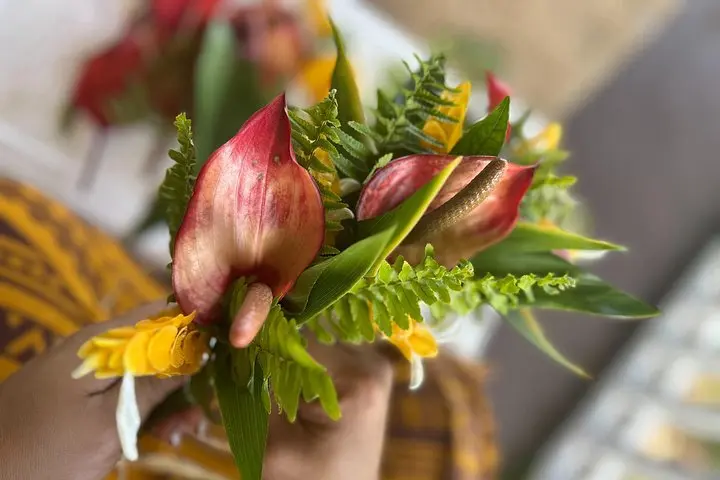
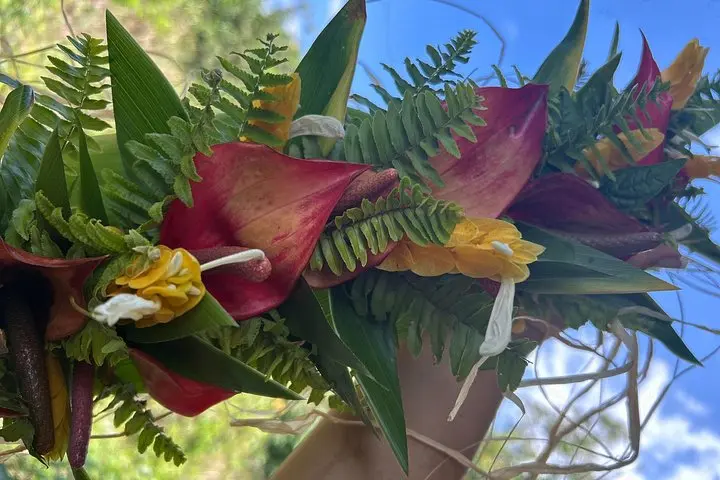
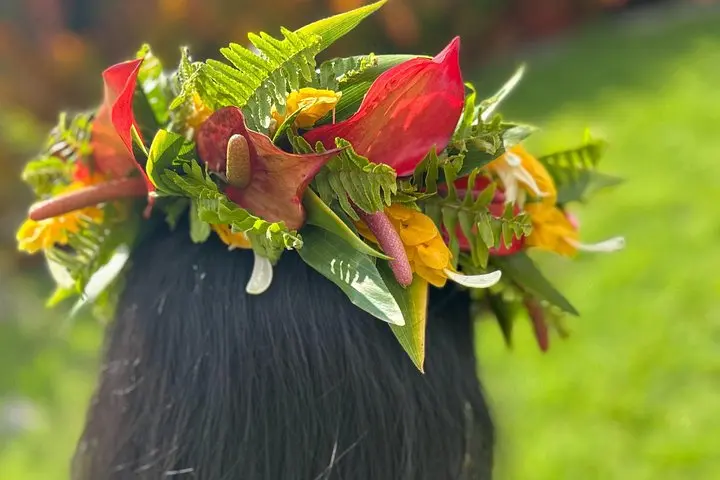
The workshop begins with a short garden walk. The guide points out seasonal foliage, explains traditional medicinal uses, and invites guests to harvest respectfully. Plants here are taught as relatives: the leaves offer remedies, the flowers offer blessing, the garden dares you to learn by touch. Back at the picnic table you’ll use rafia, cordage, scissors and a picking basket—supplied on-site—to braid a lei po’o (floral crown) using the Hawaiian wili technique.
Historically, lei-making is an act of relationship and rank; floral crowns mark ceremonies, births, and arrivals. Geologically, Hilo’s warm, wet microclimate—fed by tradewind moisture off Mauna Kea and Mauna Loa—keeps gardens lush year-round, favoring hibiscus, ginger, ti, and plumeria. Expect storytelling that threads family memory with local plant lore rather than formal museum-style lectures.
Practical notes: the class runs about two hours and is suitable for all ages and mobility levels. Come prepared for humidity and intermittent sun—light, quick-dry layers work best. Bring a small bag for finished leis and an extra camera battery; wet foliage can make surfaces slippery. If you want deeper context, ask about seasonal plant cycles and where to ethically source materials.
This is a hands-on cultural exchange: tactile, social, and rooted in place. You leave with a crafted lei, a set of weaving skills, and a clearer sense of how island life continues through everyday, careful practice.
No—this class is designed for beginners and the instructor guides you step-by-step through the wili technique.
Yes—rafia, cordage, scissors and a picking basket are included, along with seasonal foliage chosen by the guide.
Yes—infants and small children can be in strollers and the workshop is suitable for a wide range of ages; younger kids may need help with fine motor steps.
Full refunds are available if you cancel at least 24 hours before the scheduled start; the tour may be canceled in bad weather.
Hilo's Treasure operates guided outdoor trips and adventures with an emphasis on safety, stewardship, and memorable experiences.
You arrive under a pavilion set back from the shoreline, palms shifting like slow applause while a local kumu (teacher) greets the group with a simple oli—an opening chant that places your hands and breath on the aina (land).
You arrive under a pavilion set back from the shoreline, palms shifting like slow applause while a local kumu (teacher) greets the group with a simple oli—an opening chant that places your hands and breath on the aina (land).
The workshop begins with a short garden walk. The guide points out seasonal foliage, explains traditional medicinal uses, and invites guests to harvest respectfully. Plants here are taught as relatives: the leaves offer remedies, the flowers offer blessing, the garden dares you to learn by touch. Back at the picnic table you’ll use rafia, cordage, scissors and a picking basket—supplied on-site—to braid a lei po’o (floral crown) using the Hawaiian wili technique.
Historically, lei-making is an act of relationship and rank; floral crowns mark ceremonies, births, and arrivals. Geologically, Hilo’s warm, wet microclimate—fed by tradewind moisture off Mauna Kea and Mauna Loa—keeps gardens lush year-round, favoring hibiscus, ginger, ti, and plumeria. Expect storytelling that threads family memory with local plant lore rather than formal museum-style lectures.
Practical notes: the class runs about two hours and is suitable for all ages and mobility levels. Come prepared for humidity and intermittent sun—light, quick-dry layers work best. Bring a small bag for finished leis and an extra camera battery; wet foliage can make surfaces slippery. If you want deeper context, ask about seasonal plant cycles and where to ethically source materials.
This is a hands-on cultural exchange: tactile, social, and rooted in place. You leave with a crafted lei, a set of weaving skills, and a clearer sense of how island life continues through everyday, careful practice.