THE ADVENTURE COLLECTIVE® · Independent discovery and booking for outdoor travel

Explore Medinet Habu’s monumental reliefs and the intimate painted tombs of Deir el-Medina on a focused half-day tour of Luxor’s West Bank. This compact route pairs royal architecture with artisan life for a clear window into New Kingdom Egypt.
Explore Medinet Habu’s monumental reliefs and the intimate painted tombs of Deir el-Medina on a focused half-day tour of Luxor’s West Bank. This compact route pairs royal architecture with artisan life for a clear window into New Kingdom Egypt.
A low sun cuts the stone reliefs into crisp relief as visitors step from an air-conditioned vehicle onto the sands of Luxor’s West Bank. Wind pushes heat across broad courtyards at Medinet Habu; painted fields inside the workers’ tombs still carry pigments that seem to argue with time. The tour moves with purpose—temple, artisan village, temple—each stop a close-up of daily life and state power in New Kingdom Egypt.
Verified experiences and guided adventures in the surrounding area.
Operated by Egypt Luxury Trips · Luxor, Luxor Governorate
A low sun cuts the stone reliefs into crisp relief as visitors step from an air-conditioned vehicle onto the sands of Luxor’s West Bank. Wind pushes heat across broad courtyards at Medinet Habu; painted fields inside the workers’ tombs still carry pigments that seem to argue with time. The tour moves with purpose—temple, artisan village, temple—each stop a close-up of daily life and state power in New Kingdom Egypt.
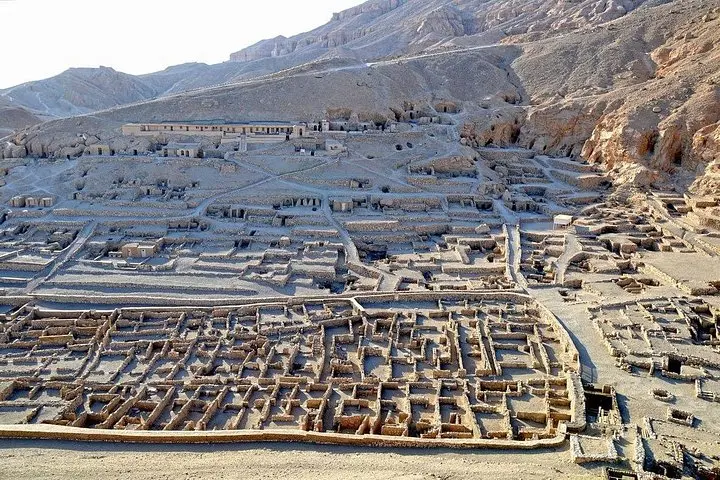
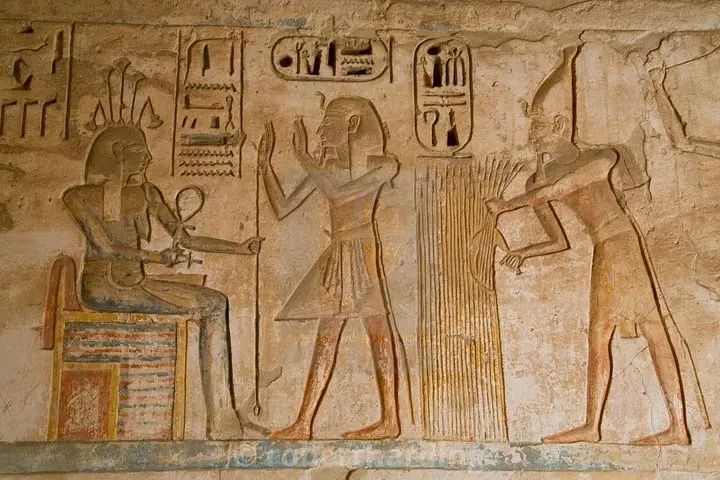
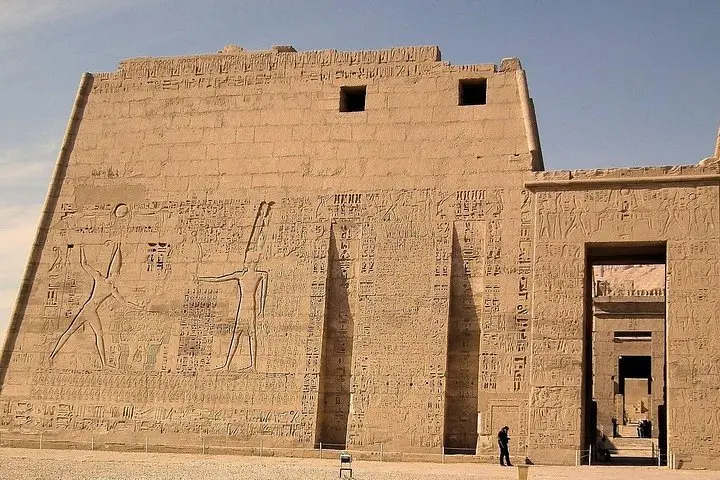
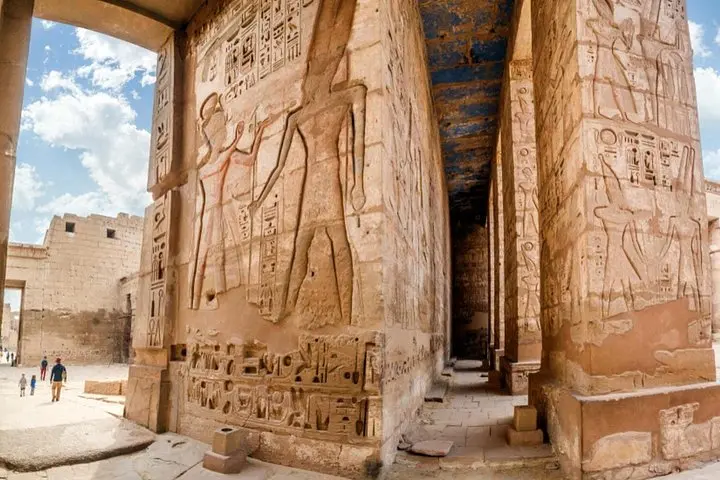
Medinet Habu, the mortuary complex of Ramses III, combines monumental pylons and battle scenes carved into hard sandstone laid down by ancient seas. A short drive west brings you to Deir el-Medina, the village of the artisans whose tomb paintings record recipe-like scenes of work, family, and faith from the 18th Dynasty onward. Together they reveal the relationship between royal patronage and the skilled labor that built the Valley of the Kings nearby.
Culturally, this half-day shows both state ritual and the quieter rhythms of craftsmen—palettes of paint, hieratic notes, and graffiti that read like human asides. Geologically, you’ll see placid limestone and sandstone faces chiselled into readable layers.
Practical guidance: allow three hours, wear sturdy closed-toe shoes for uneven rock and sand, and carry sun protection—shade is limited. Photography is generally allowed but respect signs and fragile pigments; guides provide context and help skip ticket lines. Expect moderate walking with short climbs on temple thresholds; the tour includes pick-up and drop-off on Luxor’s West Bank and bottled water. Timing your visit for morning light makes pigments pop and keeps midday heat manageable.
Yes—this tour includes entry to Medinet Habu and Deir el-Medina as listed in the inclusions.
Yes; the itinerary is rated easy with short walks, though uneven surfaces may be challenging for mobility-limited guests.
Photography is generally allowed but follow the guide and posted rules; avoid flash near fragile pigments.
This experience includes private pickup and drop-off from hotels on Luxor’s West Bank and nearby accommodations.
Egypt Luxury Trips operates guided outdoor trips and adventures with an emphasis on safety, stewardship, and memorable experiences.
A low sun cuts the stone reliefs into crisp relief as visitors step from an air-conditioned vehicle onto the sands of Luxor’s West Bank. Wind pushes heat across broad courtyards at Medinet Habu; painted fields inside the workers’ tombs still carry pigments that seem to argue with time. The tour moves with purpose—temple, artisan village, temple—each stop a close-up of daily life and state power in New Kingdom Egypt.
A low sun cuts the stone reliefs into crisp relief as visitors step from an air-conditioned vehicle onto the sands of Luxor’s West Bank. Wind pushes heat across broad courtyards at Medinet Habu; painted fields inside the workers’ tombs still carry pigments that seem to argue with time. The tour moves with purpose—temple, artisan village, temple—each stop a close-up of daily life and state power in New Kingdom Egypt.
Medinet Habu, the mortuary complex of Ramses III, combines monumental pylons and battle scenes carved into hard sandstone laid down by ancient seas. A short drive west brings you to Deir el-Medina, the village of the artisans whose tomb paintings record recipe-like scenes of work, family, and faith from the 18th Dynasty onward. Together they reveal the relationship between royal patronage and the skilled labor that built the Valley of the Kings nearby.
Culturally, this half-day shows both state ritual and the quieter rhythms of craftsmen—palettes of paint, hieratic notes, and graffiti that read like human asides. Geologically, you’ll see placid limestone and sandstone faces chiselled into readable layers.
Practical guidance: allow three hours, wear sturdy closed-toe shoes for uneven rock and sand, and carry sun protection—shade is limited. Photography is generally allowed but respect signs and fragile pigments; guides provide context and help skip ticket lines. Expect moderate walking with short climbs on temple thresholds; the tour includes pick-up and drop-off on Luxor’s West Bank and bottled water. Timing your visit for morning light makes pigments pop and keeps midday heat manageable.