THE ADVENTURE COLLECTIVE® · Independent discovery and booking for outdoor travel

Cross the Nile by motorboat to explore the Ramesseum, the Temple of Seti I and richly painted nobles’ tombs. This private, guided half-day tour pairs expert interpretation with close-up views of Middle Kingdom and Ramesside reliefs.
Cross the Nile by motorboat to explore the Ramesseum, the Temple of Seti I and richly painted nobles’ tombs. This private, guided half-day tour pairs expert interpretation with close-up views of Middle Kingdom and Ramesside reliefs.
You step off a low Nile motorboat and the west bank greets you with sun-baked stone and the hush of ancient business: vultures wheel overhead, and the river seems to push you inland toward carved doorways and painted walls. The day begins with a short sail from Luxor’s east bank, then a drive past low date palms to the Ramesseum, where colossal blocks still cluster like the bones of a giant.
Verified experiences and guided adventures in the surrounding area.
Operated by Charming Egypt Tours · Luxor, Luxor Governorate
You step off a low Nile motorboat and the west bank greets you with sun-baked stone and the hush of ancient business: vultures wheel overhead, and the river seems to push you inland toward carved doorways and painted walls. The day begins with a short sail from Luxor’s east bank, then a drive past low date palms to the Ramesseum, where colossal blocks still cluster like the bones of a giant.
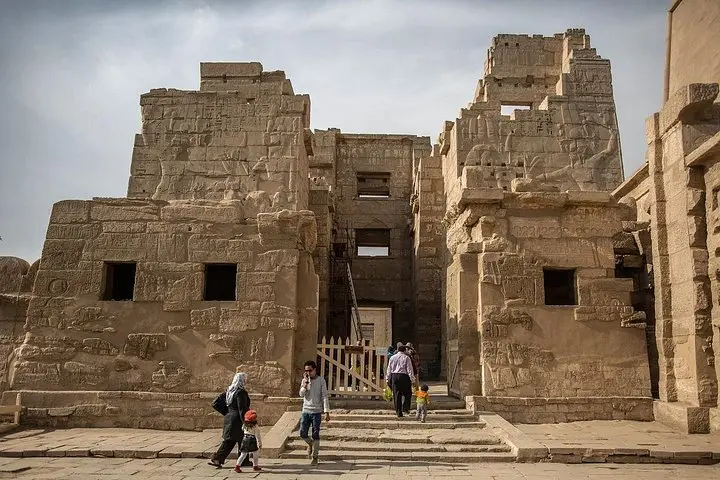
This stretch of the Nile has been Egypt’s funerary landscape for millennia. Ramesseum—Ramses II’s mortuary complex—records the Battle of Kadesh in relief, while adjacent tombs belong to Middle Kingdom nobles whose painted scenes show daily life and titles rather than royal myth. The tour also reaches the Temple of Seti I, father of Ramses II, whose reliefs and ritual spaces reveal evolving temple architecture on the west bank’s limestone bench above the floodplain.
Geologically, the west bank sits on limestone and sandstone ledges carved by wind and annual Nile inundations; the cliffs and quarries here supply the stone that makes these monuments readable today. Culturally, archaeologists and local antiquities workers have shaped conservation and access—expect narrow tomb passages, low doorways and fragile pigments.
Practical guidance: this private, 7-hour tour includes hotel pickup, an Egyptologist guide, bottled water, air-conditioned transport and a Nile boat shuttle. Wear lightweight long sleeves, sturdy closed shoes for uneven steps, sun protection and carry small change for entrance fees and tips. Tombs are cool but dim—bring a headlamp or use your phone sparingly. The tour is low-impact physically but high on steps and tight spaces; move deliberately and give the carvings room to breathe.
Admission is typically not included; bring local currency for entrance to archaeological sites and any optional on-site fees.
Yes—the itinerary includes a short Nile motorboat transfer between the east and west banks as part of the tour.
Children are welcome but must be supervised; many tombs have narrow passages and stairs so strollers are not practical.
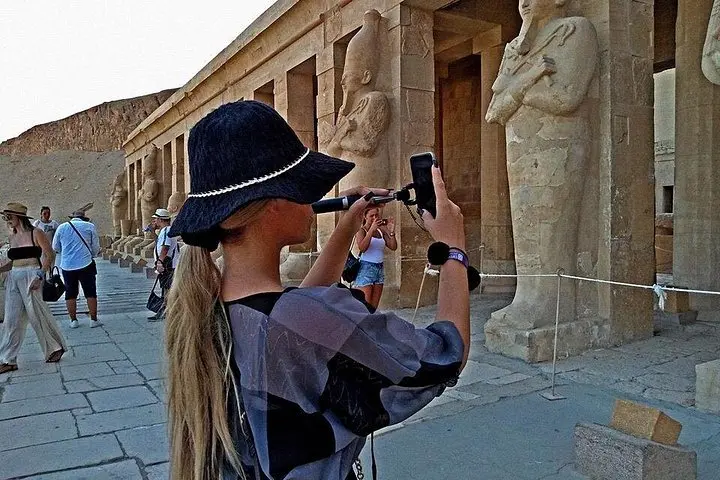
Photography is usually allowed but without flash in fragile interiors; follow your guide’s instructions to protect pigments and inscriptions.
Charming Egypt Tours operates guided outdoor trips and adventures with an emphasis on safety, stewardship, and memorable experiences.
You step off a low Nile motorboat and the west bank greets you with sun-baked stone and the hush of ancient business: vultures wheel overhead, and the river seems to push you inland toward carved doorways and painted walls. The day begins with a short sail from Luxor’s east bank, then a drive past low date palms to the Ramesseum, where colossal blocks still cluster like the bones of a giant.
You step off a low Nile motorboat and the west bank greets you with sun-baked stone and the hush of ancient business: vultures wheel overhead, and the river seems to push you inland toward carved doorways and painted walls. The day begins with a short sail from Luxor’s east bank, then a drive past low date palms to the Ramesseum, where colossal blocks still cluster like the bones of a giant.
This stretch of the Nile has been Egypt’s funerary landscape for millennia. Ramesseum—Ramses II’s mortuary complex—records the Battle of Kadesh in relief, while adjacent tombs belong to Middle Kingdom nobles whose painted scenes show daily life and titles rather than royal myth. The tour also reaches the Temple of Seti I, father of Ramses II, whose reliefs and ritual spaces reveal evolving temple architecture on the west bank’s limestone bench above the floodplain.
Geologically, the west bank sits on limestone and sandstone ledges carved by wind and annual Nile inundations; the cliffs and quarries here supply the stone that makes these monuments readable today. Culturally, archaeologists and local antiquities workers have shaped conservation and access—expect narrow tomb passages, low doorways and fragile pigments.
Practical guidance: this private, 7-hour tour includes hotel pickup, an Egyptologist guide, bottled water, air-conditioned transport and a Nile boat shuttle. Wear lightweight long sleeves, sturdy closed shoes for uneven steps, sun protection and carry small change for entrance fees and tips. Tombs are cool but dim—bring a headlamp or use your phone sparingly. The tour is low-impact physically but high on steps and tight spaces; move deliberately and give the carvings room to breathe.