THE ADVENTURE COLLECTIVE® · Independent discovery and booking for outdoor travel

Discover two hours of London's entertainment and civic history on a guided West End walk. Follow a Blue Badge guide from theatre façades to Fleet Street printing lore — an efficient, story-rich stroll through 1,000 years of city life.
Discover two hours of London's entertainment and civic history on a guided West End walk. Follow a Blue Badge guide from theatre façades to Fleet Street printing lore — an efficient, story-rich stroll through 1,000 years of city life.
A mid-morning in central London feels like stepping into a living archive — the Thames dares you forward as the Blue Badge guide threads stories through streets that have seen emperors, impresarios and printers.
Verified experiences and guided adventures in the surrounding area.
Operated by HiPS Tours Ltd · London, England
A mid-morning in central London feels like stepping into a living archive — the Thames dares you forward as the Blue Badge guide threads stories through streets that have seen emperors, impresarios and printers.
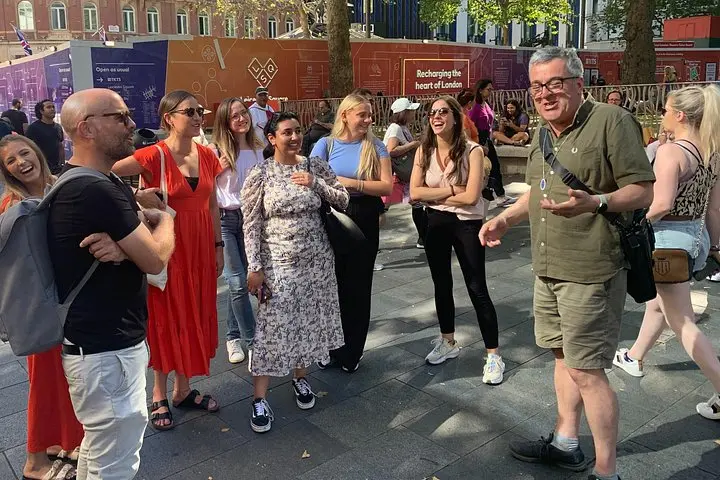
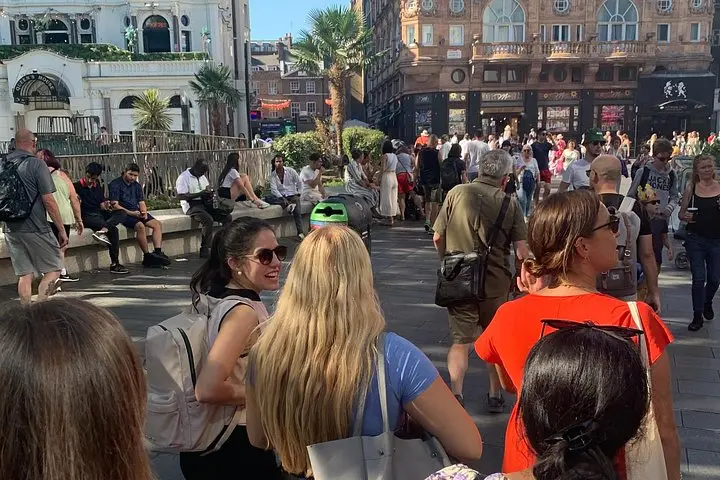
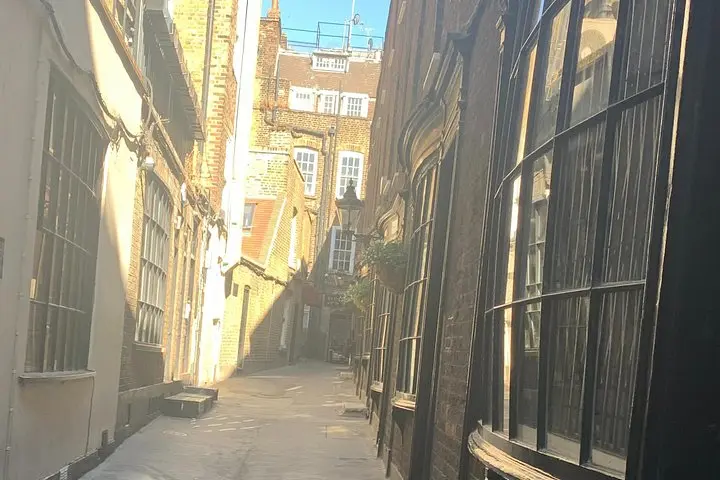
This two-hour walk moves from the theatre-lit West End across plazas and narrow alleys toward Fleet Street, tracing roughly 2–3 miles (3–5 km) on paved lanes and occasional cobbles with negligible elevation gain (under 50 m). Guides pause at sites tied to Charlie Chaplin, Winston Churchill and Harry Potter film locations, and explain how Roman roads, medieval markets and Victorian printing presses shaped the route.
Geology and urban form meet here: London Clay underpins low-lying riverfronts while the Thamesbank directed commerce, theatre and press into the same corridor. Cultural touchpoints include opera houses, long-standing pubs, and the printing heritage of Fleet Street — each stop links architecture to social history.
Practical guidance is straightforward: expect steady walking, frequent stops for storytelling and photo ops, and accessible surfaces on the main route (some side alleys have cobbles). Aim for mornings to avoid peak tourist flows or early evenings for theatre atmosphere. Public transport is the easiest approach — several Tube stations sit within a short walk of the meeting point. Wear comfortable shoes, layer for changeable weather, and bring a small bottle of water.
The walk is ideal for first-time visitors who want a compact, interpretive overview of London’s entertainment and civic history without museum lines — a compact immersion in two hours.
The tour lasts about 2 hours and covers roughly 2–3 miles (3–5 km) on mostly flat, paved surfaces with minimal elevation.
Yes — main areas on the route are wheelchair accessible, though some side alleys and cobbled sections may be less smooth; contact the operator for specific accessibility needs.
Meet at the stated central pickup point in the West End; arrive 10–15 minutes early to check in and avoid delays.
Standard policy allows a full refund if cancelled at least 24 hours before the scheduled start; check the booking confirmation for details.
HiPS Tours Ltd operates guided outdoor trips and adventures with an emphasis on safety, stewardship, and memorable experiences.
A mid-morning in central London feels like stepping into a living archive — the Thames dares you forward as the Blue Badge guide threads stories through streets that have seen emperors, impresarios and printers.
A mid-morning in central London feels like stepping into a living archive — the Thames dares you forward as the Blue Badge guide threads stories through streets that have seen emperors, impresarios and printers.
This two-hour walk moves from the theatre-lit West End across plazas and narrow alleys toward Fleet Street, tracing roughly 2–3 miles (3–5 km) on paved lanes and occasional cobbles with negligible elevation gain (under 50 m). Guides pause at sites tied to Charlie Chaplin, Winston Churchill and Harry Potter film locations, and explain how Roman roads, medieval markets and Victorian printing presses shaped the route.
Geology and urban form meet here: London Clay underpins low-lying riverfronts while the Thamesbank directed commerce, theatre and press into the same corridor. Cultural touchpoints include opera houses, long-standing pubs, and the printing heritage of Fleet Street — each stop links architecture to social history.
Practical guidance is straightforward: expect steady walking, frequent stops for storytelling and photo ops, and accessible surfaces on the main route (some side alleys have cobbles). Aim for mornings to avoid peak tourist flows or early evenings for theatre atmosphere. Public transport is the easiest approach — several Tube stations sit within a short walk of the meeting point. Wear comfortable shoes, layer for changeable weather, and bring a small bottle of water.
The walk is ideal for first-time visitors who want a compact, interpretive overview of London’s entertainment and civic history without museum lines — a compact immersion in two hours.