THE ADVENTURE COLLECTIVE® · Independent discovery and booking for outdoor travel

Spend a private day on West Lake and nearby tea country, combining a 35‑minute boat ride, visits to Guo’s Villa and Meijiawu tea terraces, and a stroll along Yunqi’s bamboo path. Practical, cultural, and paced for easy exploration.
Spend a private day on West Lake and nearby tea country, combining a 35‑minute boat ride, visits to Guo’s Villa and Meijiawu tea terraces, and a stroll along Yunqi’s bamboo path. Practical, cultural, and paced for easy exploration.
You step off the car and the city softens—West Lake spreads like a slow mirror, willows leaning in as if to listen. A private guide leads you to a short boat ride where pagodas and arched bridges slide into view; the wake sketches a temporary map of the lake’s edges and small islands.
Verified experiences and guided adventures in the surrounding area.
Operated by China Private Tours · Hangzhou, Zhejiang
You step off the car and the city softens—West Lake spreads like a slow mirror, willows leaning in as if to listen. A private guide leads you to a short boat ride where pagodas and arched bridges slide into view; the wake sketches a temporary map of the lake’s edges and small islands.
West Lake’s shoreline records centuries of Chinese garden design and Song‑era leisure culture: the Broken Bridge, Three Pools Mirroring the Moon and surrounding pavilions all speak to a measured relationship between water, stone and human use. Geologically the basin is a shallow lacustrine plain fed by small streams, its wetlands historically important for rice and tea cultivation—Longjing tea terraces still scent the air above Meijiawu village.
The day flows from the boat to Guo’s Villa, where private gardens illustrate aristocratic taste, then to the tea plantation for a tasting and simple tea‑performance. A bamboo‑lined path in Yunqi narrows the world to green and the murmur of a stream before Qinghefang Old Street returns you to lively markets and preserved streetfronts.
Practical notes: plan for 6–8 hours, comfortable walking shoes and a light rain jacket in spring; bring a refillable water bottle—the guide provides bottled water but refills reduce waste. Midday can be humid; earlier starts avoid crowds and softer light for photos. Respect tea houses by photographing discreetly and ask before touching cultivated plants. This is an accessible, low‑impact day that balances quiet nature with cultural context—ideal for travelers seeking a paced, informative introduction to Hangzhou’s rivers, gardens and tea country.
Yes—pickup and drop‑off in downtown Hangzhou are included; provide your train itinerary or hotel details when booking.
The tour notes wheelchair accessibility; contact the local operator ahead of time to confirm boarding arrangements for the boat.
A professional English‑speaking guide is included to explain sites, tea culture and local history throughout the day.
The tour includes an authentic local lunch, tea tastings and listed entrance fees; ask about dietary needs when booking.
China Private Tours operates guided outdoor trips and adventures with an emphasis on safety, stewardship, and memorable experiences.

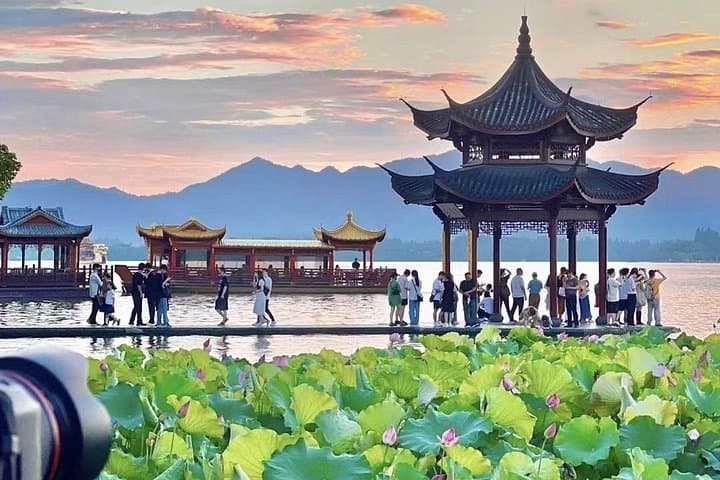


You step off the car and the city softens—West Lake spreads like a slow mirror, willows leaning in as if to listen. A private guide leads you to a short boat ride where pagodas and arched bridges slide into view; the wake sketches a temporary map of the lake’s edges and small islands.
You step off the car and the city softens—West Lake spreads like a slow mirror, willows leaning in as if to listen. A private guide leads you to a short boat ride where pagodas and arched bridges slide into view; the wake sketches a temporary map of the lake’s edges and small islands.
West Lake’s shoreline records centuries of Chinese garden design and Song‑era leisure culture: the Broken Bridge, Three Pools Mirroring the Moon and surrounding pavilions all speak to a measured relationship between water, stone and human use. Geologically the basin is a shallow lacustrine plain fed by small streams, its wetlands historically important for rice and tea cultivation—Longjing tea terraces still scent the air above Meijiawu village.
The day flows from the boat to Guo’s Villa, where private gardens illustrate aristocratic taste, then to the tea plantation for a tasting and simple tea‑performance. A bamboo‑lined path in Yunqi narrows the world to green and the murmur of a stream before Qinghefang Old Street returns you to lively markets and preserved streetfronts.
Practical notes: plan for 6–8 hours, comfortable walking shoes and a light rain jacket in spring; bring a refillable water bottle—the guide provides bottled water but refills reduce waste. Midday can be humid; earlier starts avoid crowds and softer light for photos. Respect tea houses by photographing discreetly and ask before touching cultivated plants. This is an accessible, low‑impact day that balances quiet nature with cultural context—ideal for travelers seeking a paced, informative introduction to Hangzhou’s rivers, gardens and tea country.