THE ADVENTURE COLLECTIVE® · Independent discovery and booking for outdoor travel

Experience Rotorua’s living Māori village and the raw theatre of Pōhutu geyser, steaming vents and boiling mud pools on a guided 6–8 hour cultural and geothermal tour. Learn local history, walk boardwalks over thermal ponds, and leave time for Sulphur Bay and the Redwoods.
Experience Rotorua’s living Māori village and the raw theatre of Pōhutu geyser, steaming vents and boiling mud pools on a guided 6–8 hour cultural and geothermal tour. Learn local history, walk boardwalks over thermal ponds, and leave time for Sulphur Bay and the Redwoods.
You step off the coach into a valley where steam threads the air and the ground hisses underfoot; Pōhutu geyser punctuates the sky with regular coughs of boiling water while mud pools grumble like a distant engine.
Verified experiences and guided adventures in the surrounding area.
Operated by Tino Pai Tours · Rotorua, Bay of Plenty
You step off the coach into a valley where steam threads the air and the ground hisses underfoot; Pōhutu geyser punctuates the sky with regular coughs of boiling water while mud pools grumble like a distant engine.
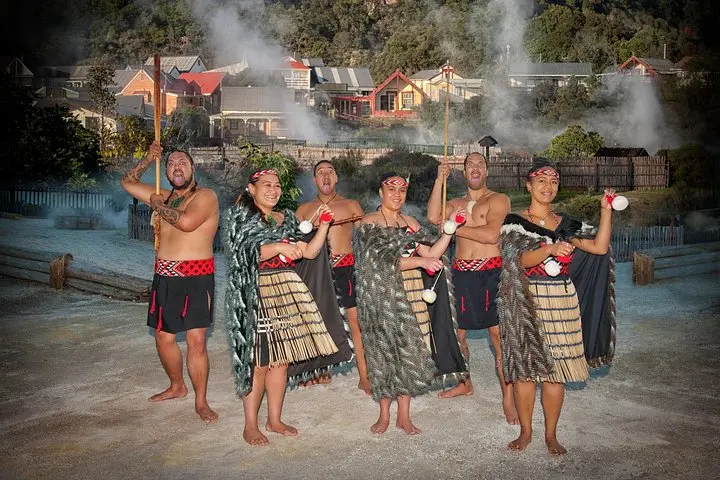
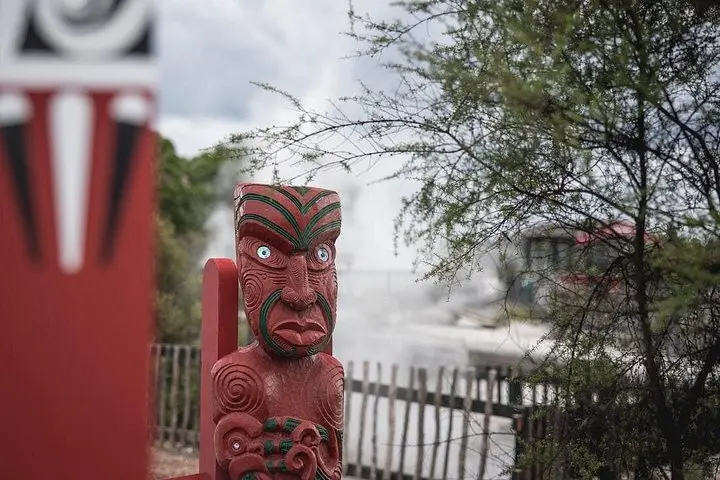
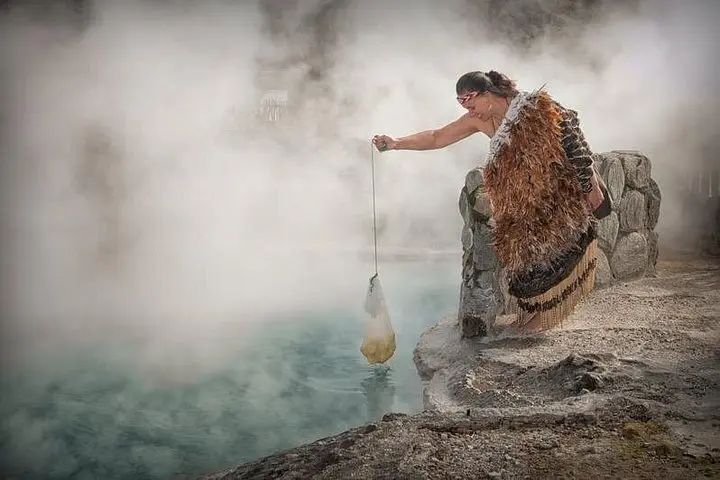
Whakarewarewa is a living Māori village—home to Tūhourangi Ngāti Wāhiao for generations—where people still use geothermal heat to cook, bathe and warm homes. The route through the geothermal valley passes Pōhutu, steaming vents, silicate terraces and bubbling pools; nearby Sulphur Bay shows milky shorelines and attracts waterfowl, while the Government Gardens and the Blue Baths reflect Rotorua’s early 20th-century spa culture. The Redwood Forest boardwalks and thermal ponds offer a calmer counterpoint to the geyser theatre.
Expect guided cultural interpretation that explains marae protocol, the WWII Memorial Archway and the whakapapa of this place, with stops at historic buildings and sacred burial grounds. Terrain is mostly boardwalks and compact paths with low elevation change—walking is steady rather than steep, but steam can make surfaces slick.
Practical notes: tours run roughly 6–8 hours including transfers and local stops; a moderate fitness level helps for standing and short walks. Wear sturdy, closed-toe shoes and layered clothes (steam and wind vary quickly). Bottled water, snacks and an English-speaking guide are included; a glow-worm experience is offered as an optional extra in the evening. Respect local tikanga: stay on paths, do not touch thermal features, and follow guide instructions to protect fragile geothermal systems and cultural sites.
Yes—the itinerary lists admission to the living Māori village and geothermal valley as included in the tour.
No—the glow-worm visit is an optional extra, typically scheduled after dusk and booked separately.
Meet at the TINO PAI TOURS sign board on the grassy mound directly opposite the port gates by the flag pole; if the ship docks after 10:00am, departure is about 60 minutes after docking (confirmed with operator).
Many children and older travelers can participate, but a moderate fitness level and mobility for short walks are recommended; strollers are not ideal on uneven boardwalks.
Tino Pai Tours operates guided outdoor trips and adventures with an emphasis on safety, stewardship, and memorable experiences.
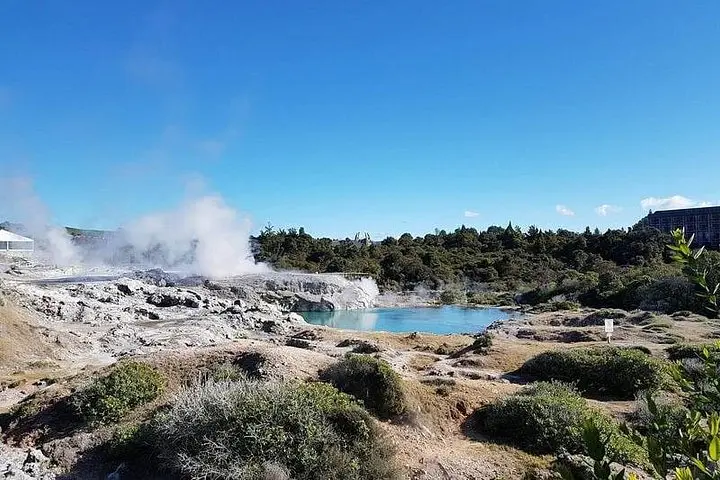
You step off the coach into a valley where steam threads the air and the ground hisses underfoot; Pōhutu geyser punctuates the sky with regular coughs of boiling water while mud pools grumble like a distant engine.
You step off the coach into a valley where steam threads the air and the ground hisses underfoot; Pōhutu geyser punctuates the sky with regular coughs of boiling water while mud pools grumble like a distant engine.
Whakarewarewa is a living Māori village—home to Tūhourangi Ngāti Wāhiao for generations—where people still use geothermal heat to cook, bathe and warm homes. The route through the geothermal valley passes Pōhutu, steaming vents, silicate terraces and bubbling pools; nearby Sulphur Bay shows milky shorelines and attracts waterfowl, while the Government Gardens and the Blue Baths reflect Rotorua’s early 20th-century spa culture. The Redwood Forest boardwalks and thermal ponds offer a calmer counterpoint to the geyser theatre.
Expect guided cultural interpretation that explains marae protocol, the WWII Memorial Archway and the whakapapa of this place, with stops at historic buildings and sacred burial grounds. Terrain is mostly boardwalks and compact paths with low elevation change—walking is steady rather than steep, but steam can make surfaces slick.
Practical notes: tours run roughly 6–8 hours including transfers and local stops; a moderate fitness level helps for standing and short walks. Wear sturdy, closed-toe shoes and layered clothes (steam and wind vary quickly). Bottled water, snacks and an English-speaking guide are included; a glow-worm experience is offered as an optional extra in the evening. Respect local tikanga: stay on paths, do not touch thermal features, and follow guide instructions to protect fragile geothermal systems and cultural sites.