THE ADVENTURE COLLECTIVE® · Independent discovery and booking for outdoor travel

Head offshore from La Paz to swim alongside whale sharks — slow-moving giants drawn to plankton-rich waters. This four-hour guided snorkel pairs close-up wildlife viewing with clear rules to protect both swimmers and sharks.
Head offshore from La Paz to swim alongside whale sharks — slow-moving giants drawn to plankton-rich waters. This four-hour guided snorkel pairs close-up wildlife viewing with clear rules to protect both swimmers and sharks.
The Gulf of California opens like a cool, moving plain outside La Paz — blue water stretching to islands and volcanic ridgelines. A low-profile skiff slips away from the Malecon and, within an hour, the shoreline is a low band of color and the ocean begins to hum. Here the currents gather plankton, and whale sharks arrive, slow and enormous, mouths agape as if inviting you to watch.
Verified experiences and guided adventures in the surrounding area.
Operated by La Paz City Map · La Paz, Baja California Sur
The Gulf of California opens like a cool, moving plain outside La Paz — blue water stretching to islands and volcanic ridgelines. A low-profile skiff slips away from the Malecon and, within an hour, the shoreline is a low band of color and the ocean begins to hum. Here the currents gather plankton, and whale sharks arrive, slow and enormous, mouths agape as if inviting you to watch.
La Paz sits on the eastern edge of the Baja California peninsula, a town shaped by fishing, pearl-diving and the seismic forces that created the Sea of Cortez. The bay’s geology — shallow shelves, sheltered coves, and nearby volcanic islands like Espíritu Santo — concentrates nutrients and draws large pelagic life. Local guides combine natural history with strict viewing rules born from decades of conservation work: no touching, limited swimmers per animal, and controlled approaches.
On a typical trip you’ll board from the Malecon area, ride 30–60 minutes to the feeding zones, and spend timed snorkel sessions beside the whale sharks under guide supervision. Expect warm, clear water, occasional wind chop, and a steady instruction cadence from the crew. Bring a mask that fits, reef-safe sunscreen, and the mindset of a respectful observer: these animals determine the pace.
Practical: tours run most mornings, can shift by permit, and last roughly four hours. Basic snorkeling competency and comfort in open water are required. Hydrate before departure, secure electronics with waterproof housing, and follow your guide’s approach distances and signals to keep the encounter safe for you and the shark.
Whale shark season generally runs from late spring through summer (roughly April–August) when plankton blooms attract them, though sightings can occur outside this window.
Yes — basic snorkeling comfort is required; you should be able to swim in open water, breathe through a snorkel, and perform short surface swims.
No — respectful viewing rules prohibit touching or chasing whale sharks to protect both animals and swimmers.
Guides organize timed shifts; individual in-water sessions vary but are typically short (10–20 minutes) to limit disturbance and allow rotation.
La Paz City Map operates guided outdoor trips and adventures with an emphasis on safety, stewardship, and memorable experiences.
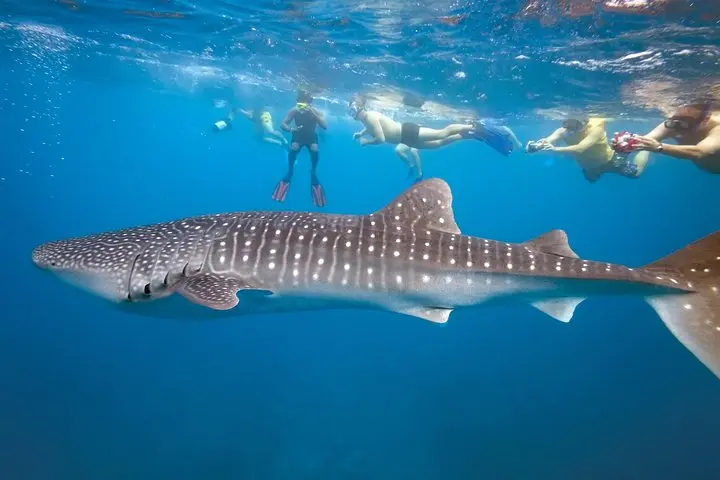
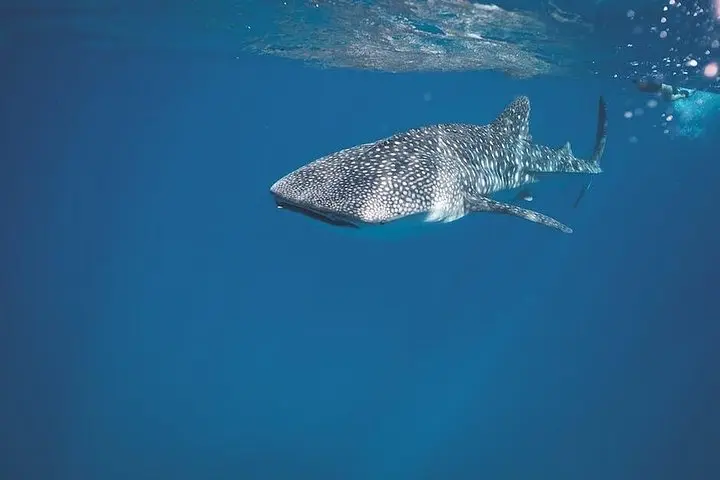
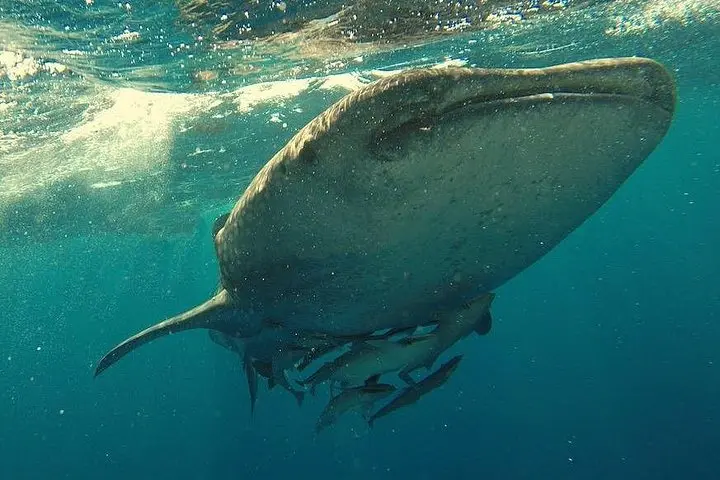
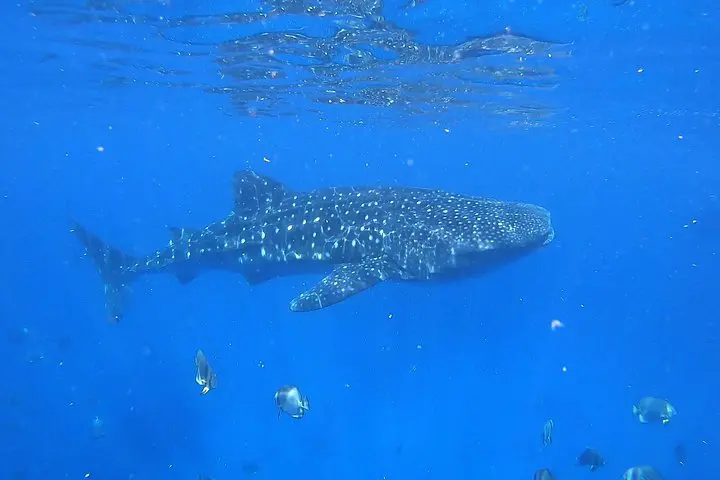
The Gulf of California opens like a cool, moving plain outside La Paz — blue water stretching to islands and volcanic ridgelines. A low-profile skiff slips away from the Malecon and, within an hour, the shoreline is a low band of color and the ocean begins to hum. Here the currents gather plankton, and whale sharks arrive, slow and enormous, mouths agape as if inviting you to watch.
The Gulf of California opens like a cool, moving plain outside La Paz — blue water stretching to islands and volcanic ridgelines. A low-profile skiff slips away from the Malecon and, within an hour, the shoreline is a low band of color and the ocean begins to hum. Here the currents gather plankton, and whale sharks arrive, slow and enormous, mouths agape as if inviting you to watch.
La Paz sits on the eastern edge of the Baja California peninsula, a town shaped by fishing, pearl-diving and the seismic forces that created the Sea of Cortez. The bay’s geology — shallow shelves, sheltered coves, and nearby volcanic islands like Espíritu Santo — concentrates nutrients and draws large pelagic life. Local guides combine natural history with strict viewing rules born from decades of conservation work: no touching, limited swimmers per animal, and controlled approaches.
On a typical trip you’ll board from the Malecon area, ride 30–60 minutes to the feeding zones, and spend timed snorkel sessions beside the whale sharks under guide supervision. Expect warm, clear water, occasional wind chop, and a steady instruction cadence from the crew. Bring a mask that fits, reef-safe sunscreen, and the mindset of a respectful observer: these animals determine the pace.
Practical: tours run most mornings, can shift by permit, and last roughly four hours. Basic snorkeling competency and comfort in open water are required. Hydrate before departure, secure electronics with waterproof housing, and follow your guide’s approach distances and signals to keep the encounter safe for you and the shark.