THE ADVENTURE COLLECTIVE® · Independent discovery and booking for outdoor travel

Step aboard a four-hour voyage from Vancouver into the Gulf and San Juan Islands where Biggs killer whales, humpbacks, grey whales and playful sea lions carve the water. This practical guide explains what you'll see, when to go, and how to prepare for a guaranteed whale sighting during peak season.
Step aboard a four-hour voyage from Vancouver into the Gulf and San Juan Islands where Biggs killer whales, humpbacks, grey whales and playful sea lions carve the water. This practical guide explains what you'll see, when to go, and how to prepare for a guaranteed whale sighting during peak season.
The boat slides away from the slip with a low, satisfied rumble and the Salish Sea opens up in front of you—a wind-sheared plane of blue and pewter that refuses to sit still. Salt stings the corner of your eyes, gulls thread the wake, and within an hour the coastline slips into a watercolor of islands: San Juan’s rounded silhouettes, the rocky spines of the Gulf Islands, and scattered logging beaches that look like postcards of another century.
Verified experiences and guided adventures in the surrounding area.
Operated by White Rock Sea Tours and Whale Watching Vancouver · White Rock, British Columbia
The boat slides away from the slip with a low, satisfied rumble and the Salish Sea opens up in front of you—a wind-sheared plane of blue and pewter that refuses to sit still. Salt stings the corner of your eyes, gulls thread the wake, and within an hour the coastline slips into a watercolor of islands: San Juan’s rounded silhouettes, the rocky spines of the Gulf Islands, and scattered logging beaches that look like postcards of another century.
This is the working geography of British Columbia’s marine highways: currents cut between islands, tidal rips concentrate forage fish, and those fish in turn attract the region’s largest predators. Indigenous communities have read these waters for millennia; the local Coast Salish nations consider the orca and humpback part of a living story that links people, salmon, and shoreline. Modern whale watching here evolved from small, local skiffs into organized fleets coordinated through the Pacific Whale Watch Association, which helps vessels share sightings and reduces pressure on animals by directing boats to distant but accessible viewing angles.
Geology presses into every horizon. The islands are the summits of submerged ranges—ancient rock scoured by glaciers and lifted by tectonic patience—creating shallow channels that funnel plankton and salmon into tight corridors. That concentrated food pushes whales into predictable routes, which is why operators can promise high sighting rates during peak months.
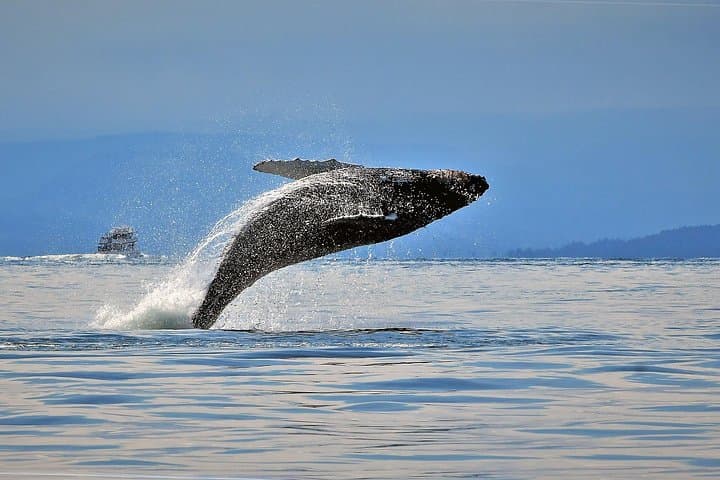
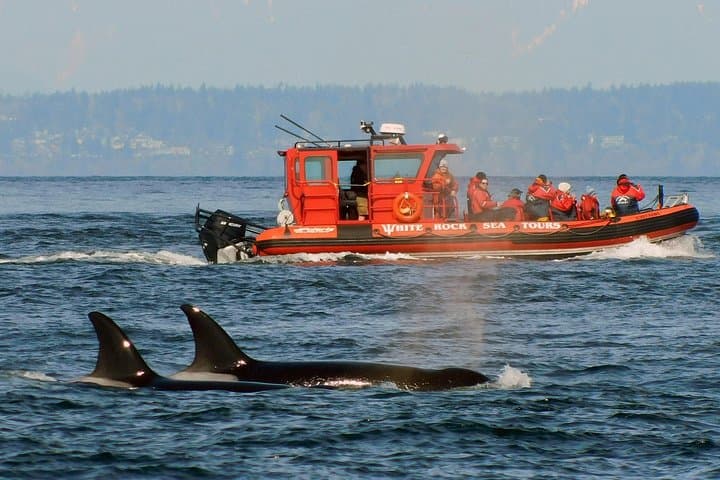
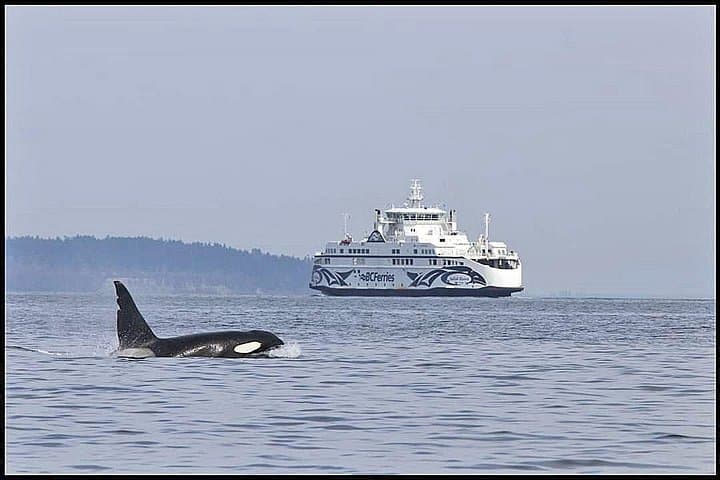
On a four-hour White Rock Sea Tours trip you’re not only watching creatures surface; you’re learning to read the ocean. Guides call out dorsal fins like weather reports—Biggs (transient) orca, humpback tail slaps, curious sea lions—and the boat moves with a practiced hush to let animals decide the distance.
Practical matters: tours run 3–5 hours and include Mustang survival suits and life jackets—expect to wear layers beneath them. The operator guarantees whale sightings April through October; outside that window sightings are still possible but less predictable. The boat can be cold and windy even on sunny days, and seas range from glass-calm to rolling, so pack waterproof footwear, a windproof outer layer, binoculars, and a camera with a mid-telephoto lens.
Timing matters: mornings are cleaner for light and often calmer; late afternoon trips can find active surface behaviors as feeding cycles intensify. If you get seasick, take preventative medication before boarding and choose a midship seat on the main deck. Children under six are allowed only at manager discretion; trips are not recommended for people with serious back problems or pregnant travelers.
Beyond whales, watch for harbour porpoise riding bow waves, seals hauled out on rocky points, and eagle-patrolled shorelines. Leave binoculars on the animals, not in the water—disturbance rules are strict and guides will enforce them to protect the animals and your chance for a close encounter.
Yes—April through October the operator offers a 100% whale sighting guarantee; if you don’t see whales you can return on a future trip.
Yes—Mustang Survival suits and life jackets are provided in sizes XS to XXXL for warmth and flotation.
Children under six are allowed only at the manager’s discretion; the trip can be long and the sea conditions rough.
Trips may be canceled for safety reasons; refunds are available if canceled at least 24 hours before departure, and operators reserve the right to cancel for weather or mechanical issues.
Take preventative medication before boarding, sit near the center of the boat, focus on the horizon, and stay hydrated; crew can advise on best seating.
Departures out of the White Rock/Surrey area reach productive waters within an hour or two, with typical trips lasting 3–5 hours round-trip.
White Rock Sea Tours and Whale Watching Vancouver operates guided outdoor trips and adventures with an emphasis on safety, stewardship, and memorable experiences.

The boat slides away from the slip with a low, satisfied rumble and the Salish Sea opens up in front of you—a wind-sheared plane of blue and pewter that refuses to sit still. Salt stings the corner of your eyes, gulls thread the wake, and within an hour the coastline slips into a watercolor of islands: San Juan’s rounded silhouettes, the rocky spines of the Gulf Islands, and scattered logging beaches that look like postcards of another century.
The boat slides away from the slip with a low, satisfied rumble and the Salish Sea opens up in front of you—a wind-sheared plane of blue and pewter that refuses to sit still. Salt stings the corner of your eyes, gulls thread the wake, and within an hour the coastline slips into a watercolor of islands: San Juan’s rounded silhouettes, the rocky spines of the Gulf Islands, and scattered logging beaches that look like postcards of another century.
This is the working geography of British Columbia’s marine highways: currents cut between islands, tidal rips concentrate forage fish, and those fish in turn attract the region’s largest predators. Indigenous communities have read these waters for millennia; the local Coast Salish nations consider the orca and humpback part of a living story that links people, salmon, and shoreline. Modern whale watching here evolved from small, local skiffs into organized fleets coordinated through the Pacific Whale Watch Association, which helps vessels share sightings and reduces pressure on animals by directing boats to distant but accessible viewing angles.
Geology presses into every horizon. The islands are the summits of submerged ranges—ancient rock scoured by glaciers and lifted by tectonic patience—creating shallow channels that funnel plankton and salmon into tight corridors. That concentrated food pushes whales into predictable routes, which is why operators can promise high sighting rates during peak months.
On a four-hour White Rock Sea Tours trip you’re not only watching creatures surface; you’re learning to read the ocean. Guides call out dorsal fins like weather reports—Biggs (transient) orca, humpback tail slaps, curious sea lions—and the boat moves with a practiced hush to let animals decide the distance.
Practical matters: tours run 3–5 hours and include Mustang survival suits and life jackets—expect to wear layers beneath them. The operator guarantees whale sightings April through October; outside that window sightings are still possible but less predictable. The boat can be cold and windy even on sunny days, and seas range from glass-calm to rolling, so pack waterproof footwear, a windproof outer layer, binoculars, and a camera with a mid-telephoto lens.
Timing matters: mornings are cleaner for light and often calmer; late afternoon trips can find active surface behaviors as feeding cycles intensify. If you get seasick, take preventative medication before boarding and choose a midship seat on the main deck. Children under six are allowed only at manager discretion; trips are not recommended for people with serious back problems or pregnant travelers.
Beyond whales, watch for harbour porpoise riding bow waves, seals hauled out on rocky points, and eagle-patrolled shorelines. Leave binoculars on the animals, not in the water—disturbance rules are strict and guides will enforce them to protect the animals and your chance for a close encounter.