THE ADVENTURE COLLECTIVE® · Independent discovery and booking for outdoor travel

Head out from Ahungalla on a shared boat to hunt for blue, sperm and fin whales along Sri Lanka’s southern shelf. Expect a long day at sea guided by a naturalist, with responsible viewing practices and coastal scenery en route.
Head out from Ahungalla on a shared boat to hunt for blue, sperm and fin whales along Sri Lanka’s southern shelf. Expect a long day at sea guided by a naturalist, with responsible viewing practices and coastal scenery en route.
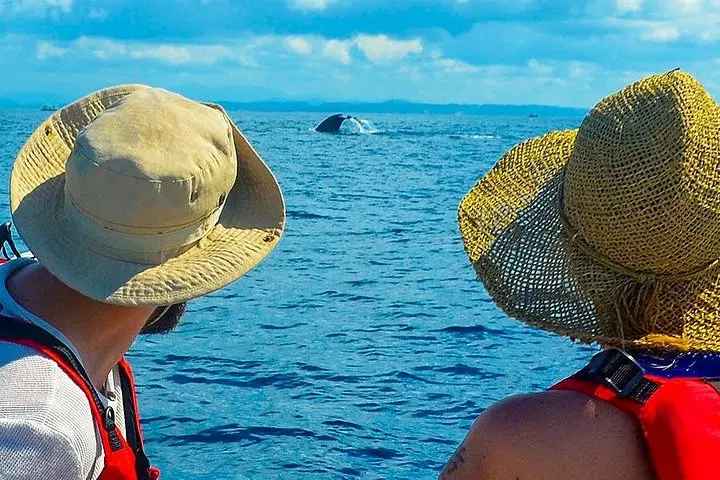
You step onto a low-slung fiberglass launch as the reef-fringed coast of Ahungalla slides past—palm shadows stretching toward the sea and gulls sketching the horizon. The boat cuts south into lanes where blue whales and sperm whales feed; the ocean breathes around the hull and the naturalist already has binoculars raised.
Verified experiences and guided adventures in the surrounding area.
Operated by Lakpura LLC · Ahungalla, Southern Province
You step onto a low-slung fiberglass launch as the reef-fringed coast of Ahungalla slides past—palm shadows stretching toward the sea and gulls sketching the horizon. The boat cuts south into lanes where blue whales and sperm whales feed; the ocean breathes around the hull and the naturalist already has binoculars raised.
This stretch of southern Sri Lanka sits on the continental shelf where deep water approaches the shore, creating predictable feeding grounds for the largest cetaceans. The coastline carries layers of history: traditional fishing villages, colonial-era forts a short drive inland, and a long relationship between people and the sea that shapes local culture and cuisine.
Geologically, upwellings and submarine canyons off the southern shelf concentrate plankton and squid—the reason blue and sperm whales come close enough to spot. Culturally, boat crews are drawn from generations of small-scale fishers whose knowledge helps locate sightings.
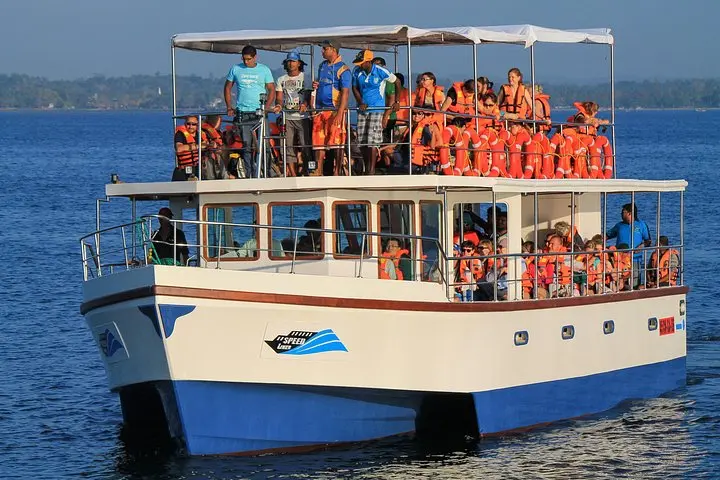
Practically: expect a 6–7 hour excursion with several hours at sea. Boats are small and shared (max ~8); dress for sun, splash and a bit of motion. A qualified naturalist will talk identification and behaviour; responsible operators keep distance to reduce disturbance. Sightings aren’t guaranteed—whales follow food, not schedules—but the trip is designed to maximize time in rich zones.
Plan pickup times early in the morning for smoother seas and softer light. Bring seasickness prevention if you’re prone, a hat, layered sun protection, and a charged camera with a telephoto lens. Respect crew instructions for safe boarding and quiet observation—this is an experience built on patience, local knowledge and a slim margin of luck.
The tour is about 7 hours from hotel pickup to return, with several hours spent at sea searching known whale feeding grounds.
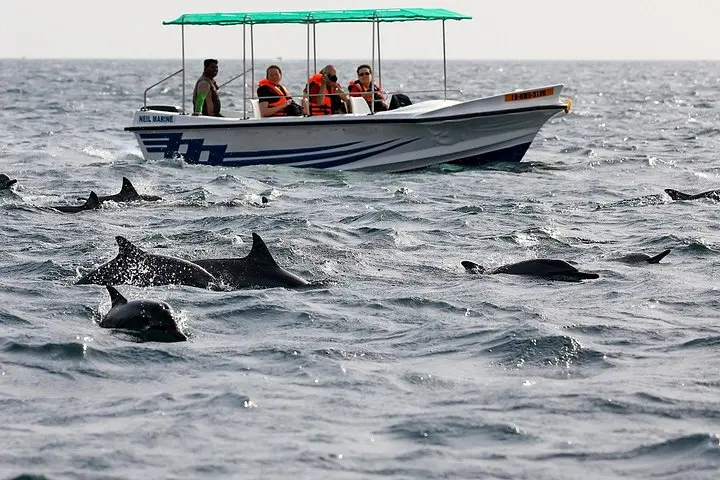
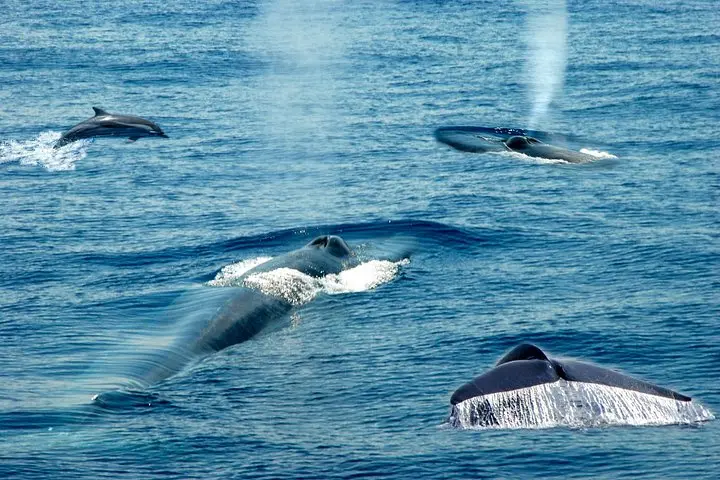
Common targets are blue whales, sperm whales and fin whales; dolphins and seabirds are frequent incidental sightings.
Responsible operators follow distancing and slow-approach protocols; this trip includes a qualified naturalist and adheres to minimal-impact guidelines.
Peak months are generally December through April, with March often producing reliable blue whale encounters, though sightings aren’t guaranteed.
Lakpura LLC operates guided outdoor trips and adventures with an emphasis on safety, stewardship, and memorable experiences.
You step onto a low-slung fiberglass launch as the reef-fringed coast of Ahungalla slides past—palm shadows stretching toward the sea and gulls sketching the horizon. The boat cuts south into lanes where blue whales and sperm whales feed; the ocean breathes around the hull and the naturalist already has binoculars raised.
You step onto a low-slung fiberglass launch as the reef-fringed coast of Ahungalla slides past—palm shadows stretching toward the sea and gulls sketching the horizon. The boat cuts south into lanes where blue whales and sperm whales feed; the ocean breathes around the hull and the naturalist already has binoculars raised.
This stretch of southern Sri Lanka sits on the continental shelf where deep water approaches the shore, creating predictable feeding grounds for the largest cetaceans. The coastline carries layers of history: traditional fishing villages, colonial-era forts a short drive inland, and a long relationship between people and the sea that shapes local culture and cuisine.
Geologically, upwellings and submarine canyons off the southern shelf concentrate plankton and squid—the reason blue and sperm whales come close enough to spot. Culturally, boat crews are drawn from generations of small-scale fishers whose knowledge helps locate sightings.
Practically: expect a 6–7 hour excursion with several hours at sea. Boats are small and shared (max ~8); dress for sun, splash and a bit of motion. A qualified naturalist will talk identification and behaviour; responsible operators keep distance to reduce disturbance. Sightings aren’t guaranteed—whales follow food, not schedules—but the trip is designed to maximize time in rich zones.
Plan pickup times early in the morning for smoother seas and softer light. Bring seasickness prevention if you’re prone, a hat, layered sun protection, and a charged camera with a telephoto lens. Respect crew instructions for safe boarding and quiet observation—this is an experience built on patience, local knowledge and a slim margin of luck.