THE ADVENTURE COLLECTIVE® · Independent discovery and booking for outdoor travel

Board a shared launch from Balapitiya to chase blue, sperm and fin whales along Sri Lanka’s southwest shelf. This responsible, full-day outing blends naturalist-led ID tips with boattime on productive offshore waters.
Board a shared launch from Balapitiya to chase blue, sperm and fin whales along Sri Lanka’s southwest shelf. This responsible, full-day outing blends naturalist-led ID tips with boattime on productive offshore waters.
The sun slides off the Indian Ocean as the shared launch eases away from Balapitiya's shore, spray tasting of salt and movement. Water hunches into swells and the horizon opens; within an hour the sea begins to breathe differently, hinting at giants below.
Verified experiences and guided adventures in the surrounding area.
Operated by Lakpura LLC · Balapitiya, Southern Province
The sun slides off the Indian Ocean as the shared launch eases away from Balapitiya's shore, spray tasting of salt and movement. Water hunches into swells and the horizon opens; within an hour the sea begins to breathe differently, hinting at giants below.
This stretch of Sri Lanka’s southwest coast sits on the edge of the deep continental shelf where nutrient upwellings attract blue, sperm and fin whales. Local fishing communities have worked these waters for generations, and small ports like Balapitiya serve now as launch points for responsible whale watching rather than industrial fleets. The geology—steep drop-offs not far offshore—creates the feeding grounds whales follow.
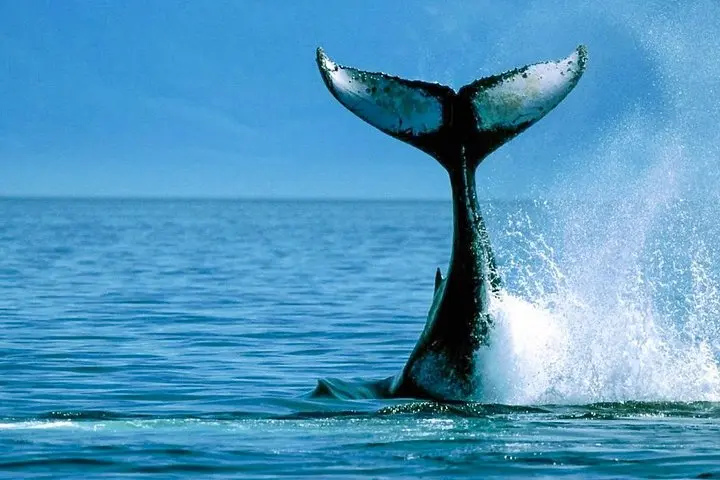
Culturally the morning begins before dawn: drivers collect guests, naturalists brief the group, and the boat crew readies lines and binoculars. Expect concise interpretation from guides trained to identify species by blow patterns, flukes and dorsal fins.
Practical guidance: wear layered sun protection (long-sleeve UV shirts are invaluable), bring motion-sickness medicine if you’re sensitive, and pack a small camera with a telephoto lens. Tours are full-day affairs—plan for a 6–7 hour outing including transit. Weather and sea state dictate sightings; mornings are generally calmer and more productive.
On the water, follow the guide’s instructions about approaching animals: observe quietly, keep distance, and let the animals choose interaction. The trip is straightforward for most travelers but rewards patience: when a blue whale surfaces, the ocean seems to pause—then motion returns and the journey continues.
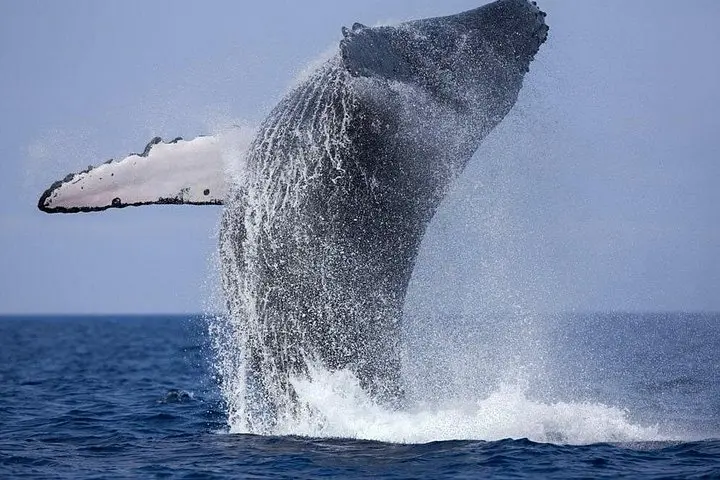
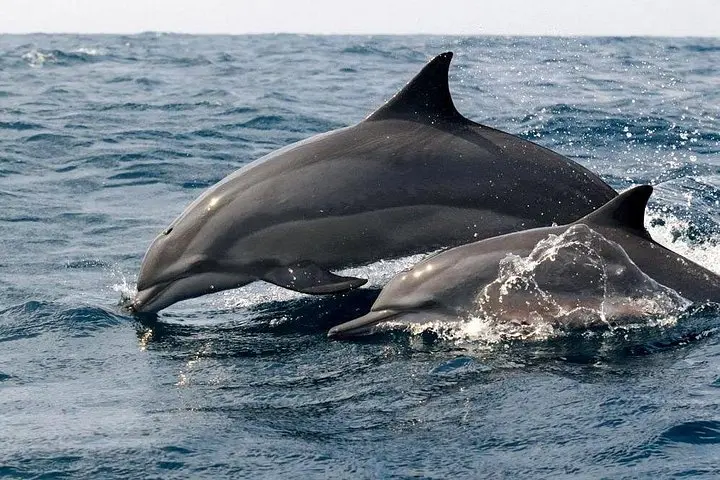
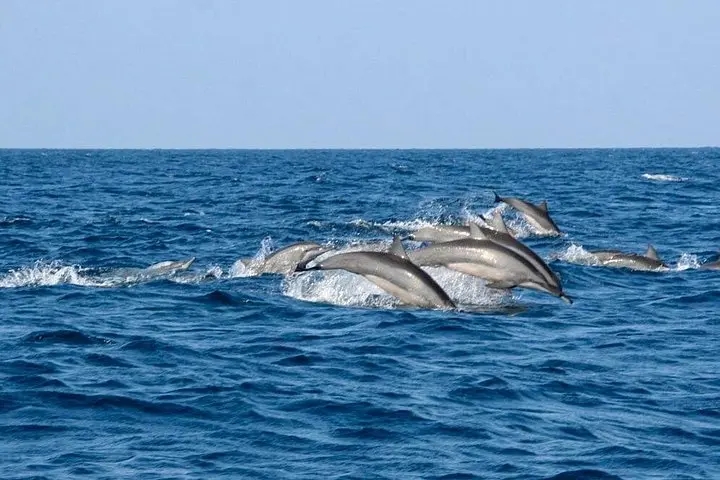
Most commonly blue whales, sperm whales and occasionally fin whales; dolphins and other marine life are frequently encountered as well.
The full experience is typically 6–7 hours including pick-up; boats depart from Balapitiya during early morning for the calmest seas.
Yes—boats are shared and guided, but participants should be able to step on/off a small launch and tolerate some boat motion.
Operators usually allow cancellation for a full refund if made at least 24 hours ahead; tours may be rescheduled if sea conditions are unsafe.
Lakpura LLC operates guided outdoor trips and adventures with an emphasis on safety, stewardship, and memorable experiences.
The sun slides off the Indian Ocean as the shared launch eases away from Balapitiya's shore, spray tasting of salt and movement. Water hunches into swells and the horizon opens; within an hour the sea begins to breathe differently, hinting at giants below.
The sun slides off the Indian Ocean as the shared launch eases away from Balapitiya's shore, spray tasting of salt and movement. Water hunches into swells and the horizon opens; within an hour the sea begins to breathe differently, hinting at giants below.
This stretch of Sri Lanka’s southwest coast sits on the edge of the deep continental shelf where nutrient upwellings attract blue, sperm and fin whales. Local fishing communities have worked these waters for generations, and small ports like Balapitiya serve now as launch points for responsible whale watching rather than industrial fleets. The geology—steep drop-offs not far offshore—creates the feeding grounds whales follow.
Culturally the morning begins before dawn: drivers collect guests, naturalists brief the group, and the boat crew readies lines and binoculars. Expect concise interpretation from guides trained to identify species by blow patterns, flukes and dorsal fins.
Practical guidance: wear layered sun protection (long-sleeve UV shirts are invaluable), bring motion-sickness medicine if you’re sensitive, and pack a small camera with a telephoto lens. Tours are full-day affairs—plan for a 6–7 hour outing including transit. Weather and sea state dictate sightings; mornings are generally calmer and more productive.
On the water, follow the guide’s instructions about approaching animals: observe quietly, keep distance, and let the animals choose interaction. The trip is straightforward for most travelers but rewards patience: when a blue whale surfaces, the ocean seems to pause—then motion returns and the journey continues.