THE ADVENTURE COLLECTIVE® · Independent discovery and booking for outdoor travel

Head out from Reykjavík’s Old Harbour into Faxaflói Bay for a focused, three-and-a-half-hour whale-watching tour with experienced guides, heated cabins, and warm overalls. Expect humpbacks, minkes, dolphins and seabird colonies—plus practical comforts and rebooking guarantees if sightings are scarce.
Head out from Reykjavík’s Old Harbour into Faxaflói Bay for a focused, three-and-a-half-hour whale-watching tour with experienced guides, heated cabins, and warm overalls. Expect humpbacks, minkes, dolphins and seabird colonies—plus practical comforts and rebooking guarantees if sightings are scarce.
The boat pulls away from the Old Harbour and Reykjavík’s glassy Harpa recedes into a ribbon of chrome. Cold sea air hits your face, a clean, saline slap that wakes up every sense. Ahead, the bay opens—Faxaflói, a broad bowl of water ringed by volcanic ridges and, on clear days, the distant silhouette of Snæfellsnes. Conversation from the heated cabin drops to a hum as the crew scans the swell; every head tilts toward the same horizon.
Verified experiences and guided adventures in the surrounding area.
Operated by Reykjavik Sailors · Reykjavík, Capital Region
The boat pulls away from the Old Harbour and Reykjavík’s glassy Harpa recedes into a ribbon of chrome. Cold sea air hits your face, a clean, saline slap that wakes up every sense. Ahead, the bay opens—Faxaflói, a broad bowl of water ringed by volcanic ridges and, on clear days, the distant silhouette of Snæfellsnes. Conversation from the heated cabin drops to a hum as the crew scans the swell; every head tilts toward the same horizon.
Whale watching here is rooted in Reykjavík’s maritime history. The Old Harbour was a working fishing port long before tourism arrived; the same currents that carried cod and herring in centuries past now funnel krill and schooling fish that attract minke and humpback whales. Faxaflói’s geology—shallow banks punctuated by deeper channels—creates predictable feeding grounds that local skippers know intimately.
The experience blends natural theatre with practical comforts: heated indoor cabins, warm flotation overalls, onboard toilets and a small bar. Guides narrate behavior and ID tips, explaining how white-beaked dolphins ride the bow wave or how puffins tuck into Akurey and Lundey’s cliffs in summer. Boats are equipped with Wi‑Fi and complimentary seasickness tablets; the operator will even offer a free rebooking if the day produces no sightings.
Timing matters. Summer brings long daylight and abundant seabirds; spring and autumn are excellent for active feeding frenzies. Winter offers stark light and a chance to pair sea-watching with a Northern Lights evening, though shorter daylight and rougher seas change the rhythm of the trip.
Practical notes: meet at Geirsgata 11—arrive 30 minutes early for briefing and warm gear. Dress in layers and bring a waterproof outer shell; wind off the bay cuts through thin jackets. Binoculars and a telephoto lens will extend your view, but some of the best moments—tails slapping, puffins diving, cityscape against a whale’s spout—happen closer than you expect.
Safety and stewardship are integral. Guides follow distance rules to minimize disturbance; photographers should use long lenses and avoid chasing animals. If you’re prone to seasickness, take medication before boarding and choose a mid-deck seat where motion feels gentlest.
This trip is less about guaranteed spectacles and more about proximity—to wild animals, to Reykjavík’s coastal story, and to an ocean still very much alive. Whether you watch a humpback arch and disappear or simply stand with a warm drink while the city’s mountains frame the horizon, the bay refuses to be passive: it keeps testing your attention and repays curiosity with memorable moments.
Meet at Geirsgata 11, Special Tours ticket office in Reykjavík’s Old Harbour; arrive 30 minutes before departure.
The outing runs approximately 3 to 3.5 hours from departure to return.
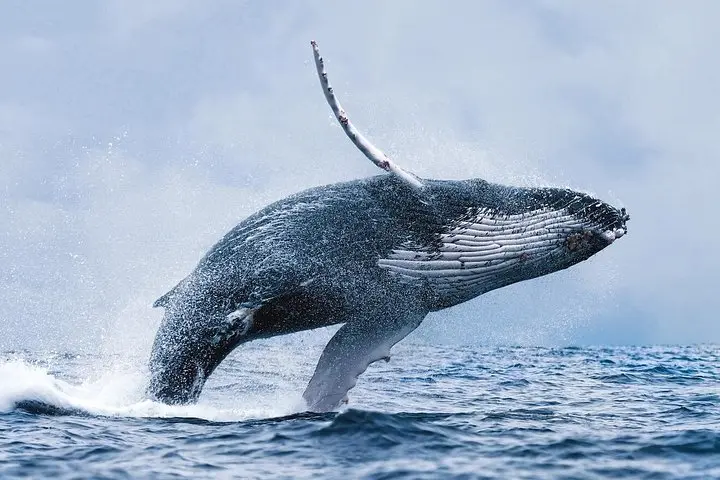
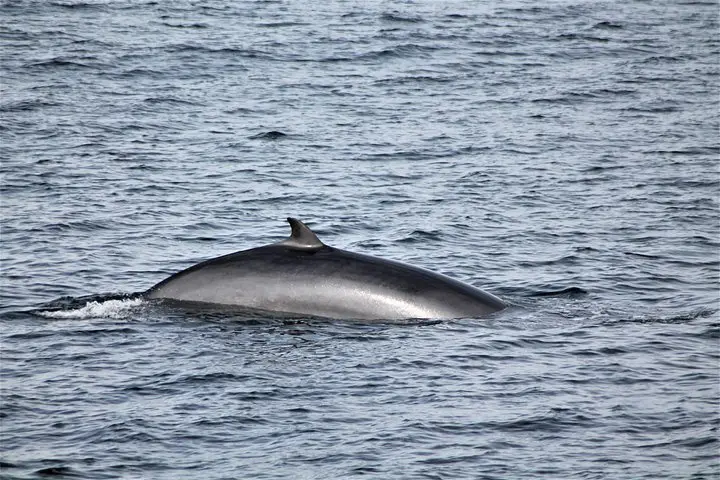
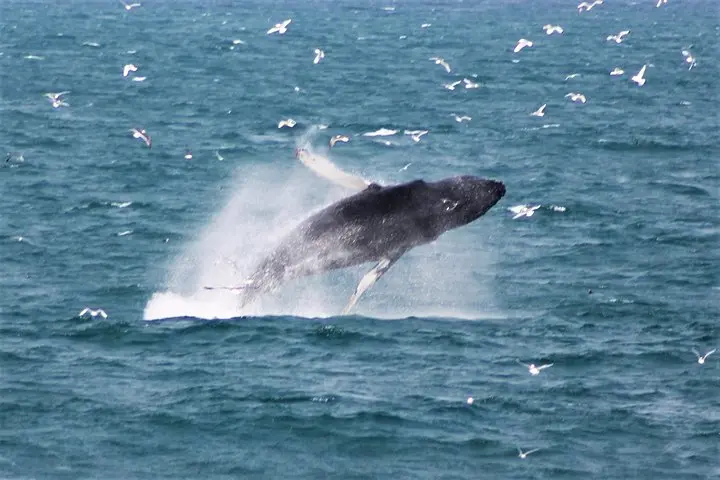
Common sightings include minke and humpback whales, white‑beaked dolphins, harbour porpoises and seasonal puffins and seals.
The operator lists wheelchair and stroller accessibility, but please notify them in advance to confirm boardings and accommodations.
If there are no sightings, the company offers a complimentary ticket to join another tour on a different day.
Some people are sensitive; complimentary seasickness tablets are available and taking medication beforehand is recommended for prone travelers.
Reykjavik Sailors operates guided outdoor trips and adventures with an emphasis on safety, stewardship, and memorable experiences.
The boat pulls away from the Old Harbour and Reykjavík’s glassy Harpa recedes into a ribbon of chrome. Cold sea air hits your face, a clean, saline slap that wakes up every sense. Ahead, the bay opens—Faxaflói, a broad bowl of water ringed by volcanic ridges and, on clear days, the distant silhouette of Snæfellsnes. Conversation from the heated cabin drops to a hum as the crew scans the swell; every head tilts toward the same horizon.
The boat pulls away from the Old Harbour and Reykjavík’s glassy Harpa recedes into a ribbon of chrome. Cold sea air hits your face, a clean, saline slap that wakes up every sense. Ahead, the bay opens—Faxaflói, a broad bowl of water ringed by volcanic ridges and, on clear days, the distant silhouette of Snæfellsnes. Conversation from the heated cabin drops to a hum as the crew scans the swell; every head tilts toward the same horizon.
Whale watching here is rooted in Reykjavík’s maritime history. The Old Harbour was a working fishing port long before tourism arrived; the same currents that carried cod and herring in centuries past now funnel krill and schooling fish that attract minke and humpback whales. Faxaflói’s geology—shallow banks punctuated by deeper channels—creates predictable feeding grounds that local skippers know intimately.
The experience blends natural theatre with practical comforts: heated indoor cabins, warm flotation overalls, onboard toilets and a small bar. Guides narrate behavior and ID tips, explaining how white-beaked dolphins ride the bow wave or how puffins tuck into Akurey and Lundey’s cliffs in summer. Boats are equipped with Wi‑Fi and complimentary seasickness tablets; the operator will even offer a free rebooking if the day produces no sightings.
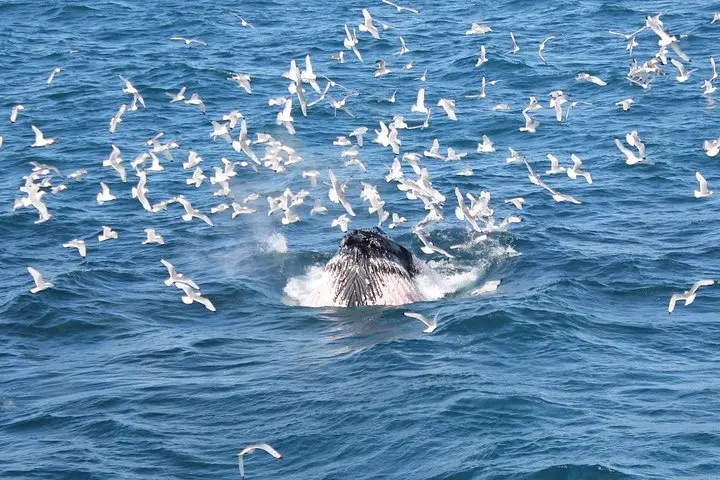
Timing matters. Summer brings long daylight and abundant seabirds; spring and autumn are excellent for active feeding frenzies. Winter offers stark light and a chance to pair sea-watching with a Northern Lights evening, though shorter daylight and rougher seas change the rhythm of the trip.
Practical notes: meet at Geirsgata 11—arrive 30 minutes early for briefing and warm gear. Dress in layers and bring a waterproof outer shell; wind off the bay cuts through thin jackets. Binoculars and a telephoto lens will extend your view, but some of the best moments—tails slapping, puffins diving, cityscape against a whale’s spout—happen closer than you expect.
Safety and stewardship are integral. Guides follow distance rules to minimize disturbance; photographers should use long lenses and avoid chasing animals. If you’re prone to seasickness, take medication before boarding and choose a mid-deck seat where motion feels gentlest.
This trip is less about guaranteed spectacles and more about proximity—to wild animals, to Reykjavík’s coastal story, and to an ocean still very much alive. Whether you watch a humpback arch and disappear or simply stand with a warm drink while the city’s mountains frame the horizon, the bay refuses to be passive: it keeps testing your attention and repays curiosity with memorable moments.