THE ADVENTURE COLLECTIVE® · Independent discovery and booking for outdoor travel

Join a 2.5-hour conversation at the Chicago History Museum exploring how Mexican migrants in Chicago preserve culture through objects and rituals. Featuring exhibitions Fertile Ground and Aqui en Chicago and a panel of leading scholars and makers, this event connects design history to everyday lives.
Join a 2.5-hour conversation at the Chicago History Museum exploring how Mexican migrants in Chicago preserve culture through objects and rituals. Featuring exhibitions Fertile Ground and Aqui en Chicago and a panel of leading scholars and makers, this event connects design history to everyday lives.
Book with Farnsworth House
Verified experiences and guided adventures in the surrounding area.
Operated by Farnsworth House · Plano, Illinois
At the Chicago History Museum at 1601 N Clark St, Chicago, IL 60614, 'What We Carry: Design, Objects, Memory and Belonging between Mexico and Chicago' assembles a compact public conversation about how migration shapes everyday life. This 2.5-hour program, organized with Edith Farnsworth House, traces how Mexican migrants in Chicago preserve and transform cultural heritage through objects, domestic rituals, and community spaces.
The scene is straightforward: a museum hall converted into a neighborhood workshop of memory. Panelists Ane Elena Mallet, Tatiana Cuevas, Guevara and Jojo Gavin, moderated by Iker Gil of Mas Context, talk through vases, textiles, furniture, church accoutrements and foodways rather than policy briefs. They map the networks—churches, settlement houses, social clubs and neighborhood organizations—that acted as cultural laboratories where craft, celebration, music and communal making resisted the displacements of industrial life. The conversation pairs with two exhibitions: Fertile Ground and Aqui en Chicago, offering artifacts and installations that extend the talk into a gallery walk.
Why go? This event reframes migration as practice and material knowledge. If you care about design, urban history, or how objects travel with people, the discussion unpacks visible traces—altar pieces, handmade toys, repurposed household goods—and invisible ones: skills, rituals, recipes and repair practices transmitted across generations. A reception with refreshments follows in the Chicago History Museum café, a moment to continue questions and meet fellow visitors.
Practical notes are clear. The event takes place at the Chicago History Museum at 1601 N Clark St, Chicago, IL 60614; the structured listing also gives a meeting point at MillerKnoll 1100 W Fulton Market, Chicago, IL 60607. Pre-registration is recommended; walk-in space may be available. Tickets are nonrefundable, so plan ahead. Check-in is at Chicago History Museum with your reservation name; printed tickets aren’t required.
This program is an essential cultural stop for travelers who want more than sightseeing—those who want to understand how immigrant communities shape city life through objects and shared practice. It ties local institutions and collectors to broader currents of twentieth-century modernization in Mexico and the United States, showing how transborder exchange reconfigures design and domestic life. The conversation makes the museum a kind of living archive where family heirlooms share space with design history, and where everyday things carry the weight of belonging. Come prepared to look closely, ask questions, and follow the exhibits after the talk for a fuller picture of these living histories.
Accessible by CTA and transit, the museum sits within reach of Lincoln Park and neighborhood cafés where you can continue conversations. Bring a notebook for object details, arrive early to view the exhibitions at your own pace, and respect gallery photography policies. The program's indoor format makes it a reliable cultural option in any season.
The event takes place at the Chicago History Museum at 1601 N Clark St, Chicago, IL 60614; check-in is at the museum with the name on your reservation.
Pre-registration is recommended; walk-in registration may be available if space permits, but tickets are nonrefundable.
Yes, a reception with refreshments follows the panel in the Chicago History Museum café.
Printed tickets are not required—check in at the museum with the name on your reservation.
The listing does not specify age limits; consider the discussion format and subject matter when deciding whether it’s appropriate for younger visitors.
The structured listing notes a meeting point at MillerKnoll 1100 W Fulton Market, Chicago, IL 60607, but the event itself takes place at the Chicago History Museum at 1601 N Clark St, Chicago, IL 60614.
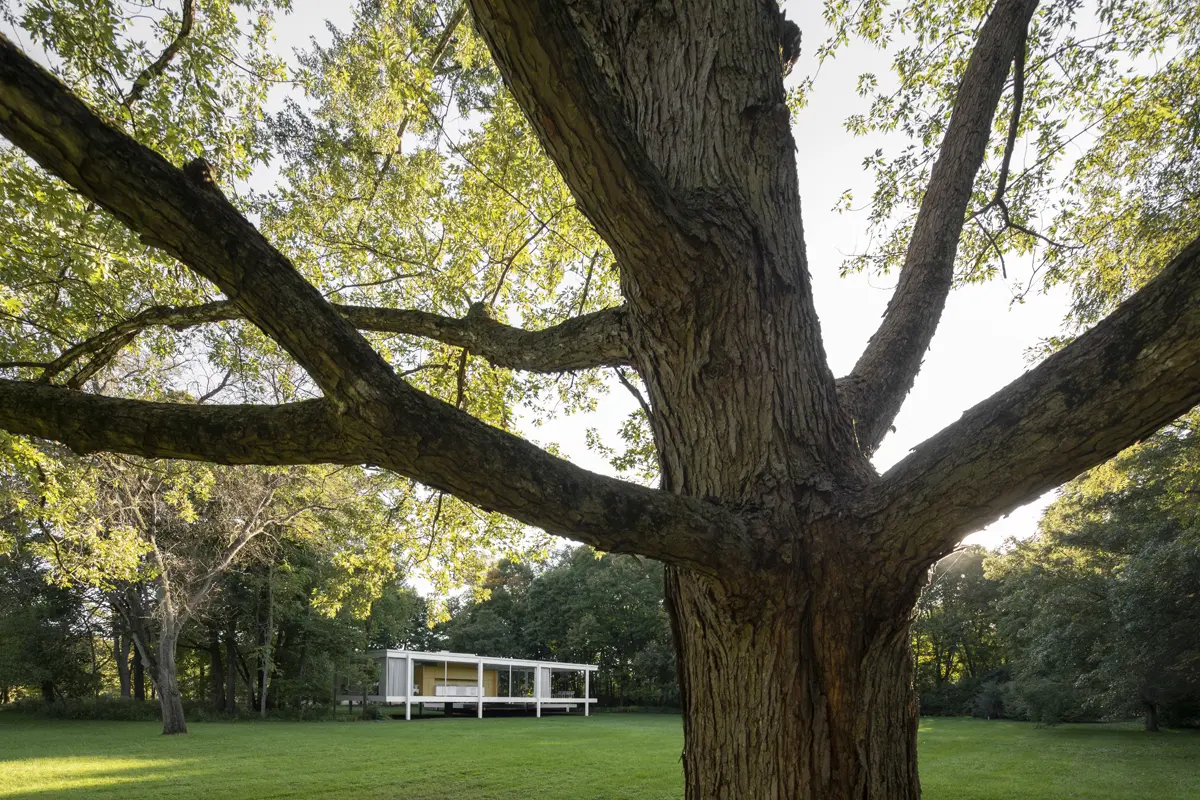
Farnsworth House is a historic modernist house in Plano, Illinois dedicated to architecture, art, and landscape interpretation. Operated as a conserved cultural site, Farnsworth House offers guided tours of the Edith Farnsworth House and self-guided access to 60 acres of grounds from March through November. Visitors can join specialized experiences including watercolor workshops, canoe trips along the Fox River, moonlight tours, curator-led talks, live music evenings, and collaborative events with local partners. Programs at Farnsworth House combine architectural interpretation with seasonal exhibitions and community-focused events. Expert guides provide 90-minute tours that explore Ludwig Mies van der Rohe's design, the property's preservation efforts, and the house's place in Mid-Century Modern history. Special events feature artist talks, exhibit openings, and joint tours with nearby cultural organizations and local distilleries. Farnsworth House engages recognized curators and artists to present rotating exhibitions that illuminate local and Native American art, including focused conversations on artists such as Truman Lowe. Families, architecture enthusiasts, art students, and outdoor recreation visitors find value in combined offerings like canoe-and-tour days, the Trifecta House tour with additional private homes, and evening music and dining events. Farnsworth House's blend of education, conservation, and cultural programming positions it as a trusted destination for learning, photography, and reflective visits to a landmark of American modernism. Seasonal ticketing and limited capacities ensure personalized, high-quality visitor experiences year-round.

Book with Farnsworth House