THE ADVENTURE COLLECTIVE® · Independent discovery and booking for outdoor travel

Experience the annual wildebeest migration as herds converge on the Mara River. Expect dramatic river crossings, predator encounters, and a mix of long waits and sudden motion—best viewed over multiple days with an experienced guide.
Experience the annual wildebeest migration as herds converge on the Mara River. Expect dramatic river crossings, predator encounters, and a mix of long waits and sudden motion—best viewed over multiple days with an experienced guide.
Dust lifts off the open plains as a moving dark line of bodies approaches the riverbank — wildebeest press forward, hooves drumming, eyes fixed on the opposite slope. The Mara River, cool and churning, dares the herd to cross; crocodiles wait like history made flesh. This is Masai Mara at migration season: raw, urgent, and elemental.
Verified experiences and guided adventures in the surrounding area.
Operated by Denki Travel · Masai Mara, Narok County
Dust lifts off the open plains as a moving dark line of bodies approaches the riverbank — wildebeest press forward, hooves drumming, eyes fixed on the opposite slope. The Mara River, cool and churning, dares the herd to cross; crocodiles wait like history made flesh. This is Masai Mara at migration season: raw, urgent, and elemental.
The migration is part of the greater Serengeti–Mara ecosystem and occurs each year as more than a million wildebeest, zebras and gazelles follow seasonal rains. The Mara itself cuts through ancient volcanic soil and alluvial plains, shaping the river crossings that have defined predator–prey strategies for generations. The reserve sits on land long stewarded by Maasai communities, whose cattle-grazing traditions and cultural presence remain woven into local tourism and conservation policy.
Expect dramatic river crossings, dense herds on open savanna, and close encounters with predators in short bursts between long stretches of patient observation. Guides position vehicles along game paths; early mornings and late afternoons yield the best light and the highest activity. Practical notes: crossings are seasonal and not guaranteed on any single day, so allow multiple days in your itinerary. Park rules strictly limit off-road travel — stay with licensed guides, carry water and sun protection, and plan for dusty roads and variable temperatures.
This is a watchful, kinetic experience—less a hike than a waiting-room for spectacle—where timing, local knowledge, and a respectful approach to wildlife determine what you’ll see and remember.
The highest probability is July through October, with many crossings concentrated in August–September, but crossings are weather- and herd-dependent and not guaranteed on a single day.
Yes when viewing from vehicles and with licensed guides; keep distance, follow guide instructions, and never attempt to approach animals on foot.
Visitors pay park entrance fees and must follow reserve regulations; fees are typically included with guided tour packages but confirm before travel.
Many operators accommodate children and provide infant seats, but check age policies and travel comfort—long drives and bumpy roads can be challenging for very young children.
Denki Travel operates guided outdoor trips and adventures with an emphasis on safety, stewardship, and memorable experiences.
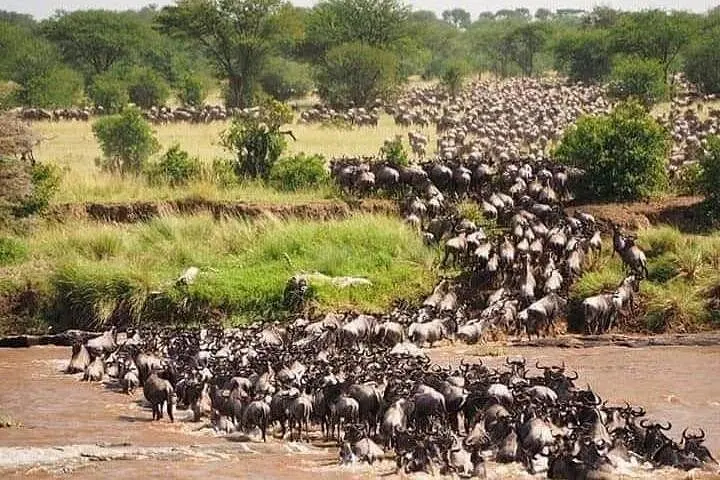
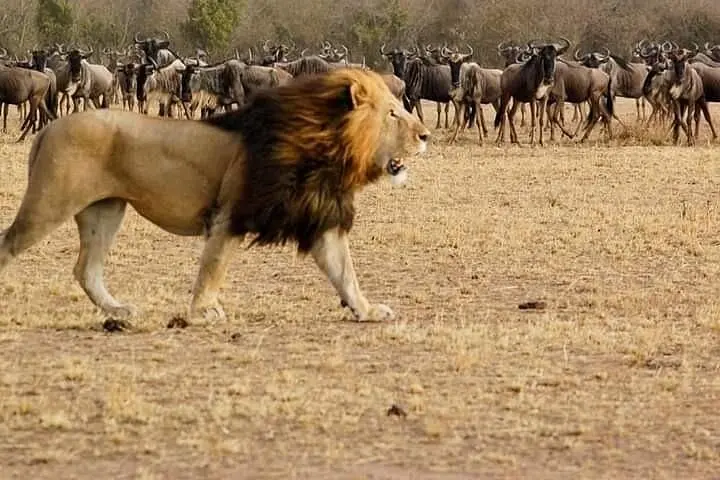
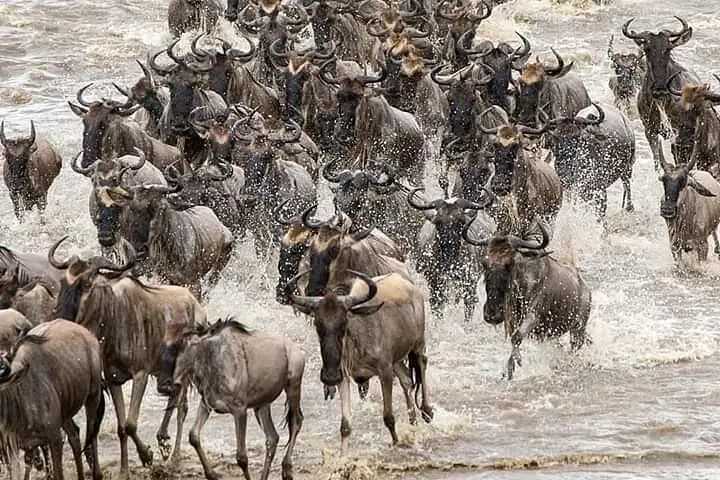
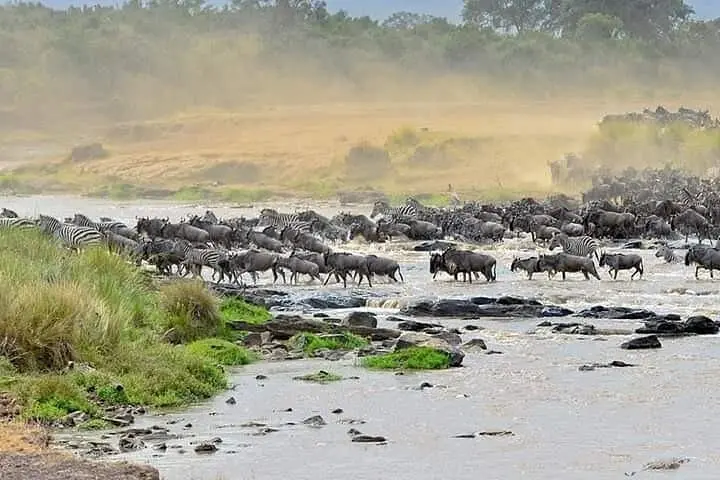
Dust lifts off the open plains as a moving dark line of bodies approaches the riverbank — wildebeest press forward, hooves drumming, eyes fixed on the opposite slope. The Mara River, cool and churning, dares the herd to cross; crocodiles wait like history made flesh. This is Masai Mara at migration season: raw, urgent, and elemental.
Dust lifts off the open plains as a moving dark line of bodies approaches the riverbank — wildebeest press forward, hooves drumming, eyes fixed on the opposite slope. The Mara River, cool and churning, dares the herd to cross; crocodiles wait like history made flesh. This is Masai Mara at migration season: raw, urgent, and elemental.
The migration is part of the greater Serengeti–Mara ecosystem and occurs each year as more than a million wildebeest, zebras and gazelles follow seasonal rains. The Mara itself cuts through ancient volcanic soil and alluvial plains, shaping the river crossings that have defined predator–prey strategies for generations. The reserve sits on land long stewarded by Maasai communities, whose cattle-grazing traditions and cultural presence remain woven into local tourism and conservation policy.
Expect dramatic river crossings, dense herds on open savanna, and close encounters with predators in short bursts between long stretches of patient observation. Guides position vehicles along game paths; early mornings and late afternoons yield the best light and the highest activity. Practical notes: crossings are seasonal and not guaranteed on any single day, so allow multiple days in your itinerary. Park rules strictly limit off-road travel — stay with licensed guides, carry water and sun protection, and plan for dusty roads and variable temperatures.
This is a watchful, kinetic experience—less a hike than a waiting-room for spectacle—where timing, local knowledge, and a respectful approach to wildlife determine what you’ll see and remember.